How to Crackle Paint with Hair Spray!
Hello Graphics Fairy DIYers. Chippy white paint, also known as the Shabby Chic paint finish, is still beloved and highly sought after. Today we will be discovering How to Crackle Paint with Hair Spray. We will turn white acrylic paint into crackled, chippy paint using hair spray. I will be sharing a fun and easy technique to use inexpensive craft paint to enhance and embellish wood or other hard surfaces. This is a way to take your art on wood to the next level.
This post may contain affiliate links which won't change your price but will share some commission, you can find our privacy policy here.
Crackle Finishes
Cracked or crazed, distressed finishes have been a staple for many years. There are several products on the market that produce this look, but they can be quite pricey and challenging to do. However, I am going to show you how to easily create this rustic finish with a beauty staple… hair spray.
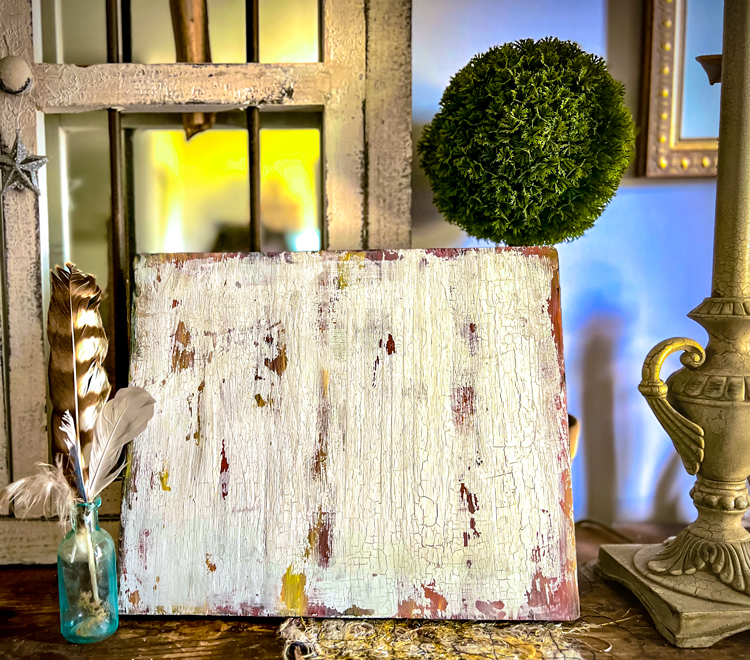
I will walk you through the simple steps in this tutorial and give you tips and tricks I learned through a variety of experiments. Below is my finished piece.
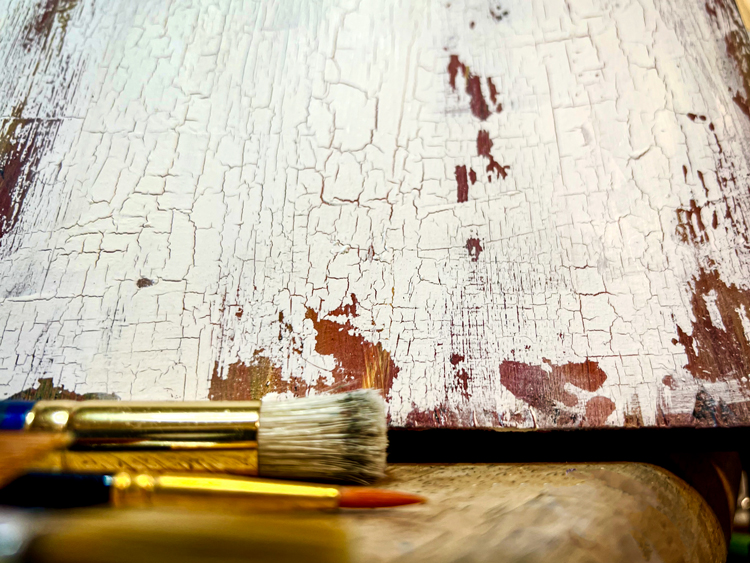
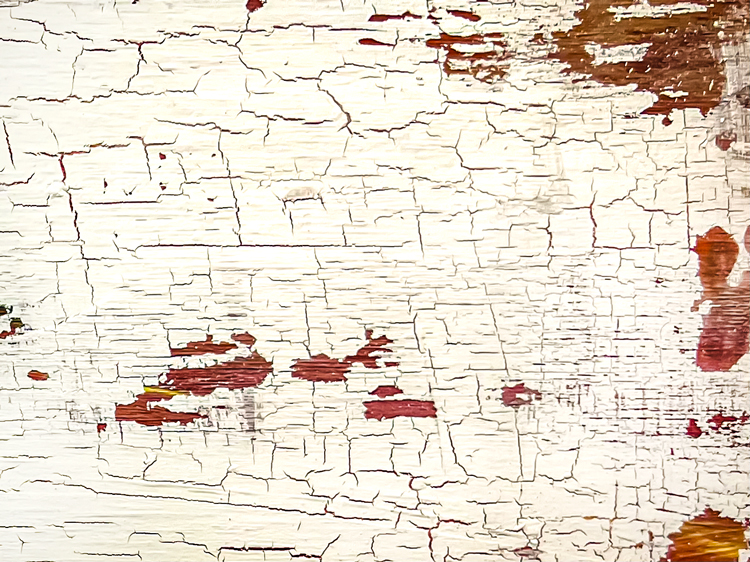
Here is a close up of the yummy cracks:
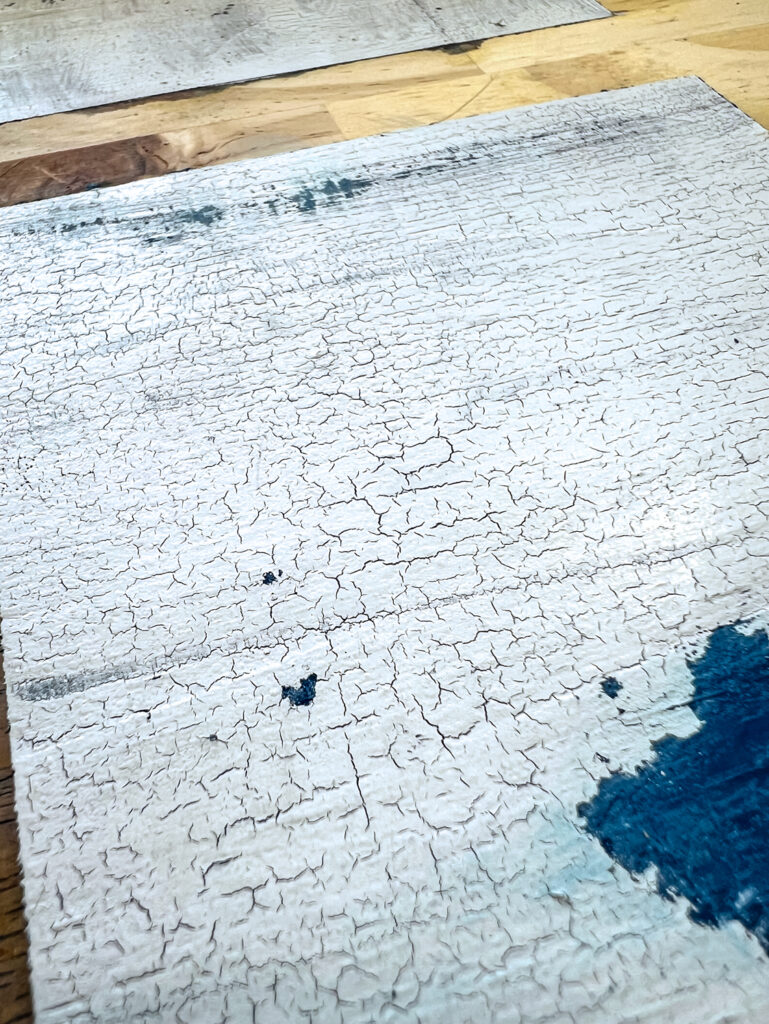
I tried four different products to create the backgrounds for my trials. They are:
- Acrylic Craft Paint (Top left)
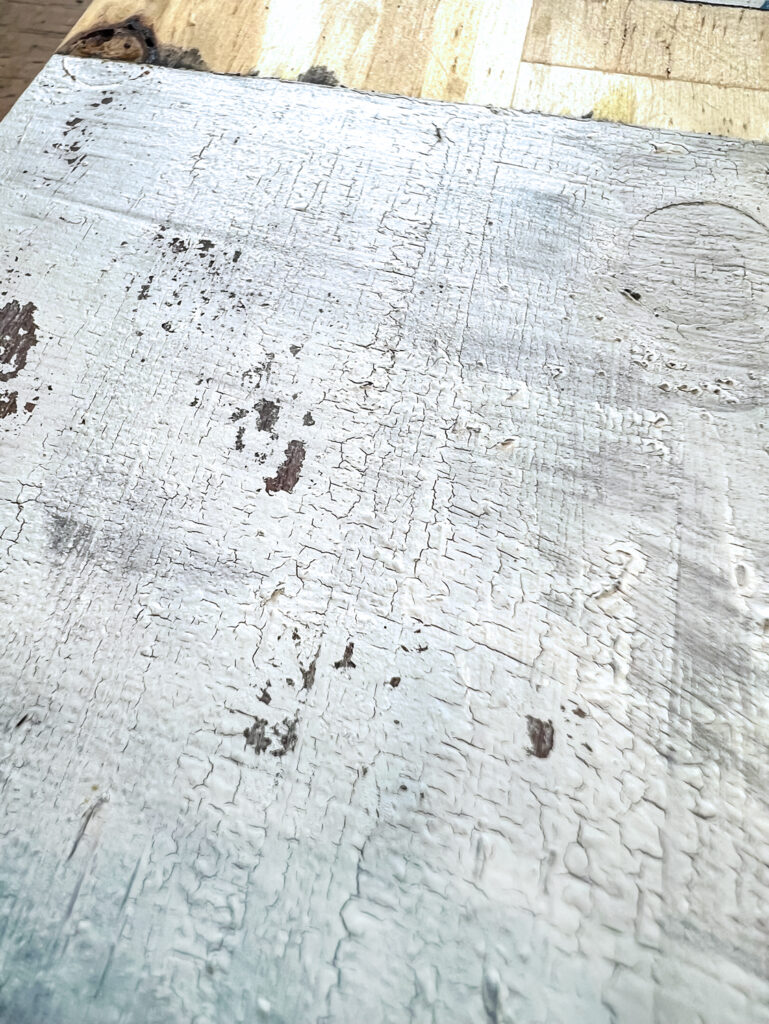
- Chalk Paint (Top right)
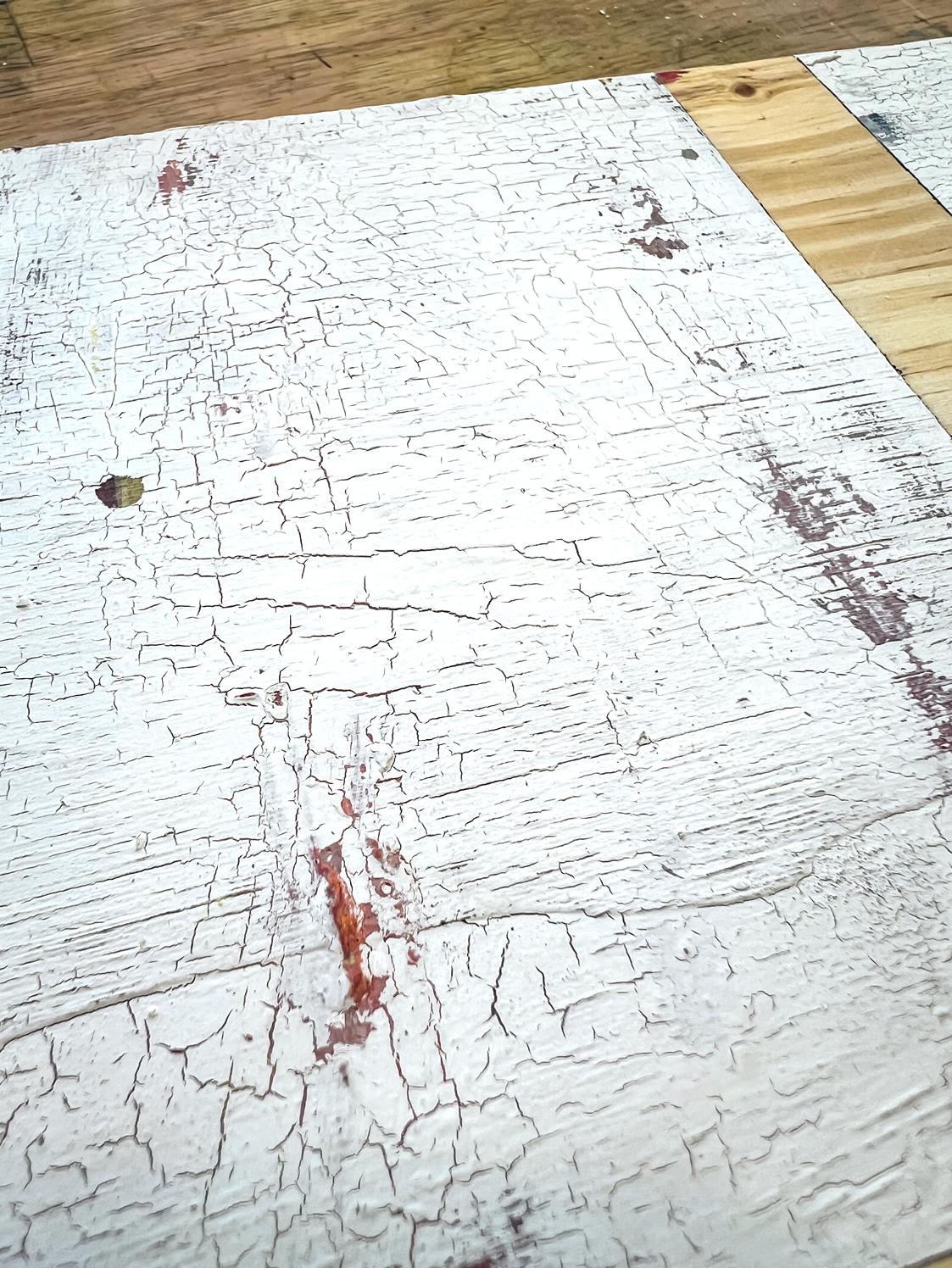
- Latex Paint (Bottom left)
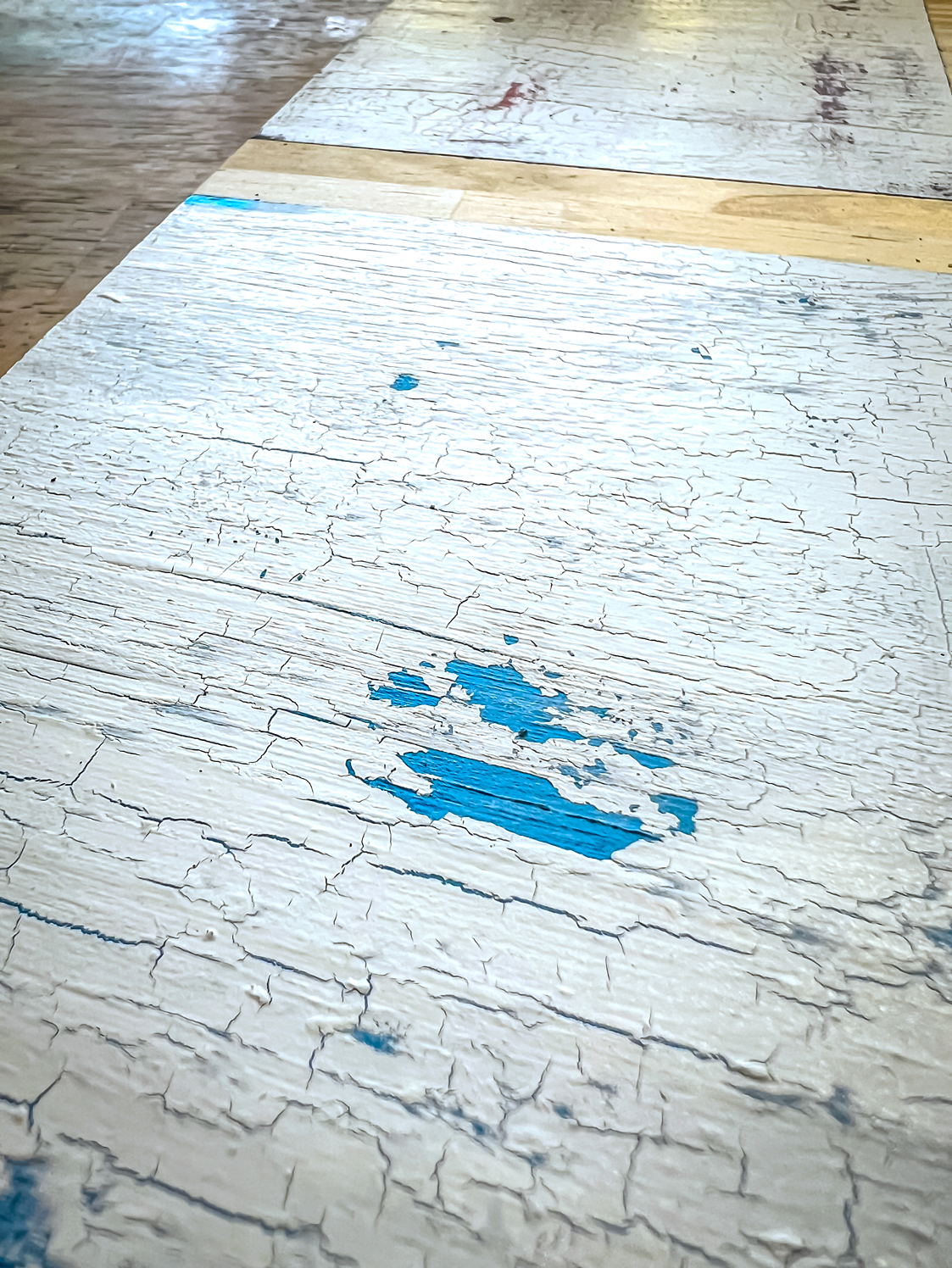
- Wood Stain (Bottom right)
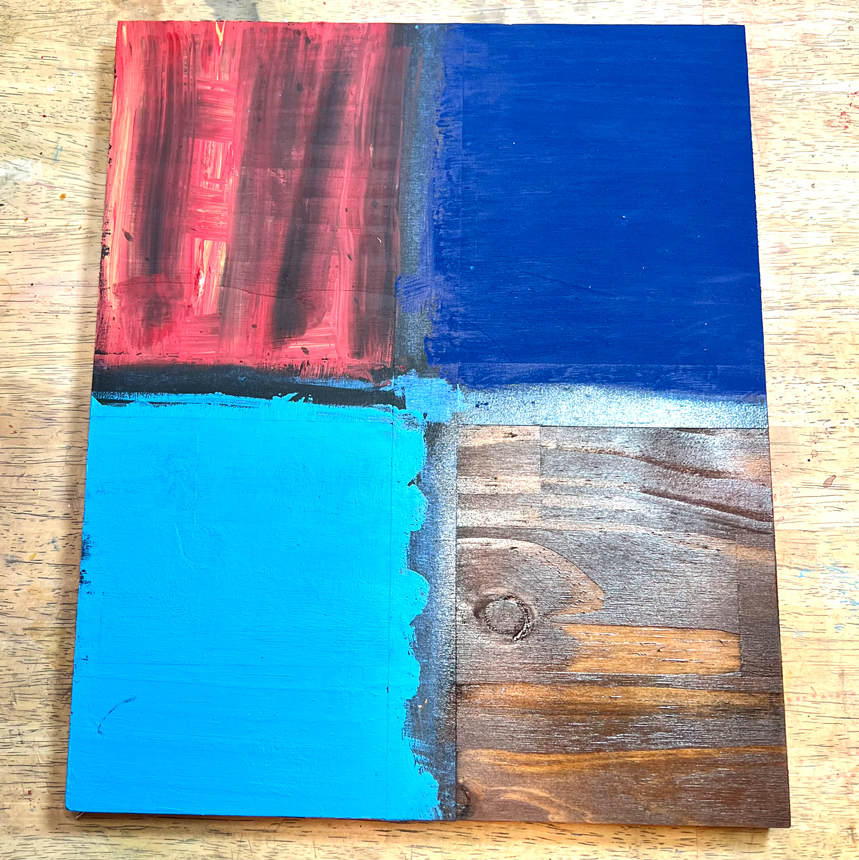
I will give you give you the pros and cons along with plenty of tips and tricks I have learned from my experience of painting professionally for decades. Let’s look at these options for creating your own unique and special artworks.
Here are the finished samples:
- Acrylic Background – simple to apply, many color choices, easy to find, cracks well.
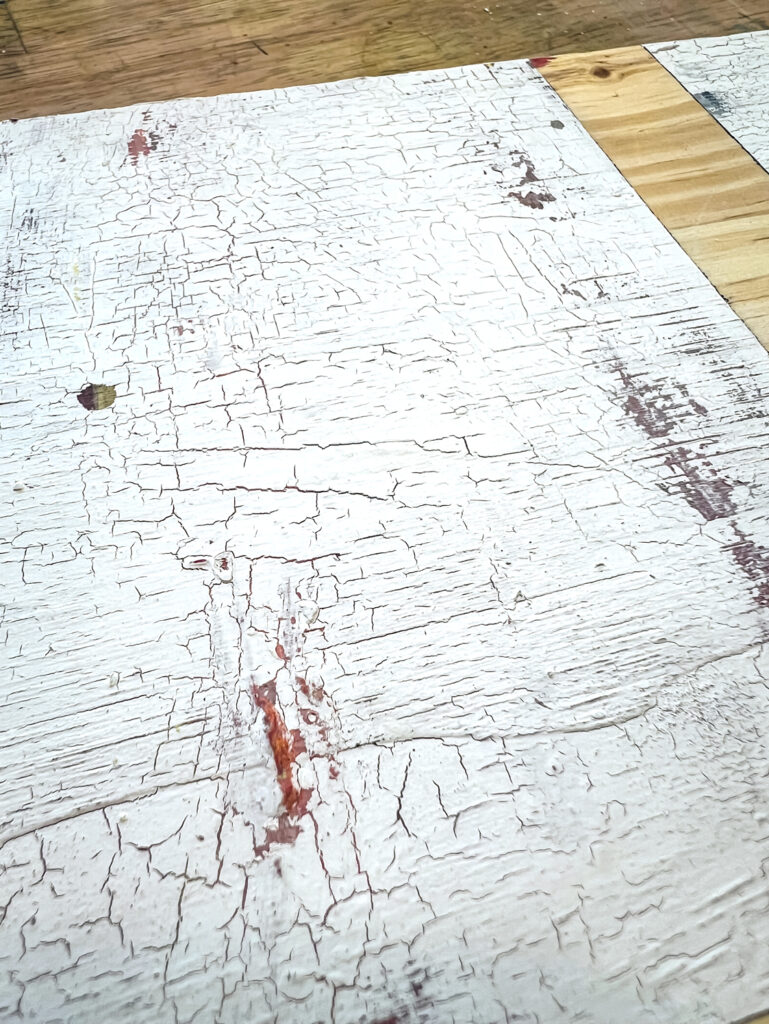
- Latex Background – simple application (roll or brush), many color choices, easy to find, cracks well.
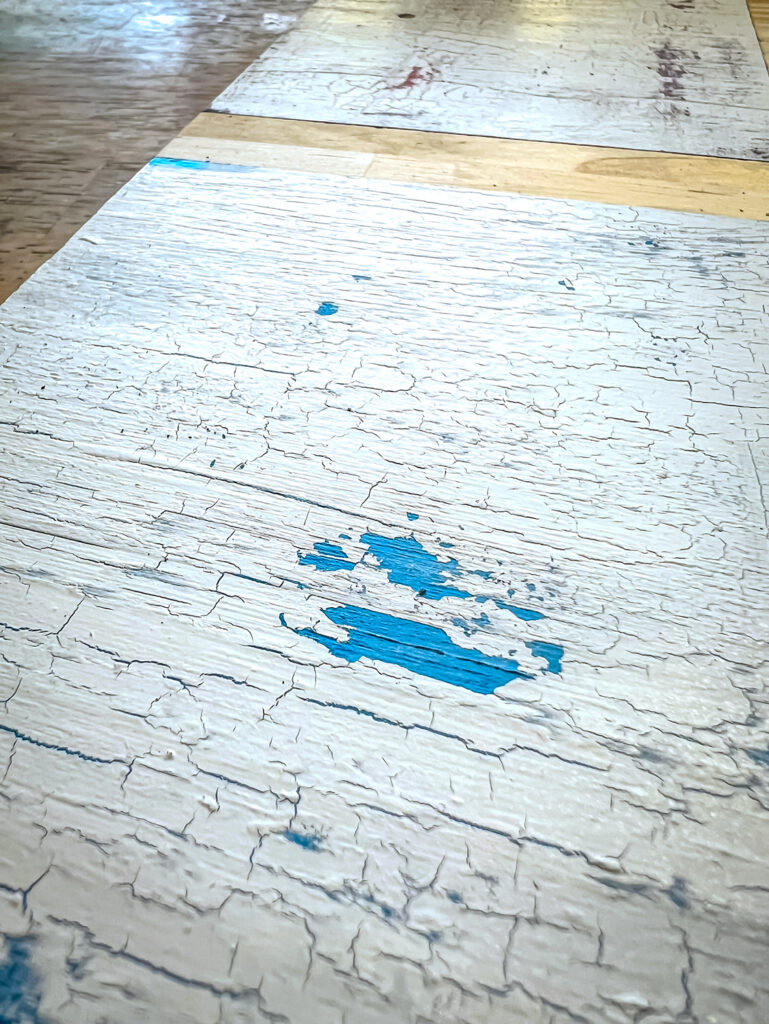
- Chalk Paint Background – simple to apply, several color choices, fairly easy to find, cracks well. I love the small cracks that I achieved with this product.
- Stained Wood Background – fairly easy to apply, limited color choices, easy to find, cracks okay.
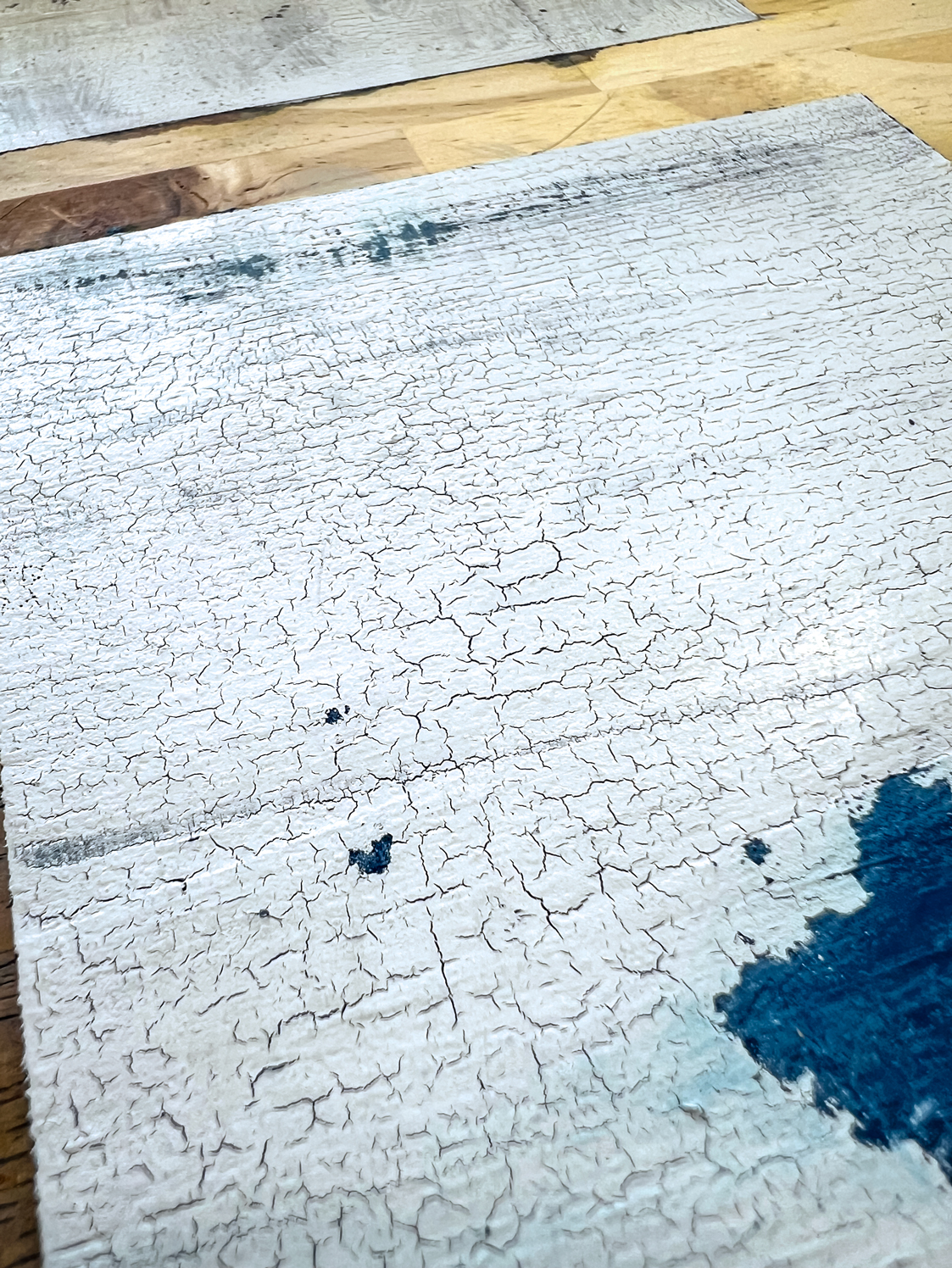
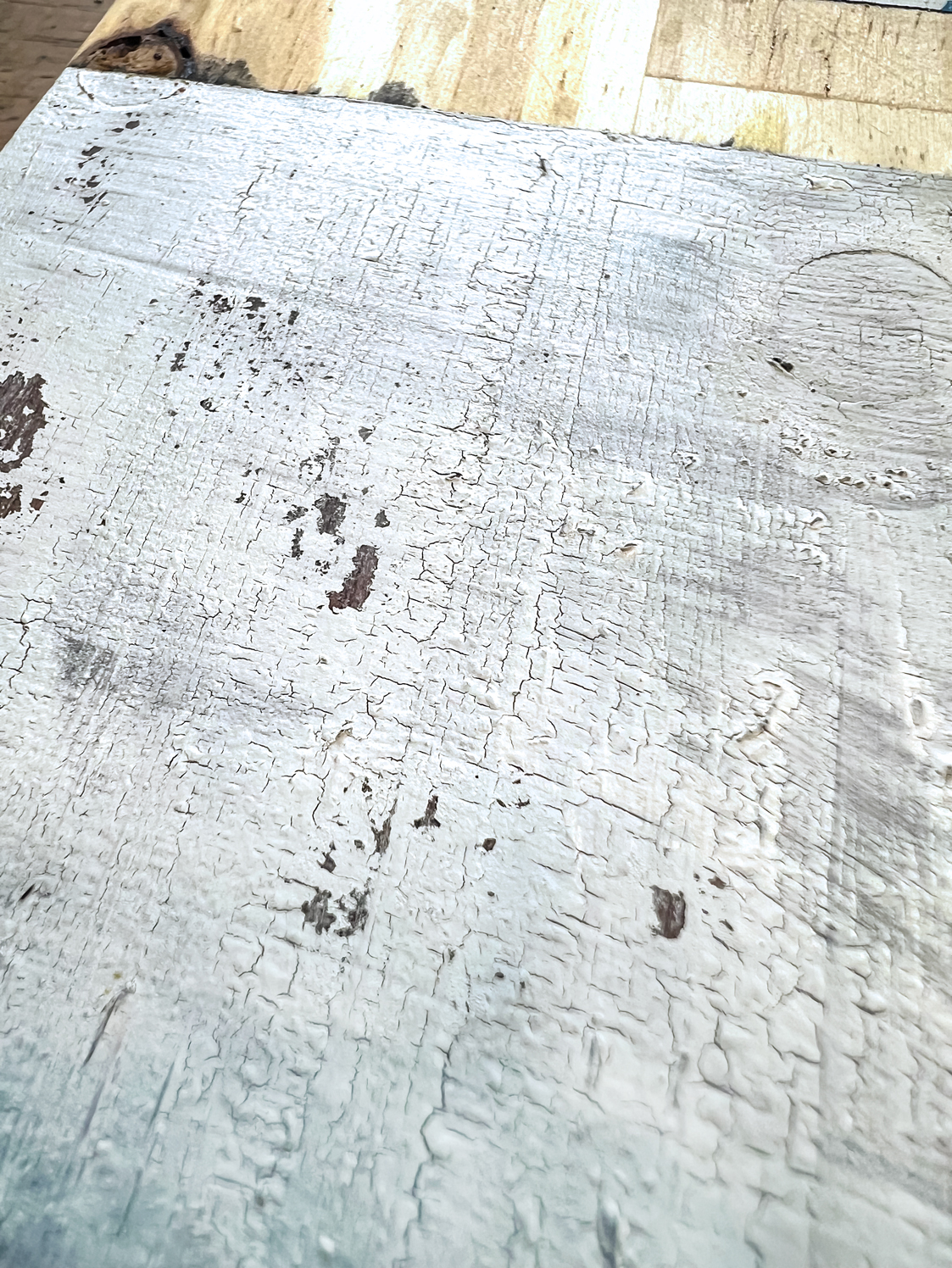
NOTE: I was surprised by this finish and the results. I was pretty sure before my experiments that this finish would be a little unstable. By that I mean: I thought it would be delicate and not too permanent. I was sure it would peel and chip off the wood. But to my surprise, it is stable and fairly rugged. I was even able to do a transfer on top of all four of the finished backgrounds… rubbing and rubbing to reveal the image. And the crackle stayed intact. So go ahead and do your thing with it!
Surfaces
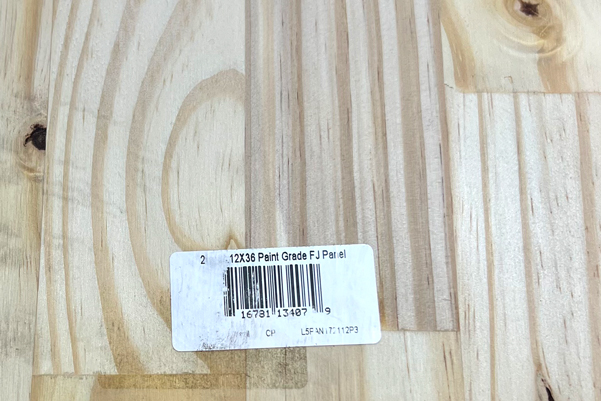
This technique is specifically made for wood surfaces. I bought a 12″ X 36″ piece of ‘paint grade’ wood and cut it to size (12″ X 10″). Other hard surfaces might work if properly prepared. You may have tried to crackle and had some success or you might have made a mess. That is how I learned that some surfaces work better than others. Although you can use these mixtures to paint paper and cloth, the flexibility of the surface will make the crackle disintegrate and come off.
Hair Spray
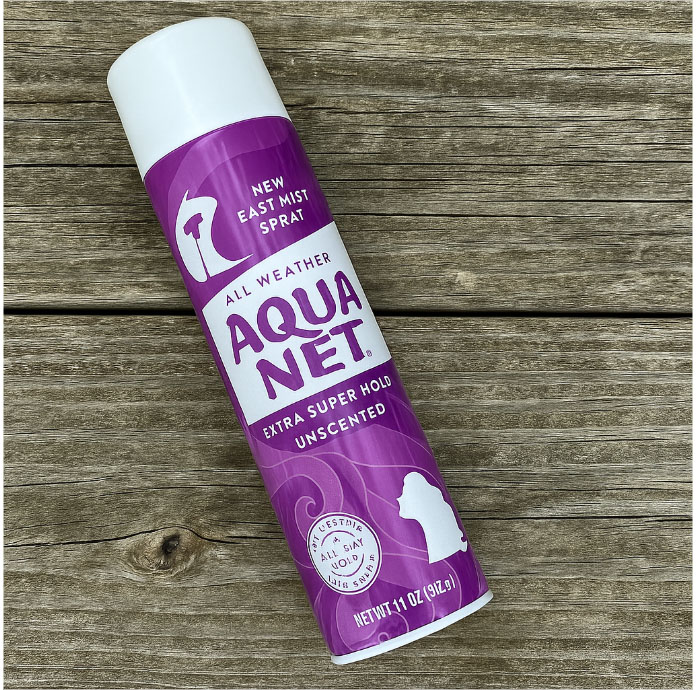
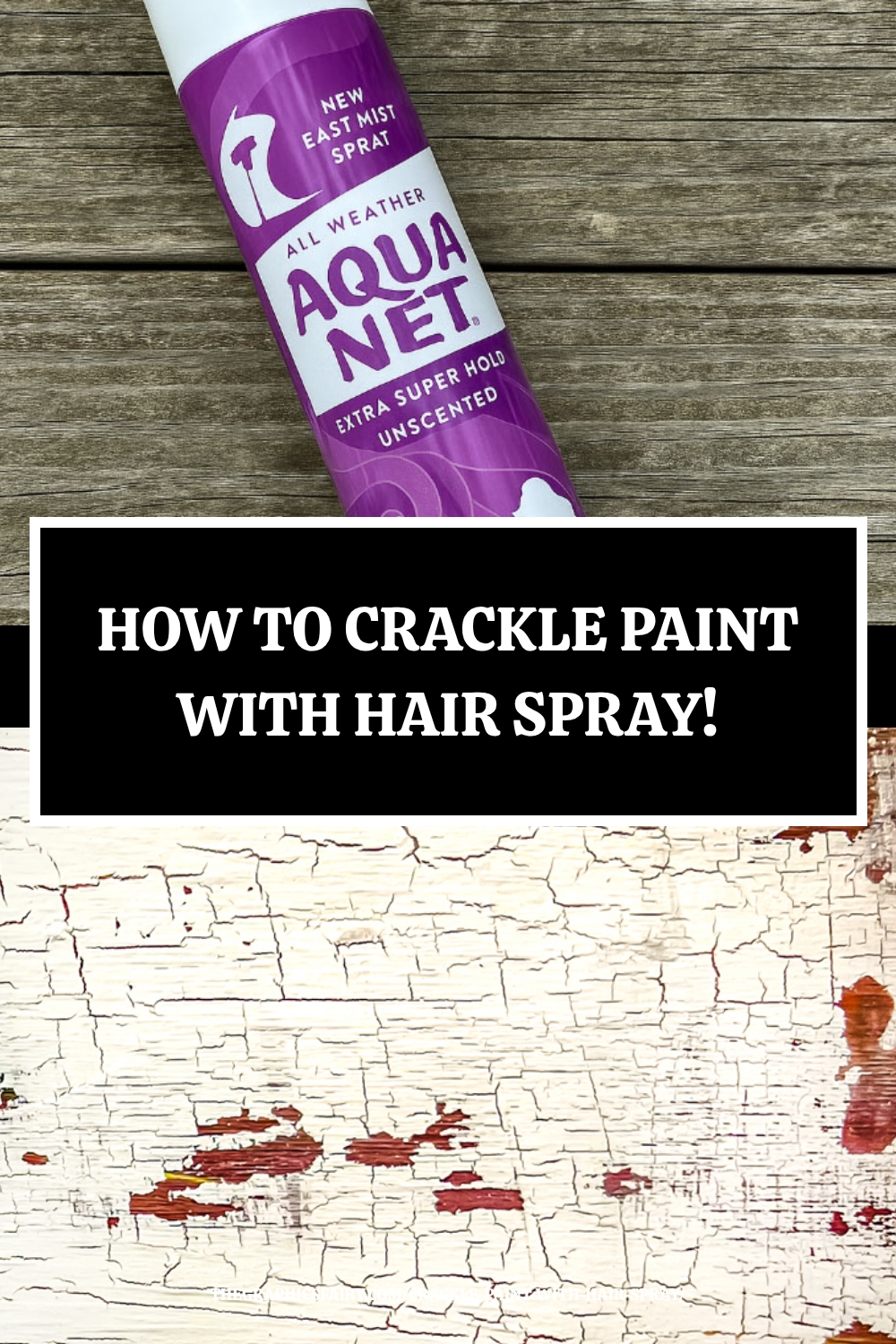
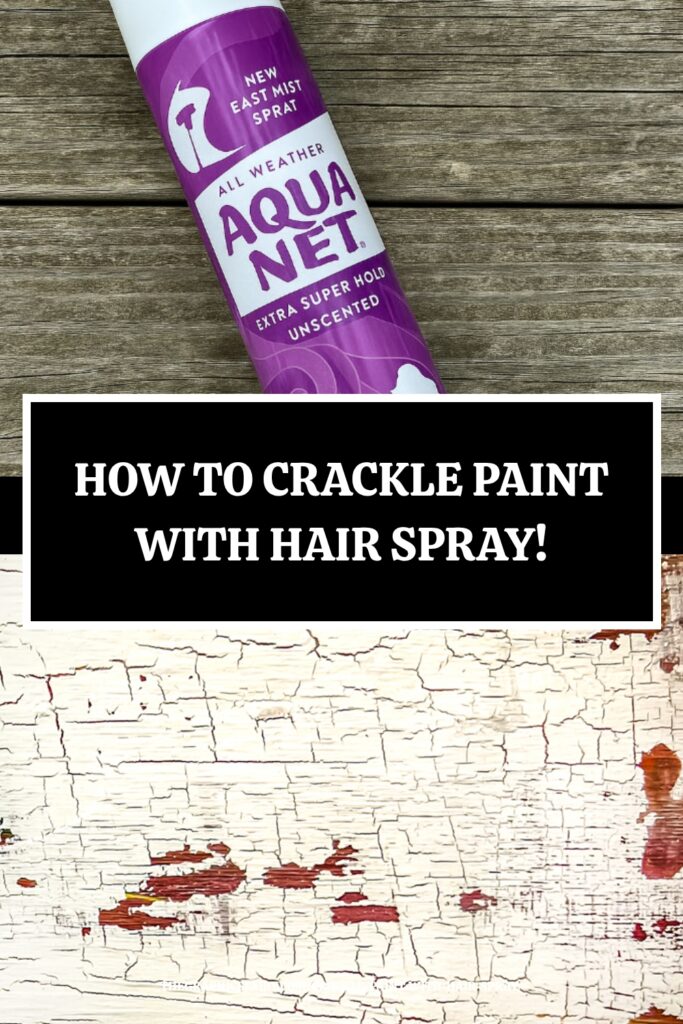
Almost any brand of hair spray will work. Aerosol and pump bottles both work. Caution: Be aware that aerosol hair sprays contain VOCs “Volatile Organic Compound,” which refers to the chemicals in aerosol cans that are harmful. There are many types of sprays as well – volumizing, shaping, working, texturizing, weightless, basic. I tried the good old basic Aqua Net for my experiments. But all should work. Use what you have is my motto.
Hair Spray Crackle 101
After my experiments, I decided to go with the acrylic craft paint background for my project. Why? Mostly because they are inexpensive, come in a wide variety of colors and finishes, and are easily found. You probably have several bottles in your stash already.
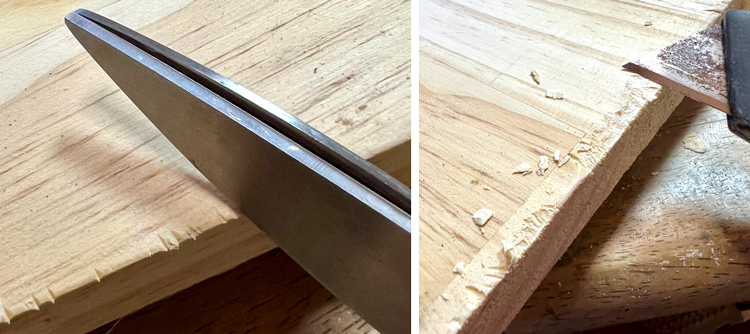
- Distress the Edges – I used a real wood surface (Paint Grade) purchased from a big box store. (It is soft pine and easily sanded. I distressed the edges with a utility knife and the side of my scissors. Since it is so soft, I was not afraid that I would harm my scissors. I did not beat up the surface, just the edges. We will allow the paint to do that for us. Then I lightly sanded the edges and the surface to smooth it for the painting. I wanted a rustic look. You can just sand the wood with our distressing if you want a more refined look.
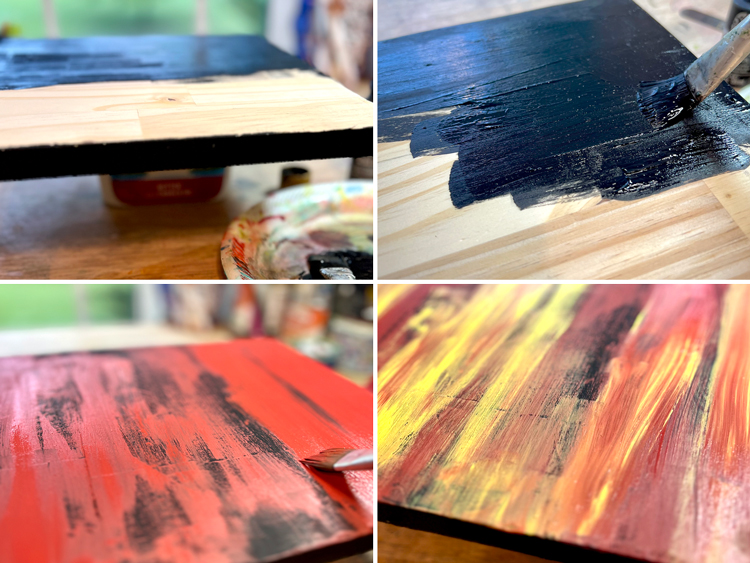
- Painting the Background – Coat the surface and edges with black acrylic paint. I elevated the surface on an old butter container (top left). Allow to dry for 10 minutes until it is no longer shiny. Use the background colors you desire. With the black background and two other acrylics, I have plenty of layers to show through the cracks and around the edges. I chose Tuscan Red and Lemon Yellow acrylic craft paint applied randomly over the black. I allowed some of the black to show through. Let dry overnight. TIP: It is critical that the paint be fully dry before you apply the hair spray.
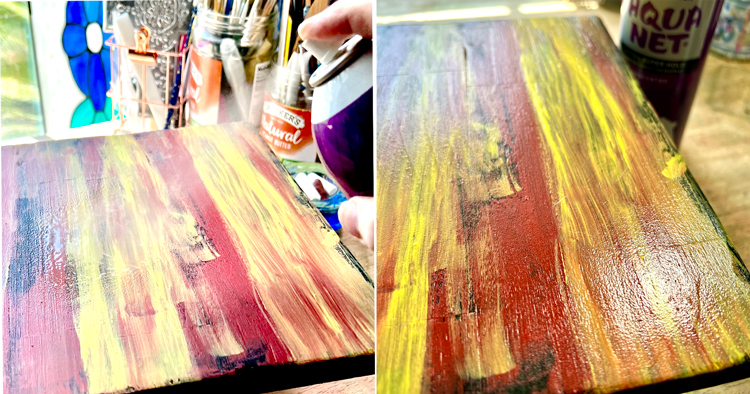
- Apply the Hair Spray – Spray the surface with hair spray – three coats. Hold the can several inches above the surface and move it back and forth in a steady motion. Keep moving. You don’t want puddles of hair spray. Let each coat dry completely before spraying the next coat. TIP: DO NOT use a heat gun to dry the spray. It can burn it. Just wait 10 minutes or place in front of a fan. You can use a hair dryer. Patience wins this game! The hair spray will leave the surface shiny as in the photo at right below.
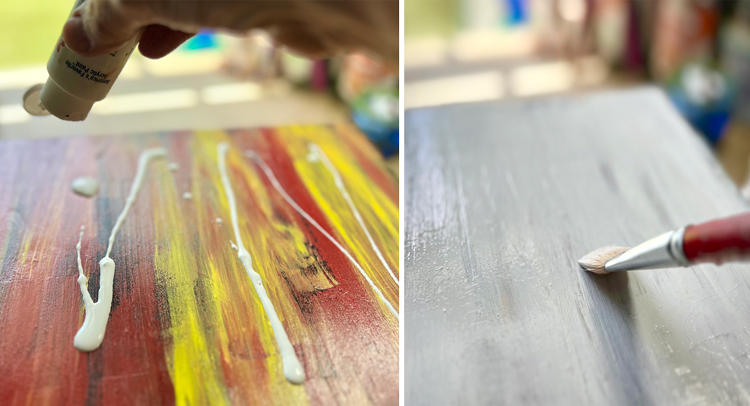
- Apply White Acrylic Paint – Apply white acrylic craft paint to the dry surface. You can actually use any color for this, but white seems to be the desired color for chippy paint. TIP: Use it full strength… do not dilute it with water. I just squirt it around the surface and spread quickly with a brush. TIP: Don’t over work the paint as it begins to crackle quickly. If you keep brushing until the paint is almost dry, the paint and hair spray can peel off. TRICK: You can brush the paint in several directions to make the cracks look more random. Brushing in one directs causes a more linear cracking.
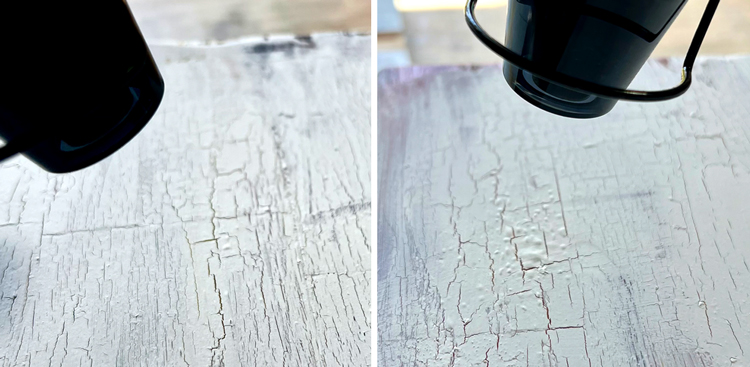
- Cracking the Paint – It will begin to crack quickly. You do the crackling process with a Heat Tool. Keep it on the low setting until you get the hang of it. Hold it away from the surface several inches and keep it moving. It can burn or bubble the paint if it gets too close or you hold it in one spot too long (See image at right)! Enjoy watching the cracks form!
- Let it dry completely before doing any finishing techniques.
Alternative Finishing Techniques
Here are a few optional finishing techniques I tried on this piece. Of course, I wanted to have a Graphics Fairy image on my surface! You can just display the crackled wood as is if you prefer. You can paint or decoupage over it as well.
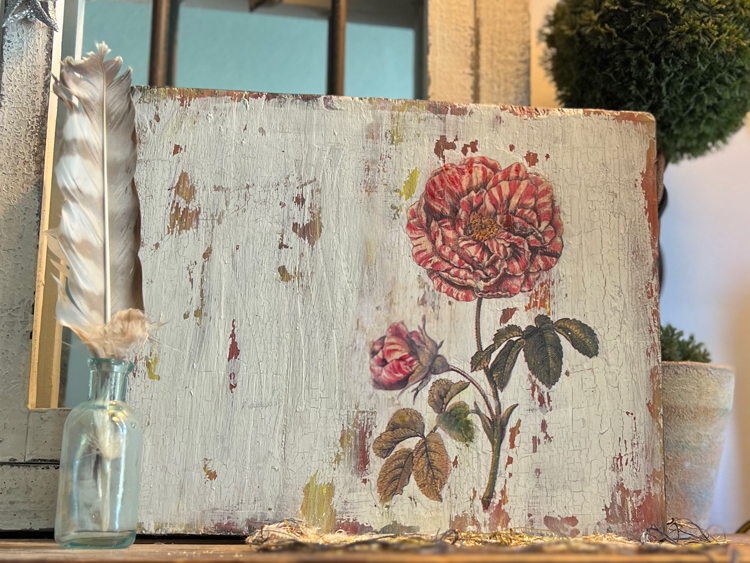
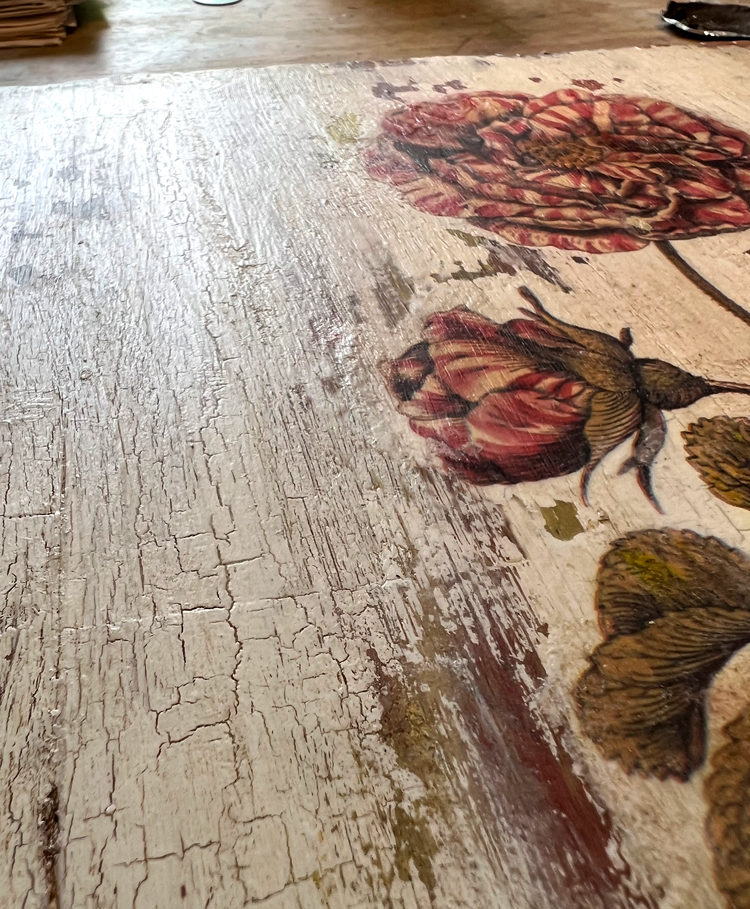
- Transfer a Graphics Fairy Image – I transferred this beautiful “Flamed Rose Flower” from a bundle on the Premium Site. I was a little afraid that I would rub off the crackled paint, so I experimented before doing this on my main surface. It worked beautifully. A little bit rubbed off here and there but it just added to the overall rustic look and feel. I used gel medium for the transfer method. Check out our 22 Transfer Technique Tutorials for step-by-step instructions. Below is the piece before antiquing wax was applied.
- Apply Antiquing Wax – I used warm brown antiquing wax to make the cracks pop. It is subtle, but makes a noticeable difference. It is challenging to capture this in photographs. The antiquing wax I used was made for use over chalk paint. It works well over acrylics too. Remember to use what you have and follow the manufacturer’s directions. Mine is not really wax, but gives the look of wax to painted finishes. You just paint it on the surface (I used a stencil brush) in small sections and immediately rub it off. The wax will stay in the cracks and enhance them and come off the surface leaving a warmth. You buff the whole surface 24 hours later for a nice sheen.
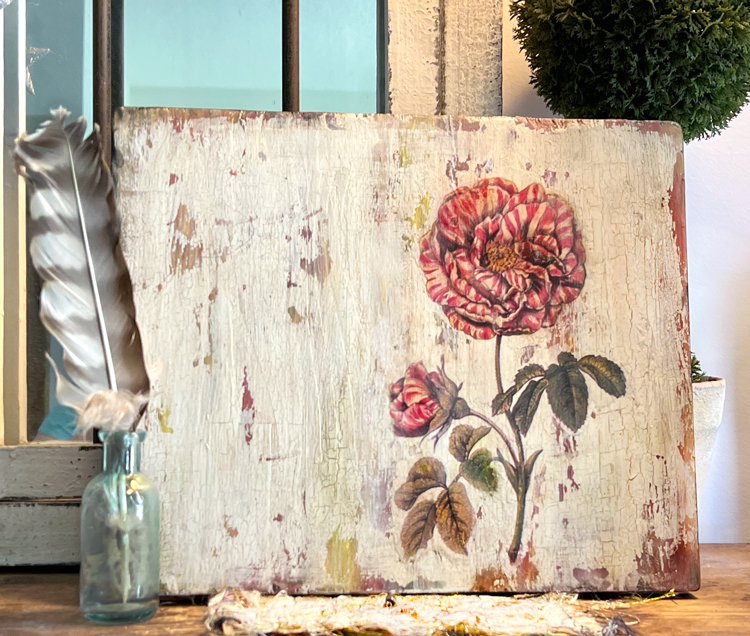
Below is a before (left) and after (right) wax image. You can see how the wax makes the cracks appear darker and even reveals some other textures.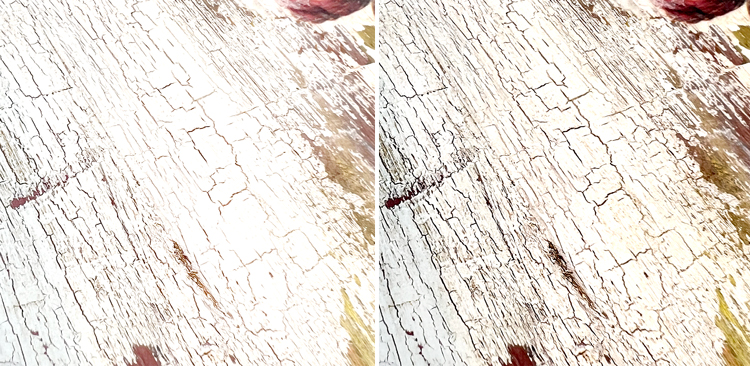
Below is a French Text transfer on the Stained Crackle. I adore the text transfers… Just remember to reverse or mirror the image before you print it so the text will read properly.
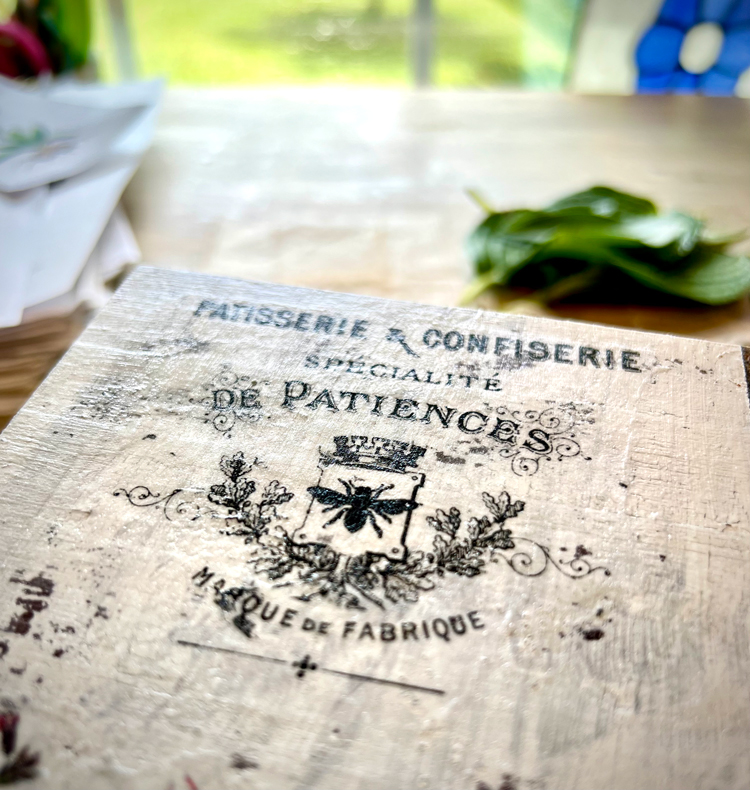
Here is a close up of the beautiful sheen the buffed wax creates.
I hope you enjoyed learning How to Crackle Paint with Hair Spray. If you want even more ways to get a Cracked Paint Finish try this post HERE. You might also like my post on How to Paint with Fabric Paint. When I am not creating for TGF, I also create Photoshop Elements tutorials and craft project videos over on The Graphics Fairy Premium Membership site. You can find even more of my books, art, and whimsical shenanigans on my website – The Bookery.
May joy be with you all,
Rebecca


Sheena Johnson says
I can’t wait to try this method! Thank you for sharing your process.
Karen says
You’re welcome! Happy crafting.
Leah says
Thanks for sharing this process! I have a vintage card catalogue (2-drawer) that isn’t very pretty, so it really needs this treatment!
Karen says
Hi Leah! You’re most welcome.😊
Carol Hake says
I cannot wait to try this!! I have tried so many different crackling techniques and none of them seem to replicate the real thing …. except for this! Not only do you provide the very BEST images for any subject (I mean ANY subject on the planet) I never come away from your site without something new and different for my projects.
Thanks!
Carol, Little White Dog Designs
Karen says
It means a lot to know our images and ideas are helping with your projects. Enjoy!! 🙂
Michelle Duncum says
So excited I found your site today!! Love this tutorial so much and will definitely be implementing this technique into my projects. Thank you and I can’t wait to see what else your site has 🙂
Michelle
Founder & Creator
Grit & Soul Co.
Karen says
Welcome, Michelle! So happy you found the site and loved the tutorial! 😊
Lorie says
What a great technique and your detailed step-by-steps with these photos and descriptions are so very helpful. I can’t wait to try this! Thank you so much.
Karen says
Hi Lorie. I’m so glad you found it helpful. Can’t wait for you to give it a try!
Marla Borntrager says
Love, the idea, I’m always looking for new ways to help with my designs thanks Marla 😊
Karen says
Happy crafting!