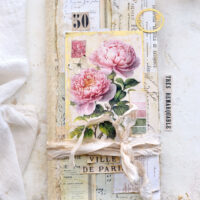
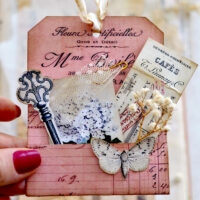
DIY Botanical Journal Tags
Hello, Graphics Fairy friends! I’m Diana from Dreams Factory and I’m happy to be here again to share another creative project with you! Today, I will show you how to make these absolutely gorgeous Vintage DIY Botanical Journal Tags with beautifully layered elements and a lovely touch of gold. You’ll only need a handful of supplies to make the tags, but the best part is that they are really easy to make. I will show you what you need to consider and how to aesthetically layer all the separate elements to create depth and add dimension. Our goal is to create final pieces that look intriguingly sophisticated!

This post may contain affiliate links which won't change your price but will share some commission, you can find our privacy policy here.
I wanted the tags to have warm, melt-your-heart tones, so I went with orange and yellow for my top choices of colors. I love these two colors for this time of year, so the tags can be easily included or associated with other seasonal fall projects. But they are quite universal too, so feel free to include them in any other projects if you feel inspired! Think color matching or botanical themed junk journals, gift tags, the sky is the limit here.

DIY Botanical Journal Tags Free Printables:
I used two vintage backgrounds to create the base for our tags and a few absolutely beautiful French ephemera cutouts to create the layered elements that we will add on top. You can never go wrong with color swatches, if you ask me, so I added some matching color swatches, too. And finally, our gorgeous yellow cotton flower and orange fruit plant with white flowers! Our focal point images with warm tones bring so much life to the finished tags, making everything put together and harmonious!
You can print this as many times as you want if you need to make more than two tags!

—-> Click HERE to Download the Full Size Printable PDF <—-
Supply List:
- white cardstock paper
- home printer
- regular scissors and manicure scissors (to cut the smaller details of the leaves) OR a cutting machine
- mini distress inks
- blending tool with foams
- Glossy Accents, paper glue stick or any other craft glue
- Decocolor gold marker (or gold acrylic paint, gold watercolors, even gold nail polish)

STEP BY STEP TUTORIAL:
Start by printing your printable on cardstock paper and use your scissors to carefully cut all the paper elements. As you can see, I added a small background between the leaves of each of our botanicals when designing them, so you’ll only need to cut on the outside. This is sort of a shortcut that will make things easier for you, as the space between the leaves can be quite difficult to remove.
The small background between the leaves matches the vintage background on our tags and will make everything blend in even better, without having to put too much effort while cutting the paper. Of course, if you have ninja cutting skills and feel confident enough to tackle that area, you can simply remove that section too.
Make two small piles and group all the elements from each tag into one of these piles.
P.S. If you want to use a Silhouette cutting machine, you can download and add the .png printable image (not the .pdf file) to your cutting machine. I usually add it to match the inside of the Registration Marks in the specific software (this will make the printable slightly smaller), I print it, I adhere it to the cutting mat and then send it to cutting.

Use your favorite brown distress ink to give the paper a lovely vintage vibe. Go all over the edges and apply more or less pressure, depending on the level of vintageness you want to create. Try to completely cover the excess white paper that might have been left behind here and there. I started with the orange fruit botanical tag.

You can see below a side-by-side comparison of regular paper elements and distressed ones. I’m always blown away by how different the paper can look after performing this distressing ink ageing technique. A quick and easy, quite fun I would say, process with such amazing final results! It’s like the paper is instantly brought to life and has so much more character!

Move on to distressing the cotton plant tag and watch it transform right under your eyes.
Be careful while distressing any of these two botanicals, but also the smaller cutout elements, as they are quite fragile and need to be handled with care. You will see that you’ll need to slightly fold (and then unfold) some areas while distressing them, so you’ll be able to get into all those small crevices.
After distressing all the edges of our paper elements, I’ve decided to brush some ink on top of the long vertical French ledger cutout, too.
P.S. Try not to add too much distress ink (or avoid completely if possible) on the small background between the leaves. Our goal is to keep that area as clean as possible so it would match the background underneath.

You can keep the vintage background as it is or you can add a touch of gold on the edges, as I did. I realized at this point that I could have skipped distressing this element in our previous step and directly applied the gold, so you can keep this in mind while making your tags.
I used my favorite Decocolor gold marker, but first, I placed a small plastic bag underneath. You can use a ruler if you want to make the gilded edges extra smooth or you can freehand. I went with the latter because I like to keep things uncomplicated and even imprint that perfectly imperfect feel.

And now it’s time to assemble our beautiful tags! Place the vintage background base on your table and gradually layer all the elements on top, but without gluing them first. I added the vertical ledger cutout on the right (and slightly outside the top edge), the color swatches on the left (and slightly outside the left edge) and a few of the French ephemera cutouts on the upper side of our first tag.

I then added the orange fruit plant on top, while keeping some of the leaves and the fruit outside the right edges.
I moved the color swatches lower on the tag and finally, I arranged the last two French ephemera cutouts on the lower side of the tag. My idea was to make the French address look like it is placed on top of the stem and the orange fruit, but also slightly tucked inside the leaf on the left. All these small details will add so much depth and dimension to the final pieces and will make everything visually appealing.

Proceed to arrange the elements of the other tag and try to group and layer the elements in a slightly different way. Move things around to find the best places for each element until everything looks beautiful and put together.

Of course, these are just a few guidelines or suggestions on how you can arrange the paper cutouts, the final decision will be all yours! You should love how everything looks together and when you do, you can use paper glue to adhere each element to its final position. The final results will be absolutely gorgeous nonetheless!

I have to confess that even though I envisioned the concept and created the design for these beauties, I was quite surprised by how amazing everything looked together afterward. They somehow exceeded my expectations and managed to surprise me in the most pleasant kind of way!

I hope you will be pleasantly surprised too, as you admire and discover one by one, your beautifully layered elements. I would say that layering is definitely the key here, so try to play around with the separate cutouts to create layers of chicness and make something truly unique.

Try gluing some elements completely on top of each other or only letting small portions overlap to create depth. Feel free to go outside the edges to add even more depth and dimension.

On some of the elements, add glue to the whole surface of the paper, while also keeping some areas glue-free on others. For example, I only added glue toward the center of the botanicals and kept the edges without any glue. This will make the paper curl in some areas and will make the plants look more realistic and intriguing.
P.S. If you want, you can also try to lift and slightly bend the edges of the leaves here and there to add even more dimension.
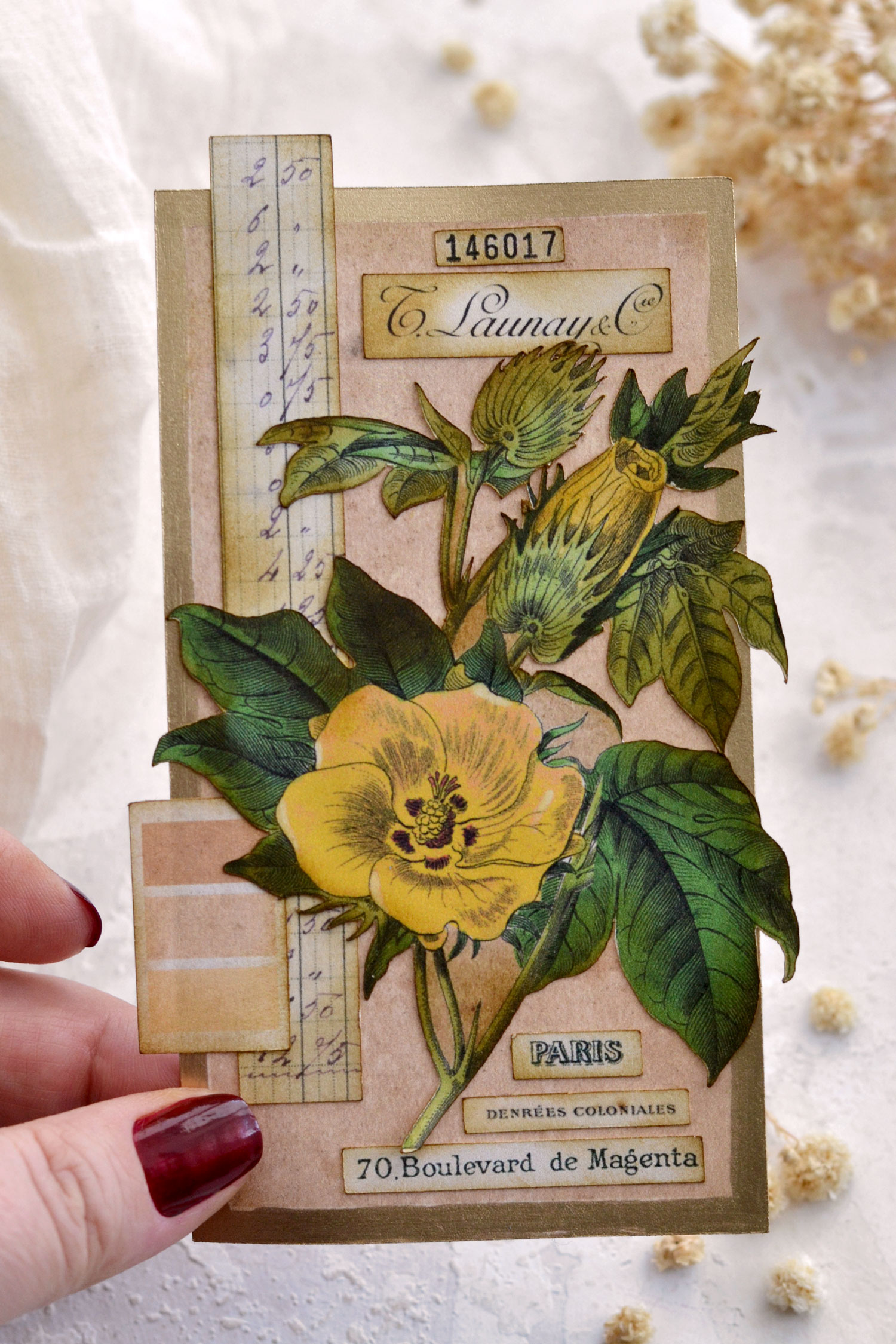
I couldn’t necessarily decide on a favorite, as I loved how both these beauties turned out. But if I had to pick just one, I think I would go with the orange botanical tag! Which, by the way, will look amazing and will instantly add so much charm to your junk journal pages! So if you love to add all sorts of beautifully layered pieces of ephemera to your journals, one of these vintage beauties will definitely be the right choice!

I hope you will love this project and decide to give it a try! The process itself is uncomplicated and you’ll have so much fun layering all these beautiful elements! I would definitely recommend the subtle gilded edges that look amazing and quite different every time the light touches them. Use a gold marker if you have one around, but if you don’t, you can also use gold acrylic paint, gold watercolors or even your favorite gold nail polish. Feel free to improvise and adapt things to what you have on hand, gold usually adds a new level of chicness and so much charm to any of your projects!
 You might also like my Fall Journal Tags HERE.
Happy crafting,
Diana | Dreams Factory