Comprehensive Guide to Chalk Paint®
Have you ever wondered what Chalk Paint® is and how to use it in your home and your art? We are going to learn all about that today in The Comprehensive Guide to Chalk Paint! First, let me tell you that I have known the inventor of Chalk Paint, Annie Sloan, CBE, for many years. When I told her I was writing this post she told me, “The Graphics Fairy is a huge favorite of mine!” So she has much in common with all of us.
This post may contain affiliate links which won't change your price but will share some commission, you can find our privacy policy here.
Chalk Paint is Not Just for Furniture!
I especially enjoy learning about and sharing with others the many fascinating tools of the art world. My ‘go to’ paint for many, many art ideas is Chalk Paint. It is used today by almost all artists and crafters for a variety of creative pursuits. This guide is everything you need to know about this versatile art supply! I will be doing a future post about how to use Chalk Paint in Mixed Media and with our beloved TGF images. Look for it!
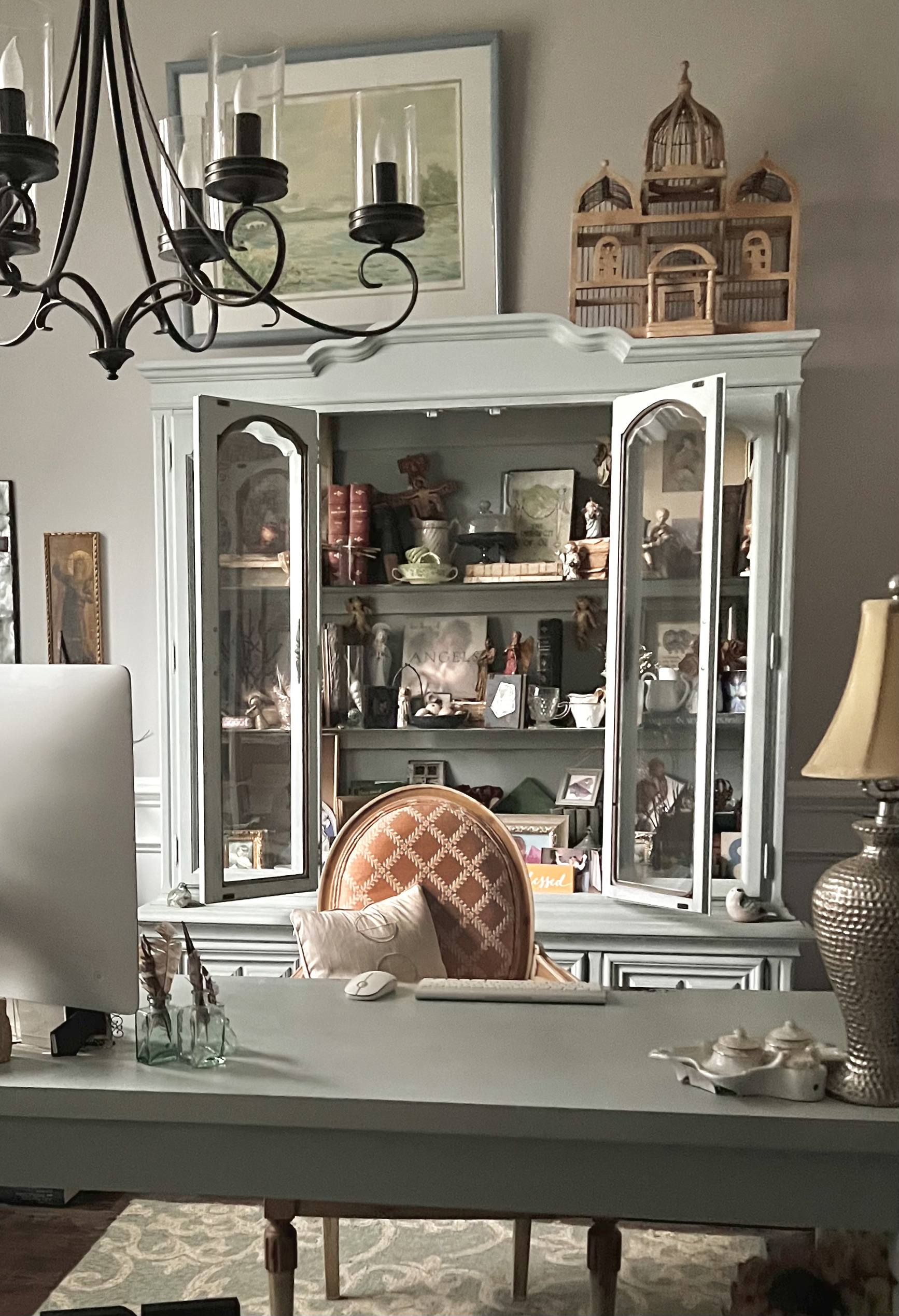
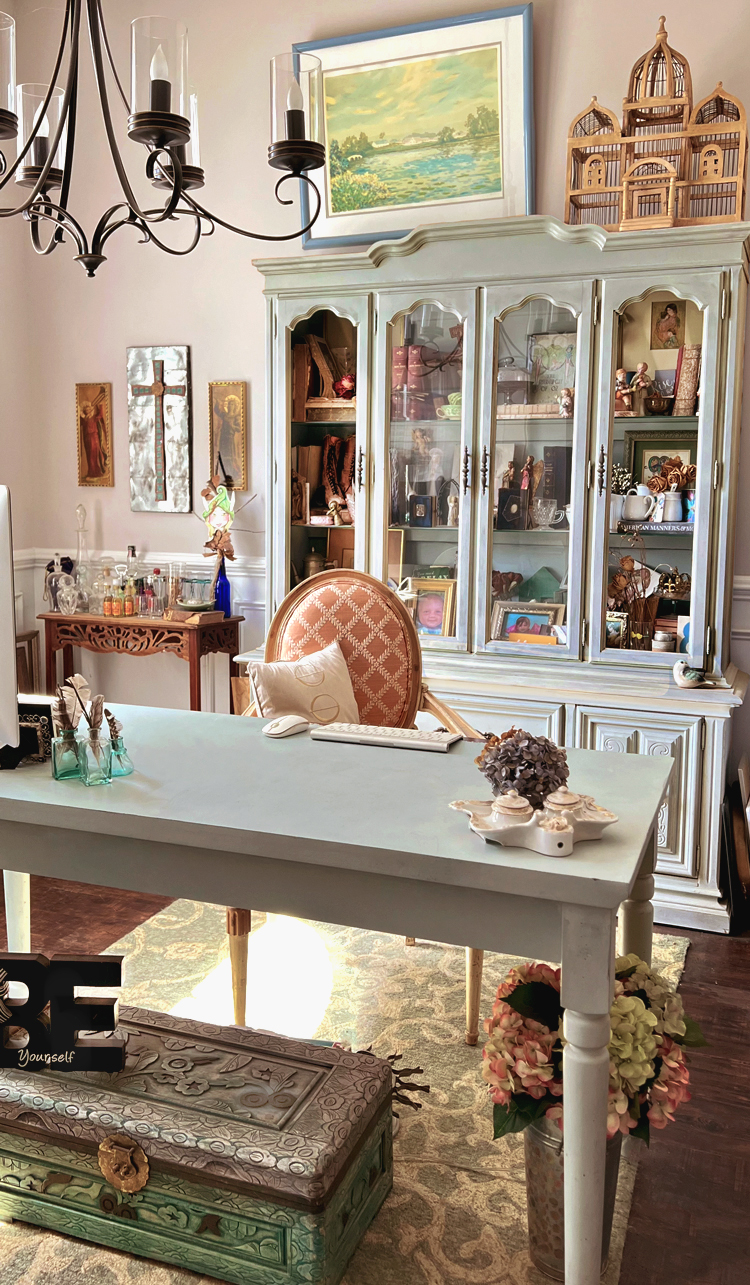
Many of you know that Chalk Paint is to answer the need Annie had for a paint which would have numerous uses – from acting like limewash to making furniture look old. She also wanted a good range of color that could be extended by the user. This paint is very easy to work with and allows people to be creative as one doesn’t get involved with all the technicalities and drudgery of preparation. Additionally, it also allows you to change your mind without hassle. I have used Chalk Paint all over my home and in my artwork. My very favorite CP project is my office furniture. The shelves contain loads of my artwork. I smile and think of Annie every time I see this space.
What is Chalk Paint?
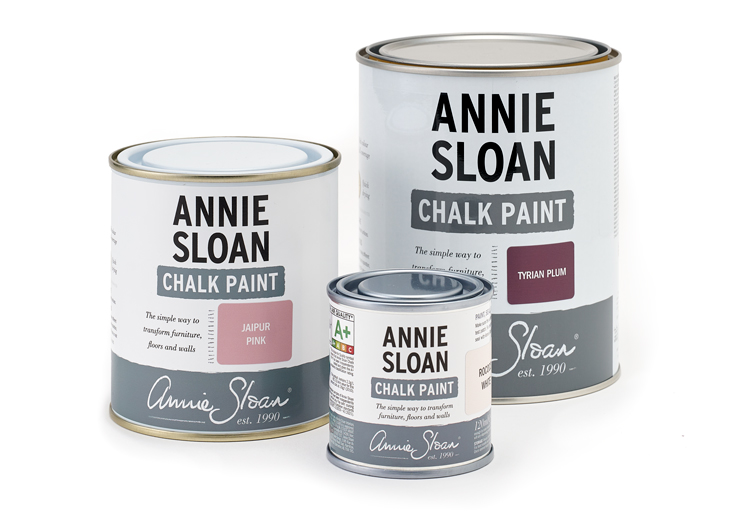
The original Chalk Paint was formulated 36 years ago, in 1990, by British artist Annie Sloan, and today there are numerous copy cat brands that use variations of it. However, many artists and crafters consider Annie Sloan Chalk Paint to be the premier choice for all of their projects, and the general consensus is that her version is still the best in the industry. Chalk Paint is a water-based latex paint that has a proprietary fine powder added to it, producing a matte finish which has a ‘chalky’ look and feel. It is available in many different colors. The great benefit for DIY projects using Chalk Paint that it is easy and fun for everyone to use. Creating a distressed, antique look to furniture and other items is the primary focus. But we can use it in our mixed media, collage, book making, card making, etc. too.
Chalk Paint is a very special paint for many different reasons. Here are some ideas:
- You can use the paint by diluting it with water to make a wash for showing the wood grain
- You can use it as an impasto (thickly) – leave the lid off to thicken
- The colors are mixed intelligently and the web site shows how you can adapt your colors for your use
- It’s flexible so you can be creative and change you mind
- The paint can be washed off of your brush even when you find your brush weeks later. [I never have to do that of course.]
- It has extremely low VOCs so it is good for the environment
- It doesn’t form a skin on it when you leave the lid off – just add some water if it’s too thick
- Very little black is used in the manufacturing so the colors are mixed with thought
How is Chalk Paint Used?
Chalk Paint can be used on various surfaces such as wood, glass, plastic, metal, existing paint or varnish, and fabric (with proper preparation), along with brick, concrete, stone and terracotta. Chalk Paint is easy to brush on surfaces and is also quite simple to create a distressed appearance. Unlike other types of paint that tend to tear or break apart when sanded, chalk paint simply wears down and leaves an antique look.
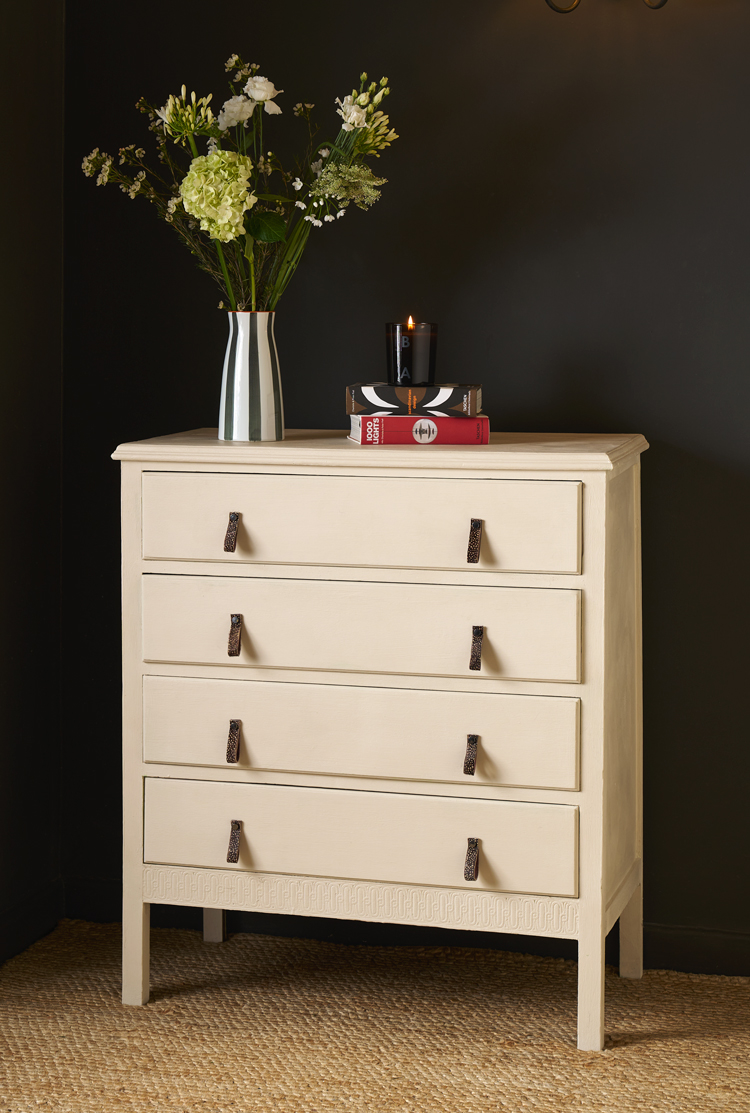
Interestingly, a piece of furniture can actually look better with Chalk Paint by producing the desired effect of an antique ‘shabby chic’ style by leaving visible brush strokes or areas where less Chalk Paint is applied, revealing the color beneath. It’s almost like making perfect mistakes, which is another reason why anyone really can use Chalk Paint without being an experienced or talented painter. To achieve a uniform solid-color finish, brushing two coats of Chalk Paint is recommended. Apply the second coat after the first one has dried in 1-3 hours. Being a water-based paint, Chalk Paint is also easy to clean up with just soap and water.
Prep Work
Can You Skip Sanding and Priming?
Chalk Paint is extremely popular for DIY projects because of the ease of use, requiring minimal to no prep work at all like priming, sanding, or stripping before use. Cleaning a surface thorougly before painting is just about the only MUST do. In most cases you can avoid sanding and priming a piece before using Chalk Paint. However, if the old paint on an item like a piece of furniture is peeling or chipping off you might wish to remove it first by scraping or sanding. Another situation that may require light sanding before painting is if the item has an unusually slick laminate or gloss surface. Just use your best judgement and test a small area before you do the whole piece.
Application
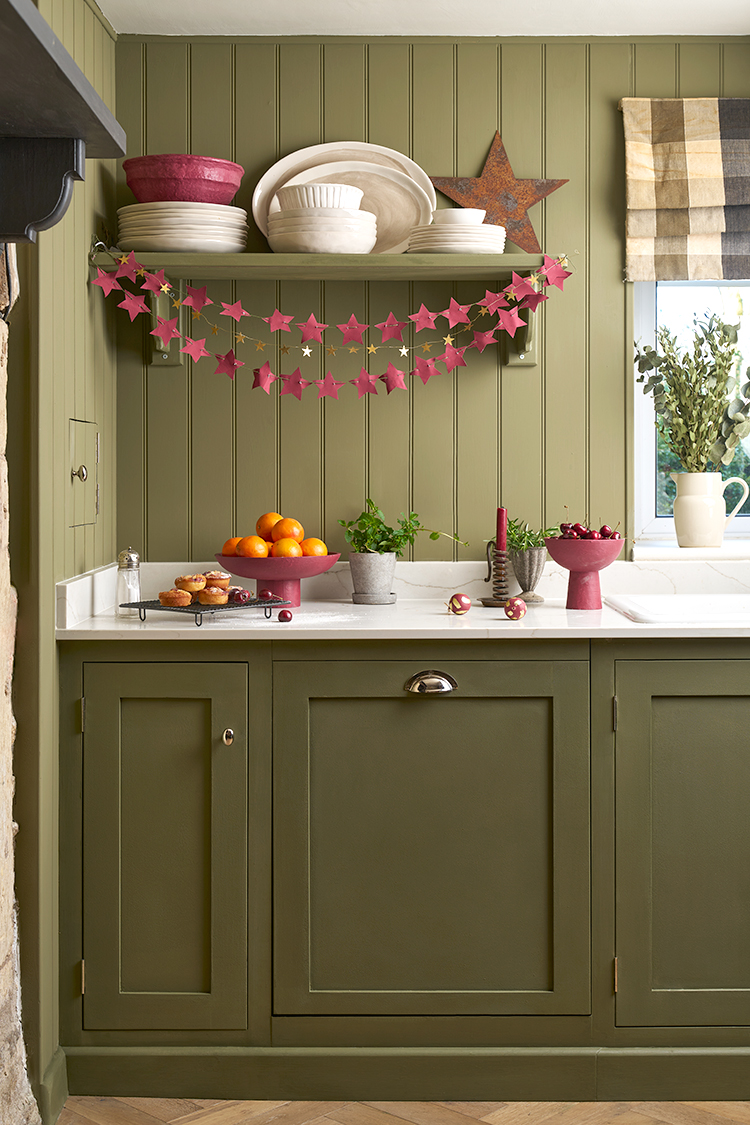
Refinishing of items like furniture, tables, and cabinets, along with home decor items is what has been especially popular with Chalk Paint. Rustic farmhouse interiors is a common theme enjoyed by many crafters for its use. There are two types of distressing for creating the ideal antique look per Annie Sloan.
Natural Distressing:
- Let the paint dry completely
- Use fine sandpaper on edges and corners
- Focus on areas that would naturally wear
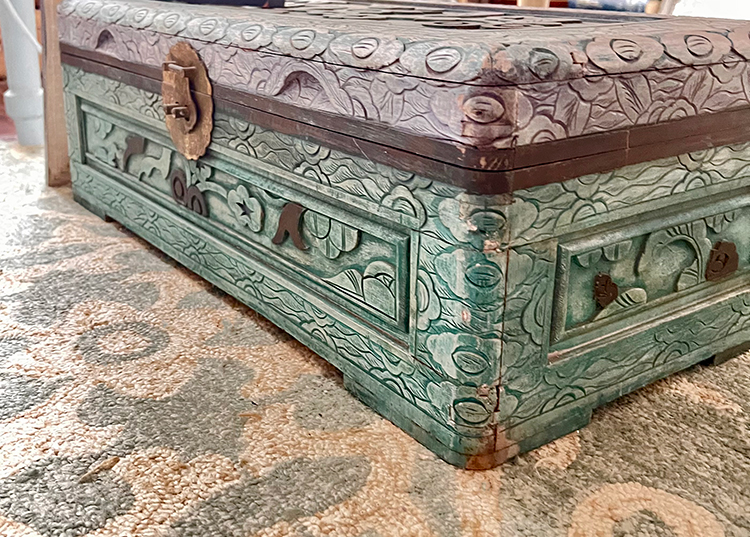
Wet Distressing:
- Apply second coat while the first is still wet
- Use a damp cloth to remove some paint
- Creates softer, more natural effects
Chalk Paint Brushes
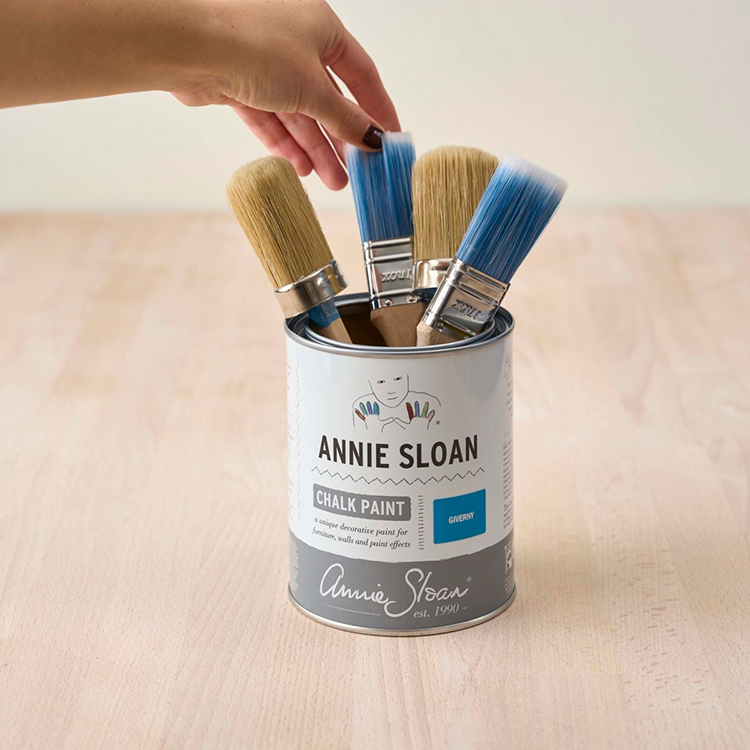
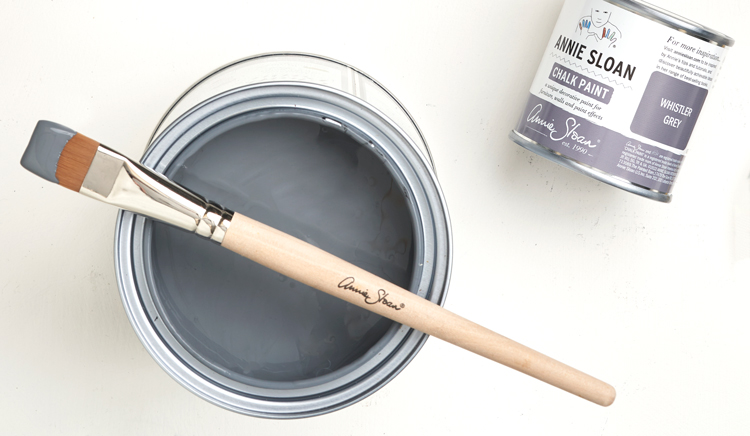
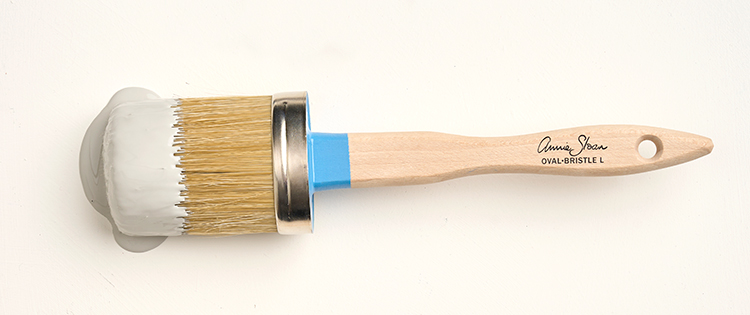
It should be noted that Annie Sloan brushes are designed specifically for chalk paint and come in several different sizes and shapes. They provide smooth, even coverage and work well with the consistency of the paint. And they are so pretty to display when not in use.
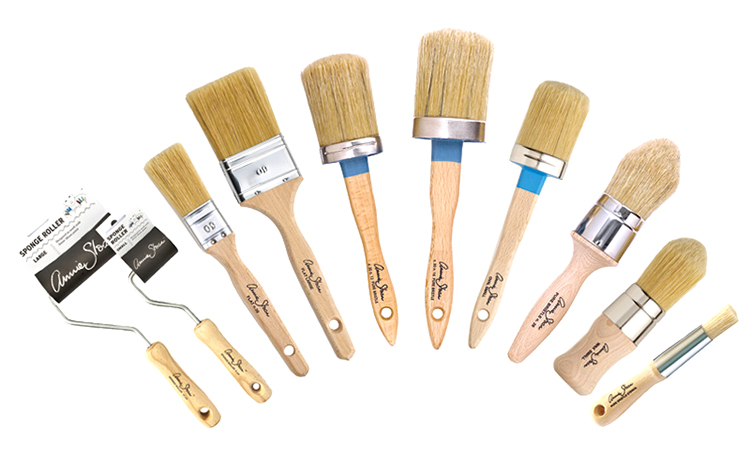
Round and oval brushes with natural bristles are the standard ones for holding a large amount of paint and enabling easy strokes. These are used for creating texture as well. For large flat areas like tabletops, flat brushes work best. Angled brushes are ideal for painting edges and providing a finish without lines. Wax brushes with short, stiff bristles can be used to apply the protective wax coating to the porous Chalk Paint. There are also rollers for some of the techniques.
Understanding Chalk Paint
Coverage
- 1 Litre covers approximately 140 square feet
- 120 ml can will cover approximately 17 square feet
- There are small 1 pint tins for samples and color matching. These are great for art!
Mixing Chalk Paint Colors
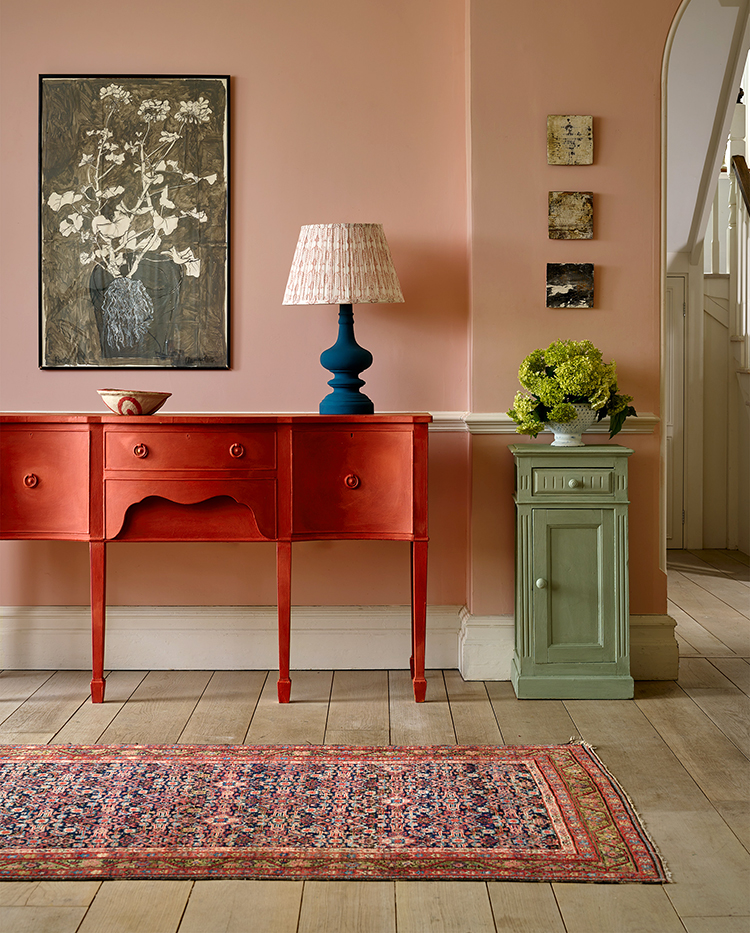
It is perfectly safe to mix the colors. My office is a mixture of three colors. Just make sure you create enough to cover the entire project or know the ratios you used. A little of this and a little of that won’t work if you run out of paint mid-project. Ask your stockist for help if you need to.
Must You Seal Chalk Paint?
Unlike some other types of paint, Chalk Paint is porous and not made with a built-in sealer. Therefore, it needs to be sealed using with either wax or lacquer for protection. There are clear waxes and darker ones as well in the Chalk Paint line. Different options are available. For example, some crafters prefer adding a darker wax over clear wax on picture and mirror frames. The darker wax will remain in crevices, giving a more aged, distressed feel. Keep a little wax for touch ups. Always use coasters or heat mats on the surfaces.
An alternative to waxing for long term sealing (including built-in UV protection) is to topcoat the surface with Annie Sloan Chalk Paint Lacquer. This is a water-based polyacrylic varnish that penetrates and protects the Chalk Paint against moisture, sunlight, and long-term wear. Always test CP Lacquer on several areas before you begin.
Curing the Wax is Vital
After waxing the paint will still be soft. Your finish will start to harden as the solvents in the wax evaporate. This is the hardening process known as ‘curing’. Curing can take from 5 and 21 days depending on temperature and humidity. Just be careful for a few weeks.
How Do I Clean a Chalk Painted Piece?
A soft cloth like microfiber lightly dampened with plain water along is best. You can add a tiny amount of regular mild dish soap if you like. Test in an inconspicuous area first. If cleaning a spot that is sticky, use only water on a damp cloth. For things like scuffs and marks a clean cloth and a little CP clear wax will work well. Make sure to avoid harsh chemicals.
How Long Does Chalk Paint Last?
Chalk Paint has an average lifespan of 10+ years for indoor furniture and 5-10 years for kitchen cabinets. For outdoor pieces, 3-5 years typically with proper maintenance.
Does Chalk Paint Scratch Easily?
Chalk Paint does not scratch easily as long as it has been waxed and fully cured. It is waxed or has a lacquered finish for protection against things like scuff marks, fingerprints, and oils as well as scratches. Touchup is not recommended by Annie. You will need to repaint the entire area, like a table top. No need to paint the legs though.
Can Chalk Paint be Used Outdoors?
Chalk paint can definitely be used outdoors and is commonly applied to patio furniture. As long as it is wax protected from the elements it will be fine but Annie Sloan recommends re-waxing annually and multiple coats of clear wax in high-traffic areas. Just be aware that Chalk Paint will fade and age gracefully in the elements unless it is finished with CP Lacquer.
Things to Avoid or Mistakes
I am a recovering paint overworker! This runs through all my artwork…sadly. But I learned early in using Chalk Paint to just slap it down and move on. Especially the first coat. Here are the things I have found that you should avoid:
- Skipping surface cleaning
- Not using lint-free cloths or rags
- Applying layers too thickly
- Rushing proper drying time between coats
- Overworking or over brushing the wet paint
- Not sealing your project with wax or a clear coat
- Using too much wax
- Not allowing the piece to fully cure
What are the Cons of Chalk Paint?
Chalk paint is not considered to be the most ideal option for items in high-traffic sections of your home, particularly kitchens and bathrooms that are more susceptible to spills and other debris that could be problematic. This is because Chalk Paint with its matte finish is porous, and even if sealed with wax there is a higher likelihood of water, grease, and other elements permeating the paint and damaging it.
Chalk Paint only produces a flat, matte finish. Regular paint comes in a greater variety of finishes such as matte, eggshell, satin, semi-gloss, and high- gloss. There is a caveat here though, because Annie Sloan offers the aforementioned Annie Stone Chalk Paint Lacquer, which is available as Gloss Lacquer and Matt Lacquer. Gloss Lacquer provides a lovely light, subtle sheen (not high-gloss) and Matt Lacquer has a low sheen.
What’s the Difference Between Chalk Paint and Acrylic Paint?
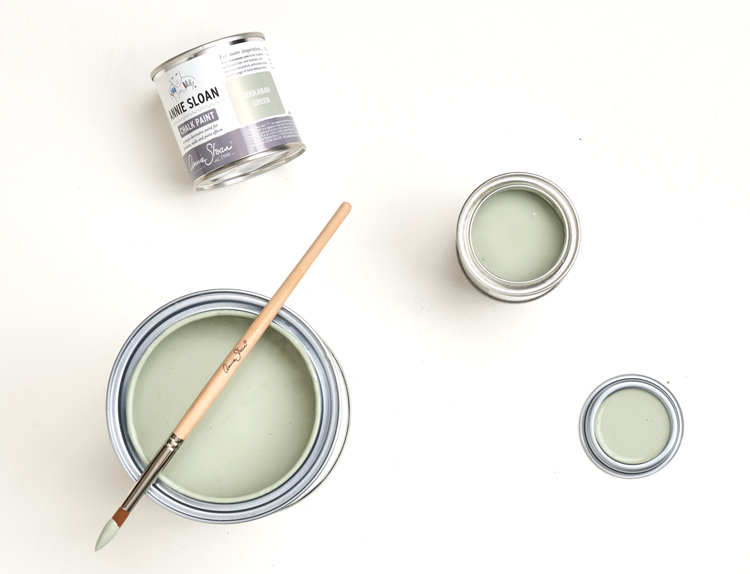
With regular paint like acrylic, sanding the surface is important, especially if it previously had an oil-based paint. Priming the surface is necessary before applying the initial coat. These steps are not needed with Chalk Paint. Chalk Paint is porous and water-based with a binder of resins and matting agents. It is strictly a matte finish until waxed. Acrylic paint is non-porous with an acrylic binder (acrylic emulsion) and is available in a variety of finishes. It almost always has a glossy sheen. Chalk Paint is easy to use for things like quick furniture makeovers with easy distressing. Acrylic paint is used in fine art with vibrant color and sheen options. Please note that Annie now has a Satin Paint for walls and other surfaces.
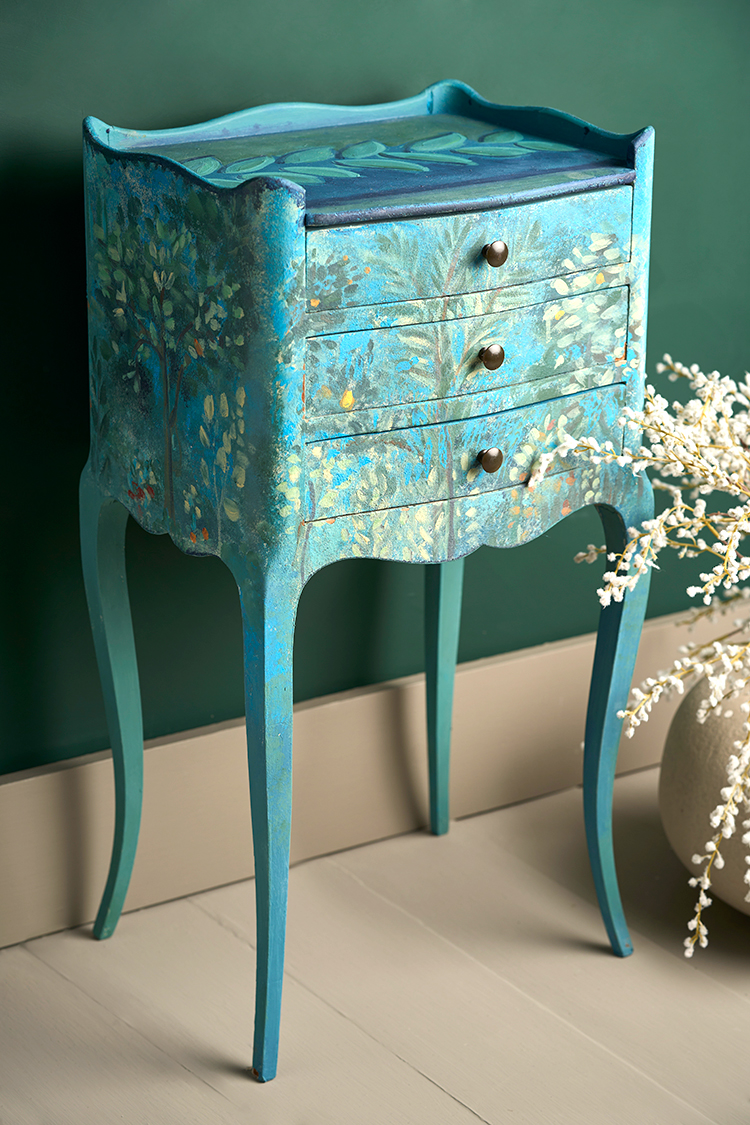
Chalk Paint is Not Chalkboard Paint
Chalkboard paint is not related to Chalk Paint. It is a decorative type of paint applied to surfaces such as walls or boards to allow for drawing and writing with actual chalk. However, Chalk Paint is an excellent choice for creating lettering, and it is ideal for use with stencils because the greater thickness prevents seepage underneath them as can regular paint. Do note that, since Chalk Paint is matte, you can write on it with chalk.
Fun Surfaces to Paint
Fabric
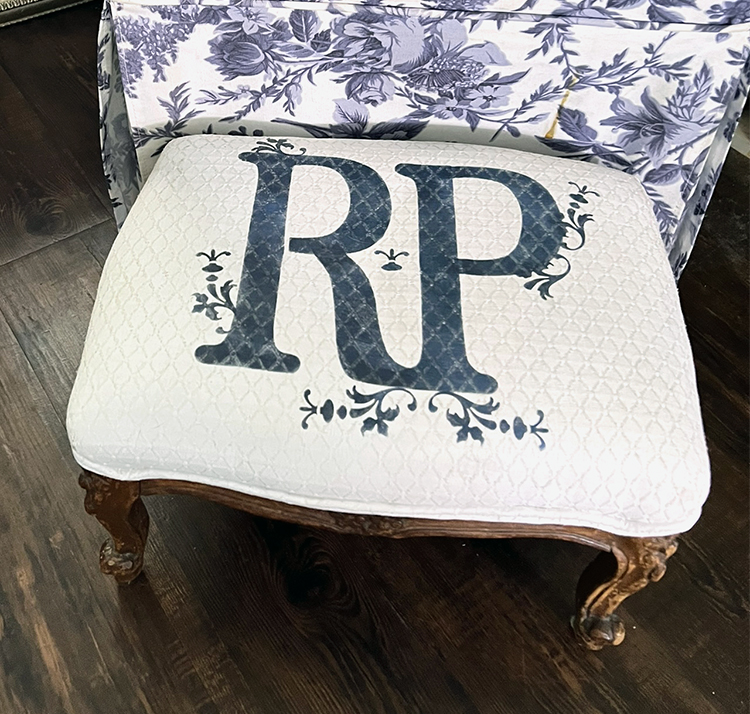
I have painted so much fabric with Chalk Paint. I painted and stenciled a footstool that is shown above. It is one of my favorite pieces and sits in my great room. Some of my tips are:
- The fabric should be taught or very firm on the piece. You can stretch fabric to paint but it takes a lot of work and patience.
- It is best on cotton or linen upholstery fabrics.
- Test that the color of the fabric is color fast. I tried to paint a red chair seat once that bled into the white paint. I had a mess.
- Going from a lighter color to a darker color works best.
- Thin the CP with water and use several coats drying well in between.
- You do not need to wax painted fabric, but you can to get a leather-like feel.
- You can paint leather and vinyl. It will need to be waxed.
Painting Accessories
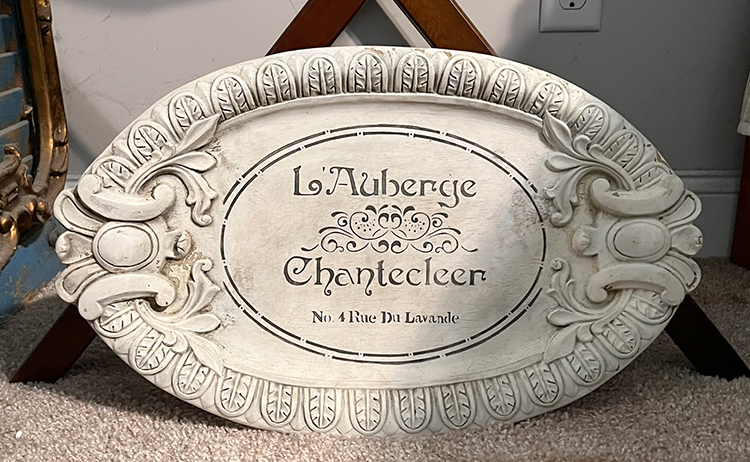
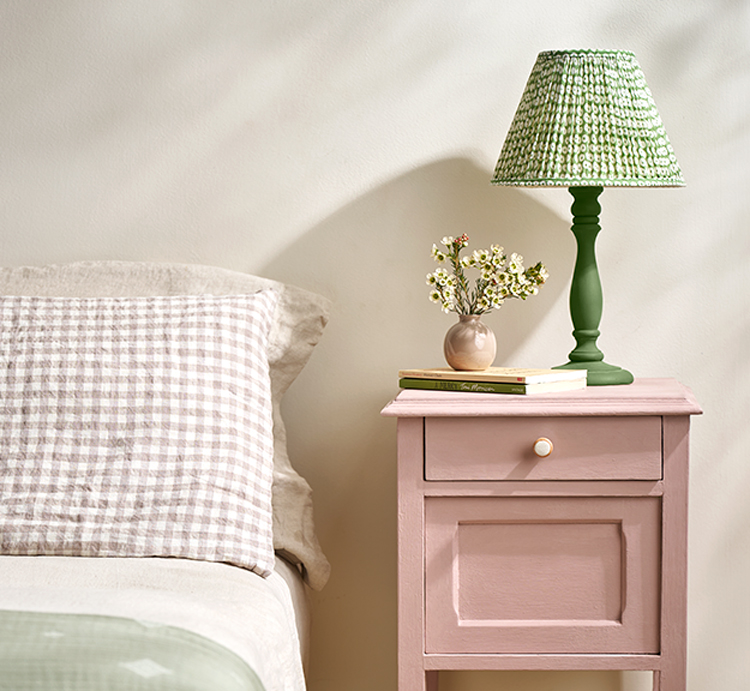
Above is a painted wooden tray that I stenciled. You paint it just the same way you paint furniture and seal it with wax. Below is a painted table lamp and night stand done the same way. You can also paint lamp shades. It works great on old silver trays too.
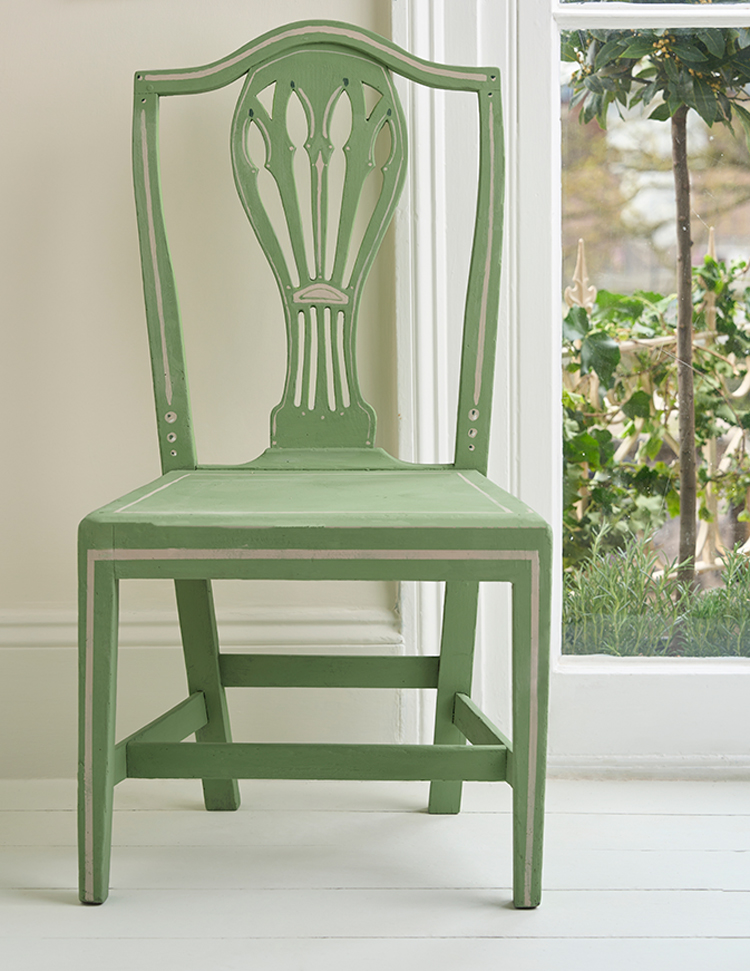
Painting chairs is one of my loves and gift ideas. You can purchase a sturdy wooden chair for a few bucks and transform it like this. It makes a great wedding gift too.
<h2>Annie and Me
 </a>
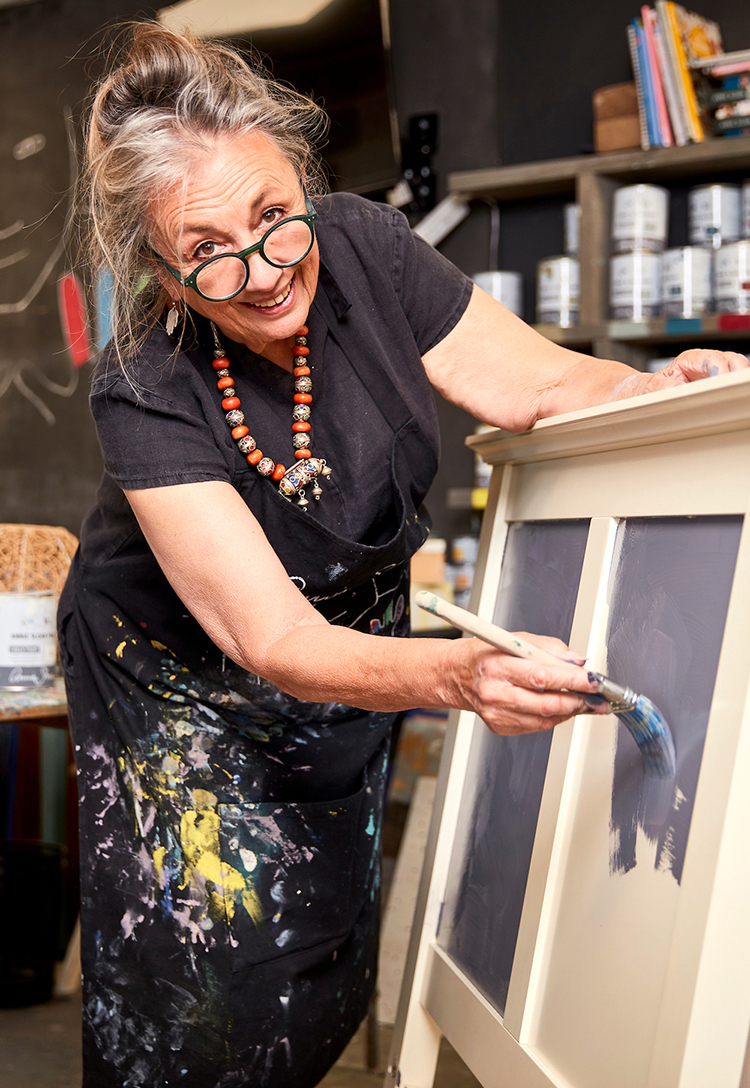
</a><p>Annie Sloan is a woman living her dreams to the max. Annie and I have been friends for years as we have much in common and have led parallel lives. We both started painting murals in homes in the 1970s while raising children. We also taught decorative painting, gilding, and decoupage at night at one time. Probably our most enjoyable mutual topic is our love and respect for all things French.
Annie trained as a painter and worked for many years decorating in London and Oxford. I trained in France and Italy. Her skills as a painter led her to begin teaching and for many years led a course in Decorative Painting at the Inchbald School of Design. In 1987 she wrote ‘The Complete Book of Decorative Paint Techniques’ which is how I came to find her. A friend who had recently been to England, brought her book home and asked me to come over and help her paint. We used Annie’s first book as a live tutorial to paint every room in her Alexandria, Virginia home. Hooked on wall finishes after this, I began painting my home. That led to painting friend’s homes on weekends.
I was soon so busy painting people’s walls, I left my day job as a graphic designer and opened a decorative painting/mural business in Atlanta. Like Annie, I started teaching others how to do faux finishes and stenciling when that craze began in the 1990s. This eventually led me to a job as editor of ‘The Artistic Stenciler’ magazine in 1998. I crossed paths with Annie again a few years later when I asked her to write an article for me on her ‘now famous’ Chalk Paint. She was also a guest on my podcast in 2010 {I was ahead of my time!}. Her book called ‘Paint Transformations’ was published in April 2010 and she asked me to write the cover notes. We both have come a long way since painting walls for friends in the 70s.
Annie was awarded the Commander of the Order of the British Empire: A high-ranking British honor awarded for a prominent regional or national achievement. Congratulations and well deserved as Annie has helped many develop a love for painting and decorating. I was named to Who’s Who in the Painting Industry in 2007.
Annie Sloan’s Chalk Paints are yummy!! You can buy them in the US at several loactions. Visit AnnieSloan.com to find a stockist near you.
Annie is going to be in the US in October 2026 at the Country Living Fair in NY and then at Round Top in Texas.
Annie’s Newest Book
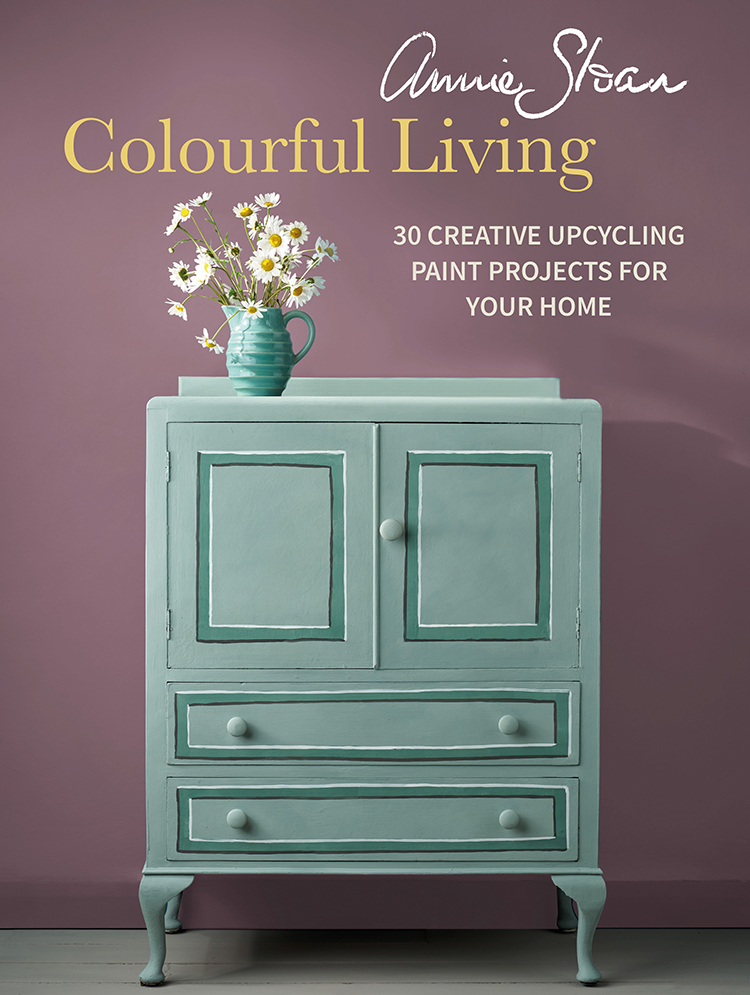 Annie has a new book that came out last year. It has some fun projects to add color to your life.
Annie’s Podcast
I interviewed Annie for my podcast, Artistically Speaking Talk Show, in 2010. She now has her own podcast!! It’s called The Colourist: The Podcast for Colourful Living. You can find it on Spotify and Apple Podcasts! It is created for people like us – painters, creatives, and color lovers, this podcast is hosted by none other than Annie Sloan, CBE alongside brand ambassador Tristan Merriam. In each episode, Annie and Tristan will dive into the rich backstory and inspiration behind one of her iconic Chalk Paint colors. Take a listen!
I hope you enjoyed browsing through my Comprehensive Guide to Chalk Paint and learning all about the paint I love so much. I can’t wait to hear your thoughts! When I am not creating for TGF, I also create Photoshop Elements tutorials and craft project videos over on The Graphics Fairy Premium Membership site. You can find even more of my books, art, and whimsical shenanigans on my website – The Bookery.
Rebecca


Leave a Reply