
How to Make Skeleton Leaves
Hey to all my favorite crafting mates – It’s Rebecca E Parsons here to share an oh so elegant crafting technique – How to Make Skeleton Leaves! If you have ever found a beautiful lacy leaf held together with only its veining, you found a treasure. They are a rare find. I love adding a beautiful leafy surprise to my artworks, Junk Journals, and Handmade books. Adding one of the delicate leaves to The Graphics Fairy images into our Paper Artworks makes a big difference. Please come play with me in my Graphics Fairy sandbox and I will show you how to make these little wonders.
This post may contain affiliate links which won't change your price but will share some commission, you can find our privacy policy here.

PRO TIP: I must share that the process of turning a leaf into its lacy skeletonized form is for the patient. It takes at minimum two weeks for the leaves to soften enough for the process to work. Some leaves will be workable after the first boil, but only a few. You must be able to deal with delays and be open to the ‘not-so-perfect’ for this to be a success.
The Leaves
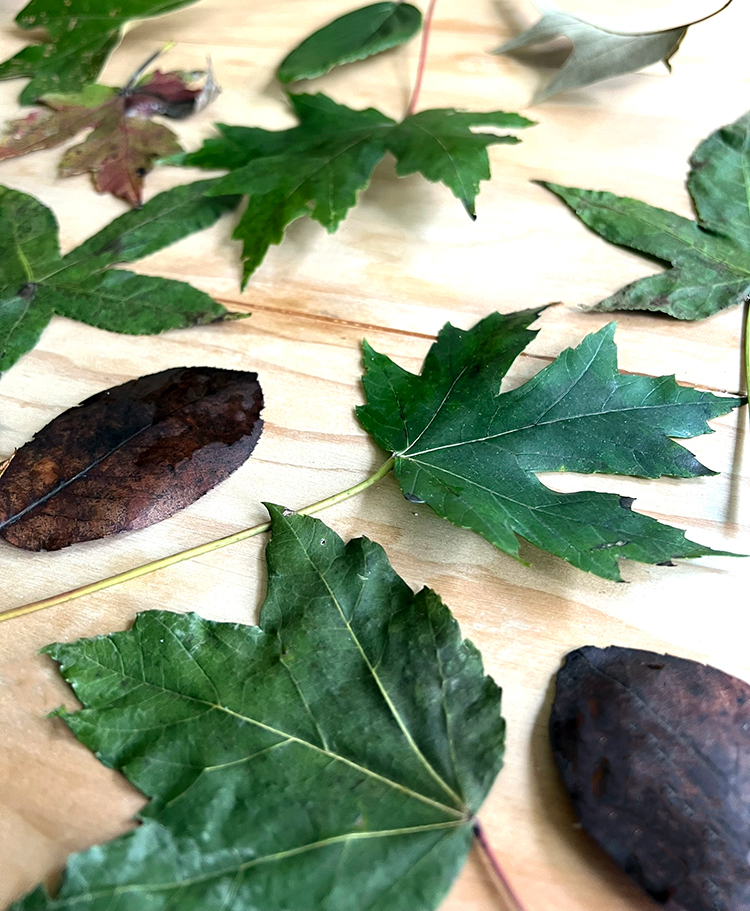
Of course the most important part is the leaves. I tested quite a few different leaves in my experiments. Leaves were gathered specimens from my own yard and several places from Florida to Virginia. I learned so much about which ones work well and which disintegrate or tear easily. It is quite fun to examine a leaf for skeletonizing as you will find. Please note that you can purchase leaves that might work better than my found leaves. I wanted to create a tutorial with leaves that you can use that did not need to be purchased.
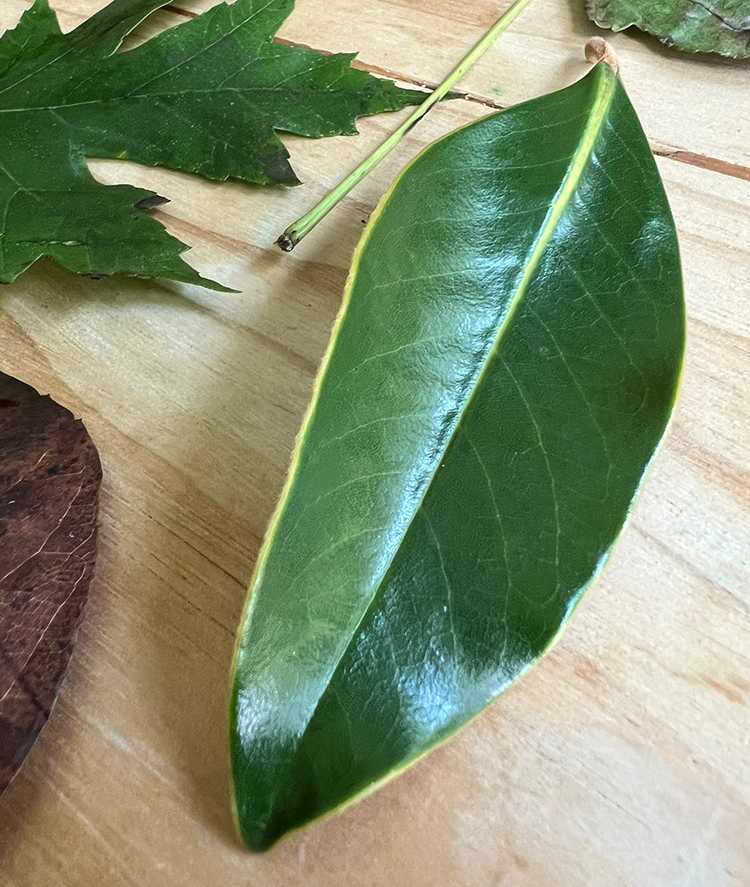
Leaves that are waxy in feel or that are thicker work better than leaves that feel delicate and flimsy in your hand. If you can rub it between your fingers and it falls apart or rolls or tears, it will not be a good choice of this.
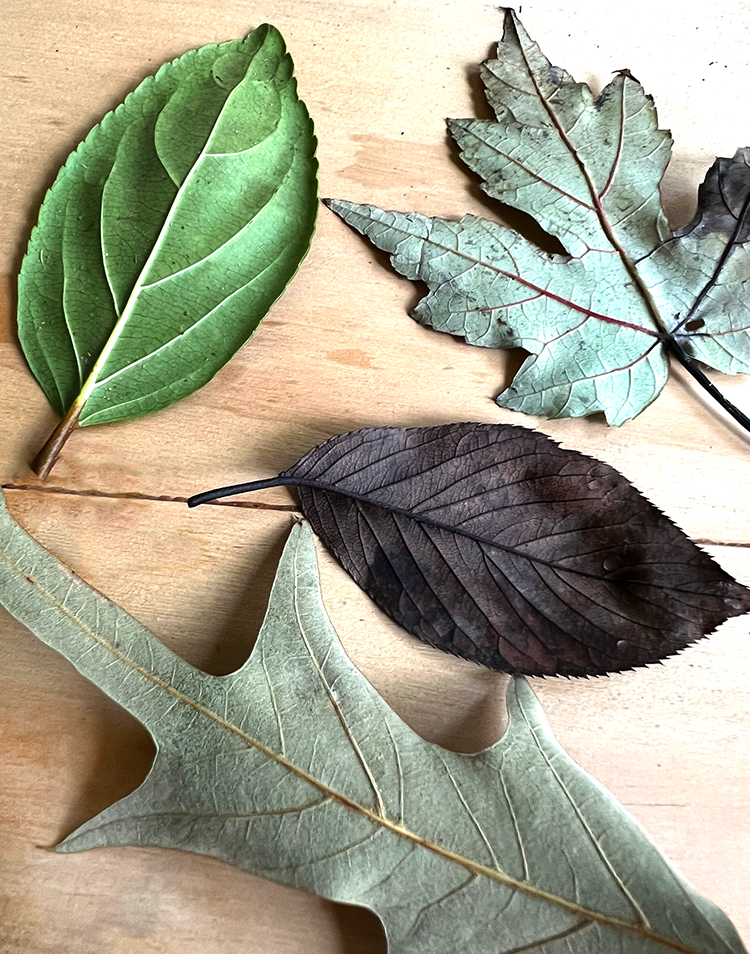
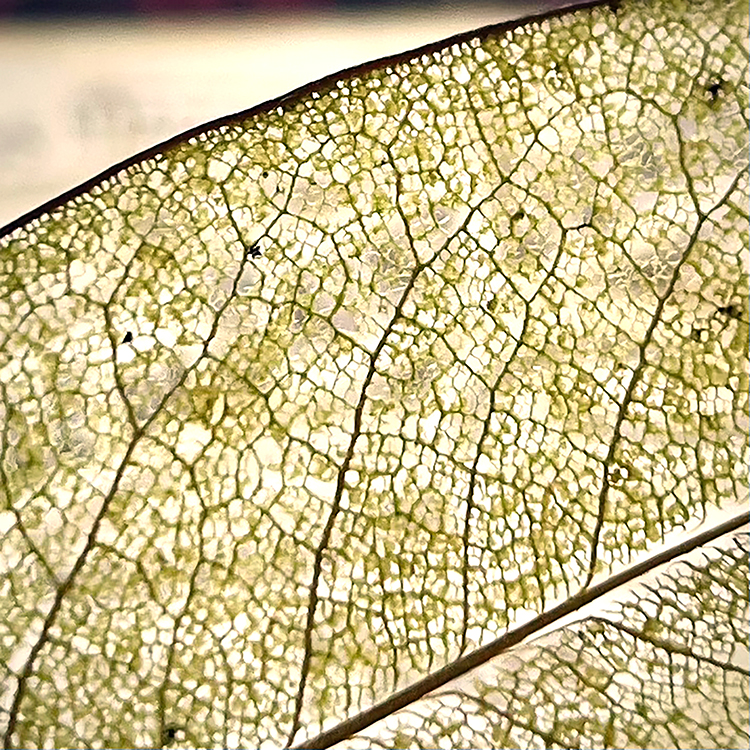
Look for sturdy leaves good veining as you can see in the above image. The best leaf for this project is green, without blemishes. Any spot will stay a spot or become a hole when worked with. I expect some of you will find other leaves that work well that I did not have access to. Please share if you can in the comments. Below is a close up look at the results.
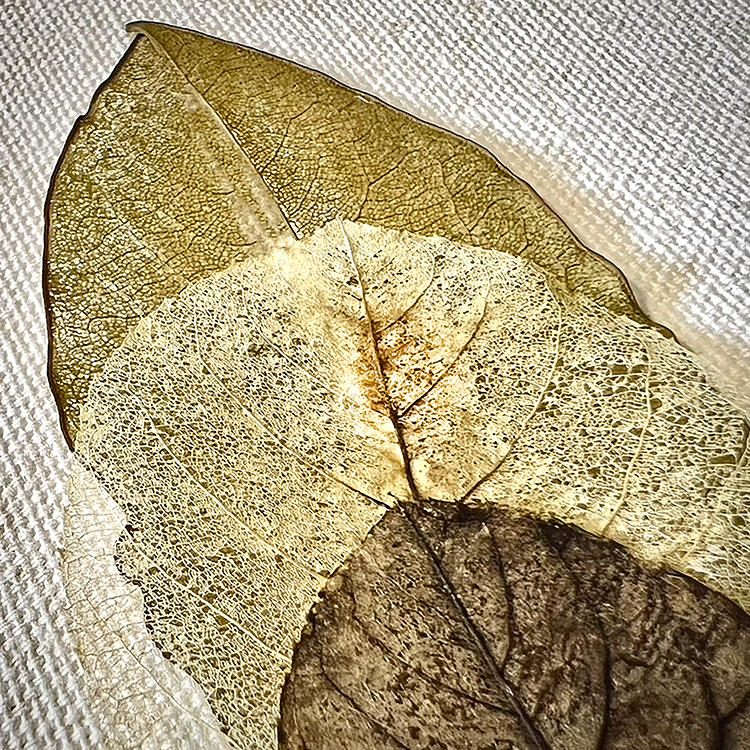
Leaves that work well (in my testing):
- Magnolia (my very fave)
- Sugar Maple (second fave)
- Red Maple
- Sassafras
- Tulip Tree
- Sycamore
- Poplar
- Gardenia
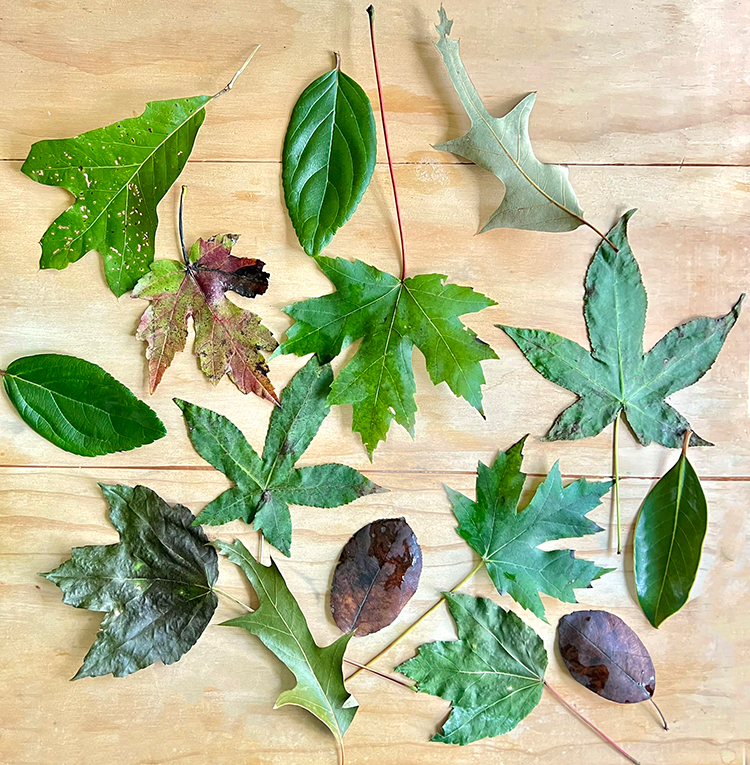
Leaves that did not work for me:
- Oak
- Ivy
- Hydrangea
- Holly
- Rose
Supplies for This Project:
You just need a few things to accomplish our mission. It is doable by anyone with patience and time and a desire to experiment and learn.
Leaves
Washing Soda (not baking soda) I used Arm & Hammer Super Washing Soda
Water
Natural bristle brushes (soft and round is best)
Paper Towels
Old towel or wash cloth
Large pot with cover (only use this for crafting)
Large flat container with low sides for rinsing
Container for water to dip brush

Tutorial:
You must have time to watch the boiling process closely. Make sure you have plenty of leaves for this process. You do not want to wait two weeks to find that your leaves don’t work or have disintegrated. The number of leaves will depend upon the size of your pan. I used two regular size cooking pots. In my experience you can do about 15 leaves (maple, magnolia) per pan. They should have room for the water to circulate all around them. Of course you could do many more smaller leaves in a pan.
Step 1 – Boil Leaves
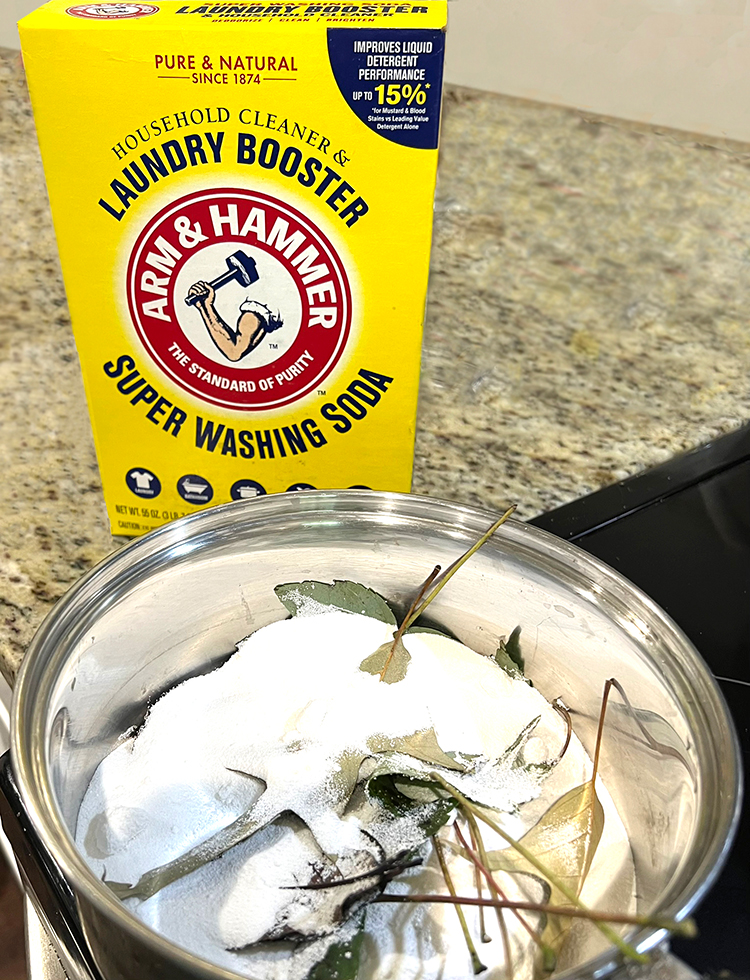
Place leaves into pan. Add 1/4 Cup of Washing Soda and 3 Cups of water. Make sure you cover the leaves with water. Place on burner and watch as it comes to a boil. When it boils, reduce the heat so it will simmer. Cover and simmer for two hours checking often. The water will boil away, so you will need to add more several times during the process.
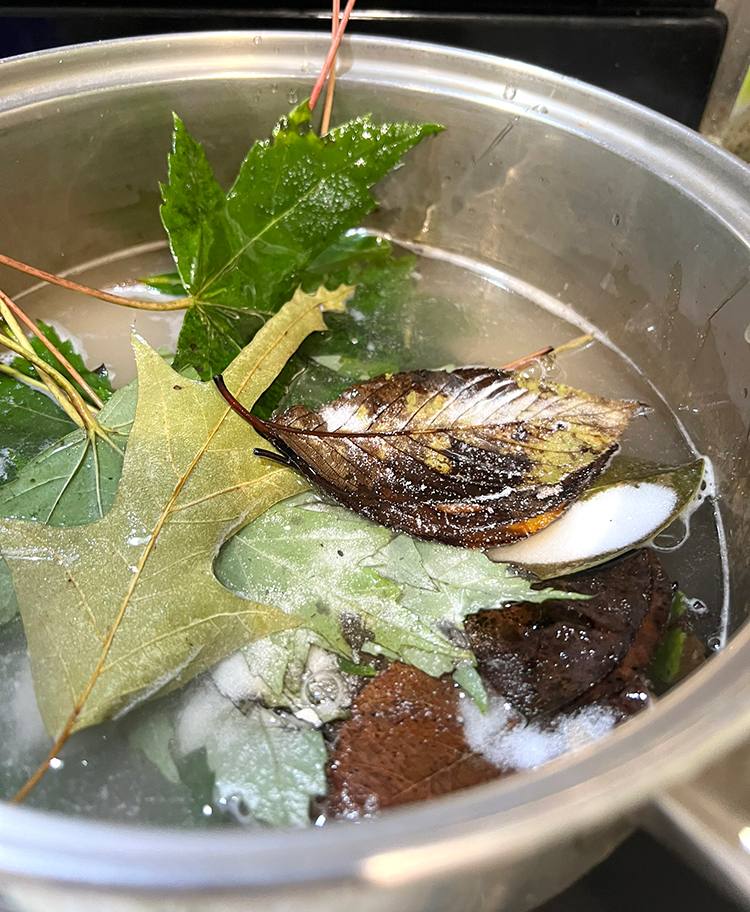
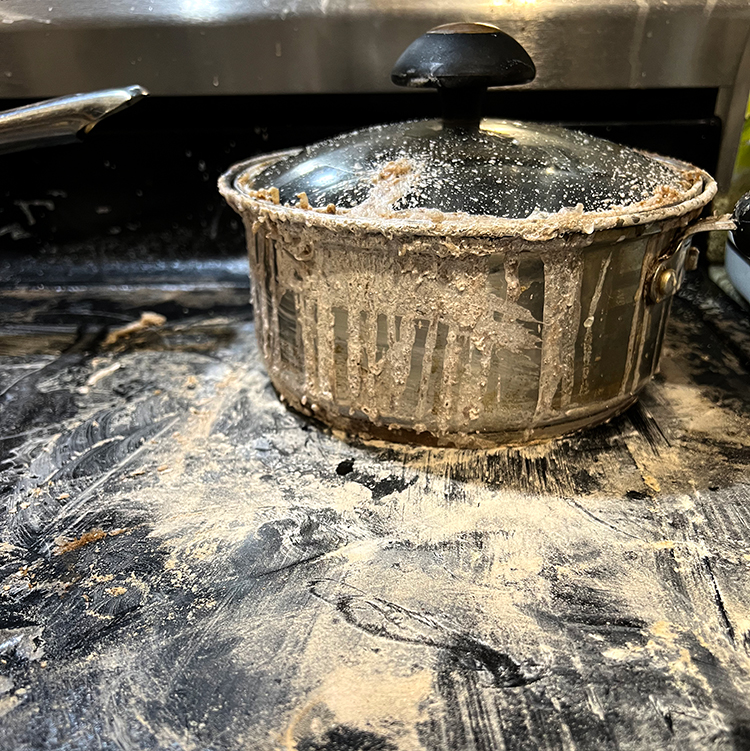
I had to share this picture. It is a messy process and boiling over causes a big mess. See my photo below. Not to worry because it is just soapy water and cleans up easily. As a matter of fact, my stove top looked beautiful after washing away the powdery mess. That is a plus! HA HA
Step 2 – Wait
Let the water cool. I know you will want to try one of the leaves at this point. Some of the softer ones MIGHT work. But be prepared for it not to. TIP: Patience is a virtue in making beautiful skeleton leaves! I promise. It will be worth the wait! Leave the cover on and check the mix once a day for the next two weeks. I swirled the pan by the handle every day to mix the leaves around. I also added a bit of rubbing alcohol (a tablespoon) to keep any mold at bay. Add water if it begins to evaporate. Keep the leaves covered with water. After the first week, turn the leaves over, swirl, and leave alone.
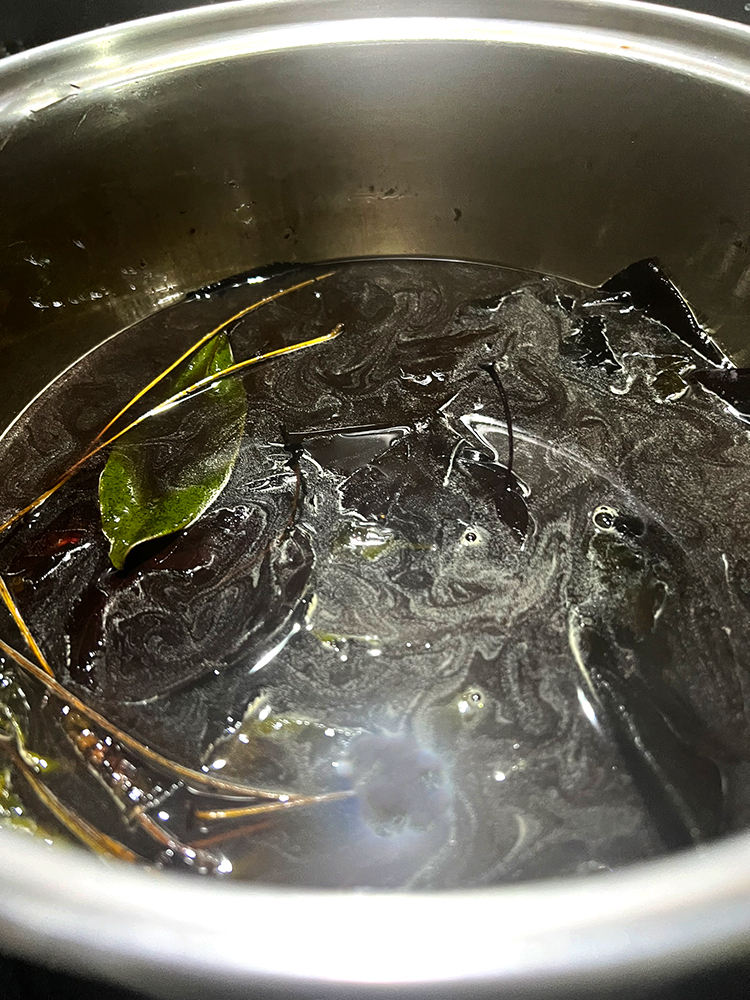
Below is a look at the leaves after boiling. They will fold over, tear, and become mush. That is why I recommend you starting with a good amount of leaves.
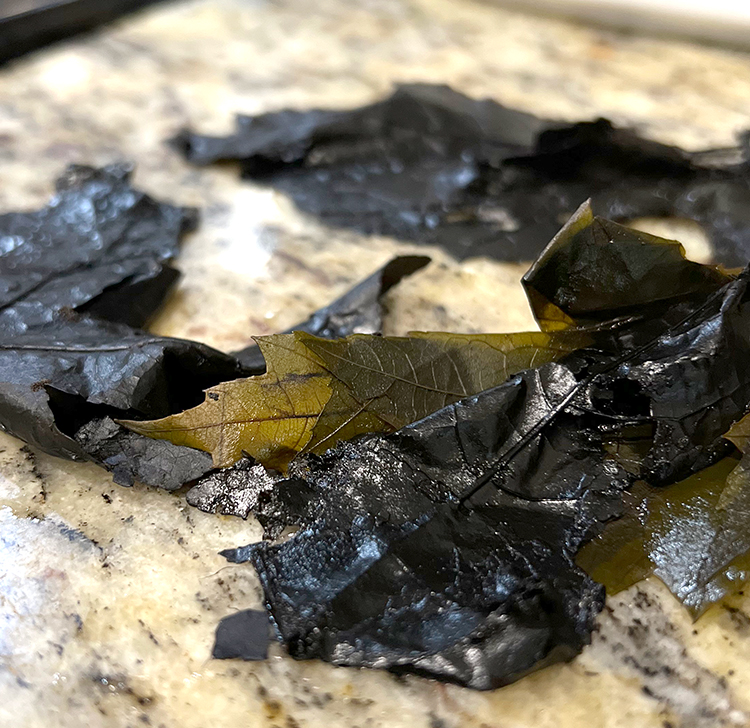
Below is how the leaves will look after two weeks in the pot. The good ones will have maintained their shape. Some are more delicate than others. You will find out which works best for you. Plus, you may have different leaves that work better. I would love for you to comment below it any discoveries you find.
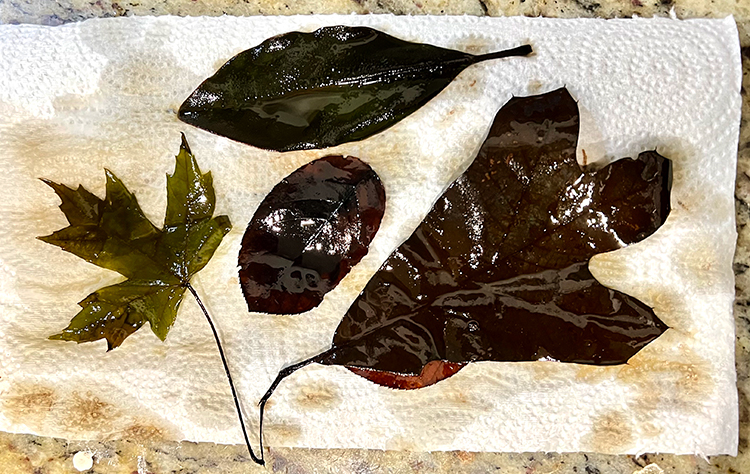
Step 3 – Remove the Leaf Membrane Material
This is the fun part that you have been waiting for. Have your shallow container filled half way with water. This is for rinsing. Fill another container with water to dip your brush in.
Remove one leaf from the pot and place it on the towel or washcloth. Smooth it out so there are no wrinkles or bumps. Dip brush in water and begin to rub the leaf gently. This is more like wiping the surface with the brush than scrubbing. If you get in a hurry and push to hard, you will tear the leaf. Take your time. Gentle touch! I hold the leaf down with two fingers as I brush. Dip the brush in the water often to keep the surface wet.
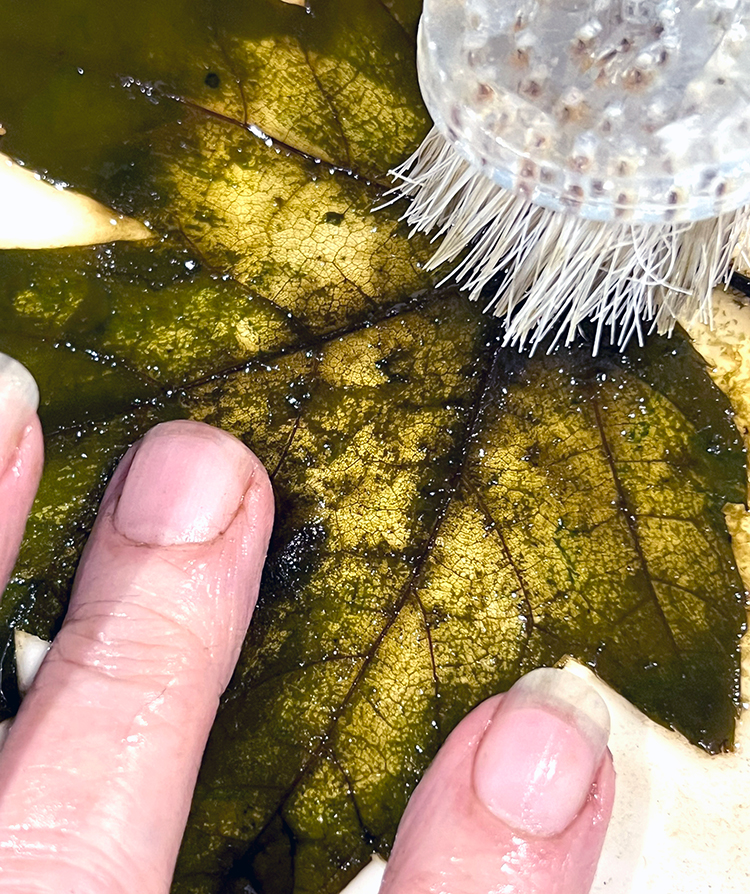
The most sensitive area of most leaves is where the stem meets the body of the leaf. It will tear easily. Just be careful in that area. I also found that the edges teas easily if brushed too much. You will see that I leave the edges with some material still attached.
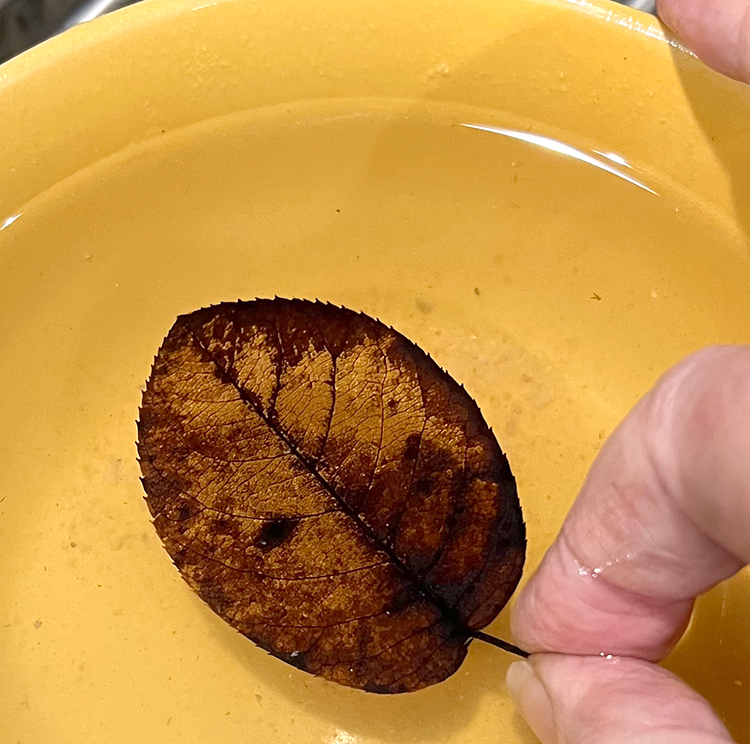
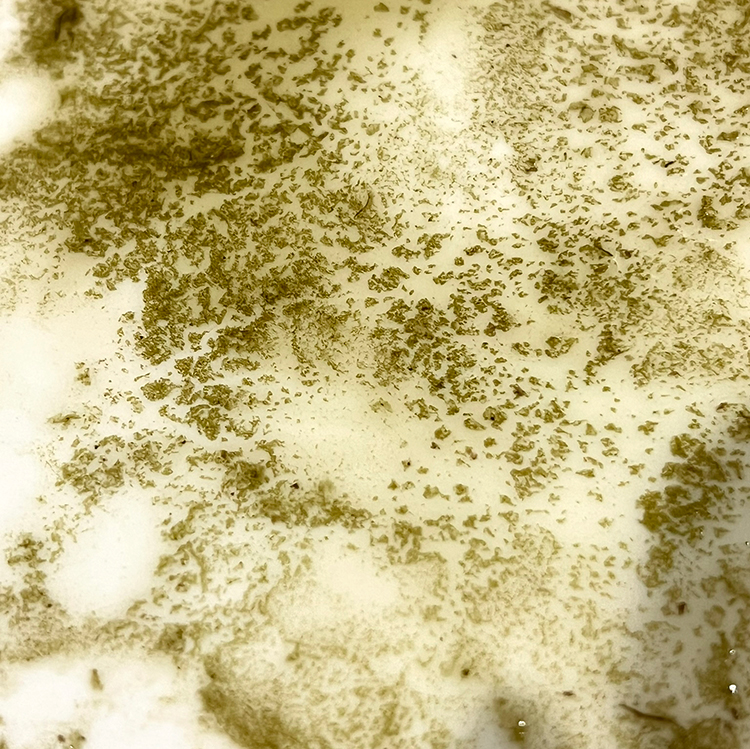
This is how to rinse the leaf. Every so often you will need to place the brushed leaf into a shallow plate of water to remove the debris. This is how you can tell if you are finished! But be very careful as you do this step as the leaf is very fragile at this point. Dip it into the water and drag it out. A larger leaf can also fold during this stage and give you fits trying to make it flat again without tearing it. Trust me on this! Below is what will come off the leaf as rubbed.
Continue until all visible veggie matter is removed. It takes several minutes and a few rinses. Below is what the completed leaf looks like.
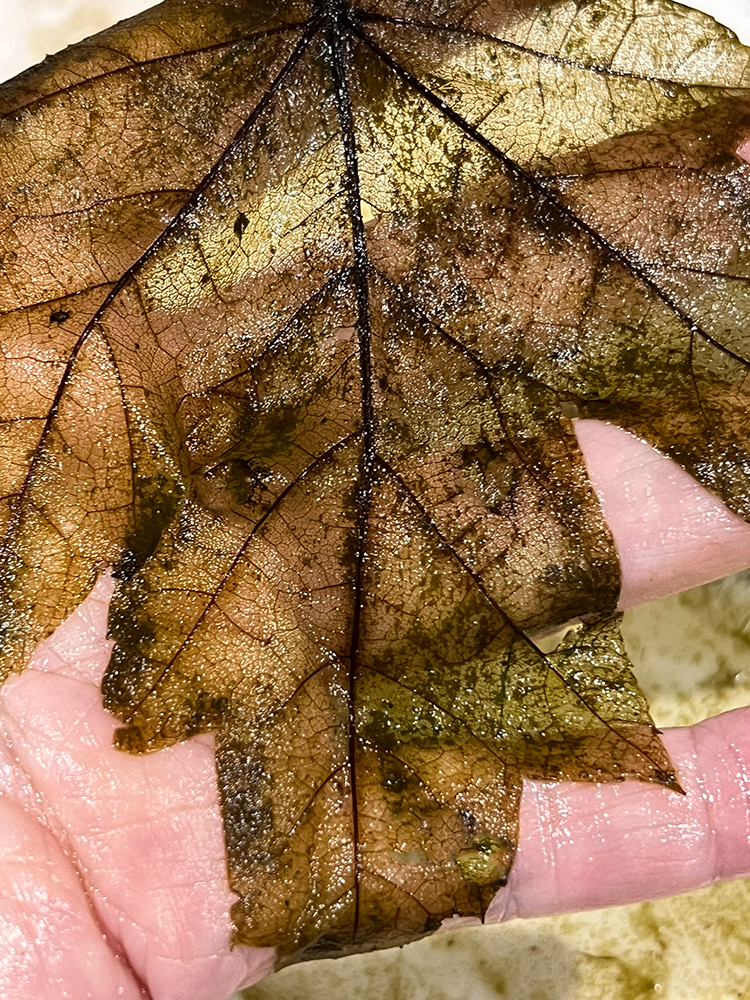
Allow the leaf to dry. Place wet leaves between two layers of paper towel and place them in a book to dry. This will keep them flat and useful.
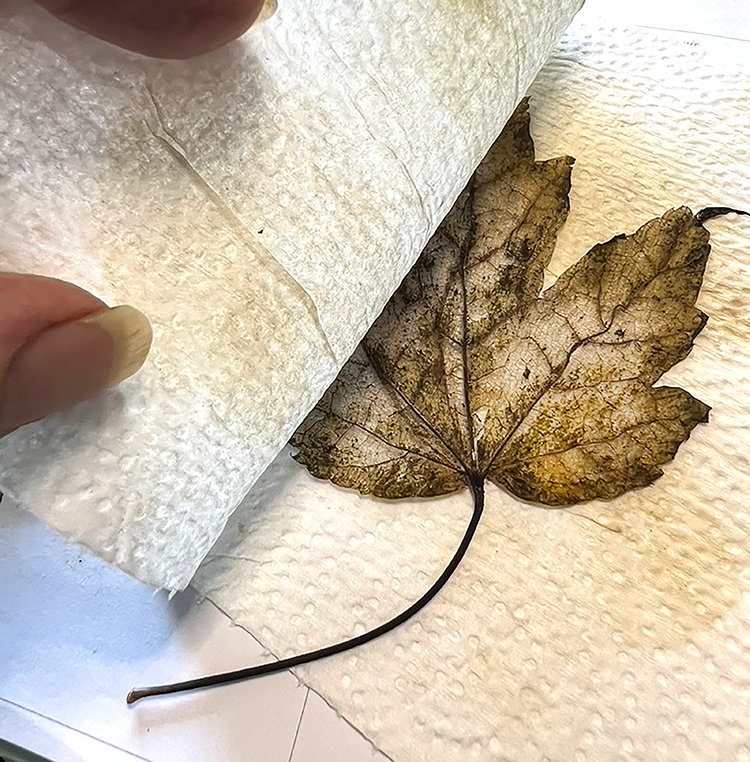
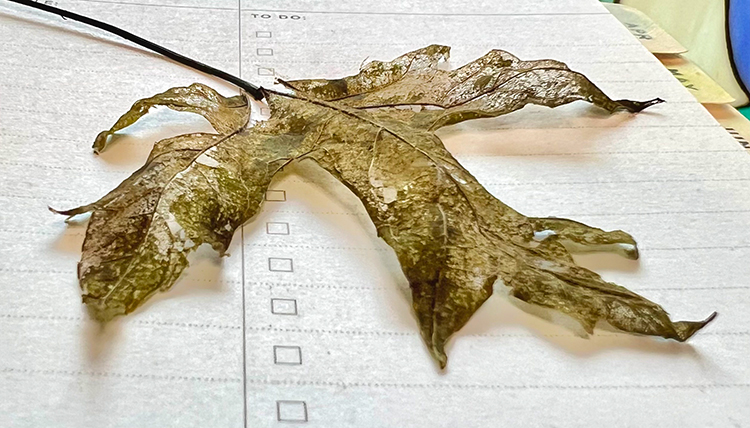
Although I love the look of this leaf below, it dried without being placed in a book. As you can see it is not flat. It looks beautiful like this, but it is not practical for art or books. It would crumble and fall apart is not protected or framed.
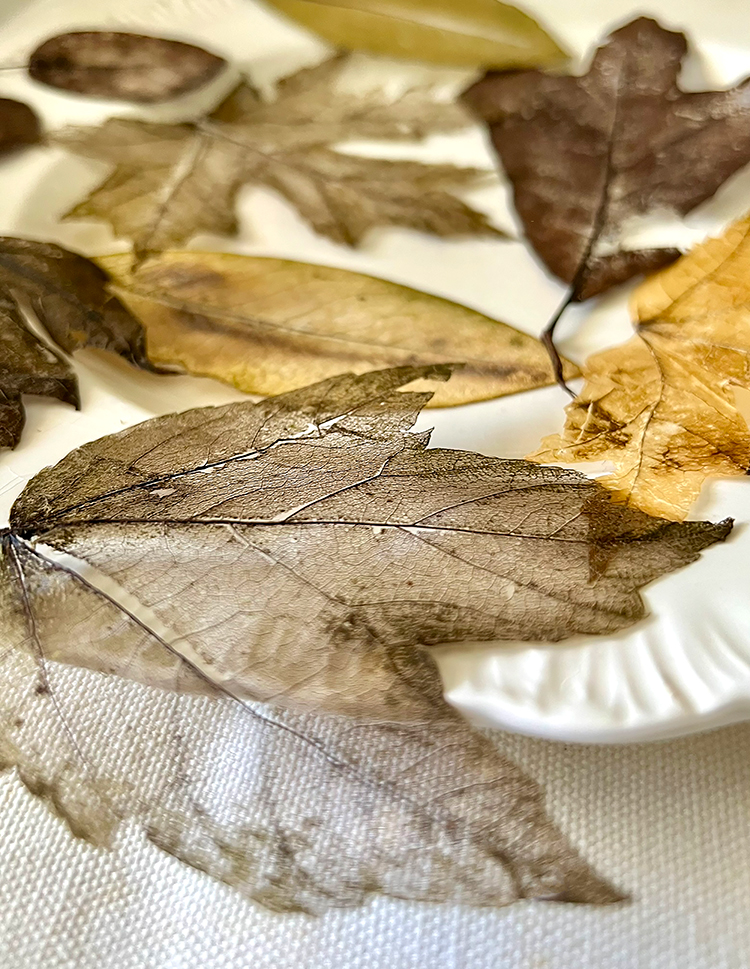
Below is the way a pressed leaf will look. See all the lacy holes? They are terribly difficult to photograph because any shadows tens to make the image look blurry. I did my best to convey the look and feel of these works of art!
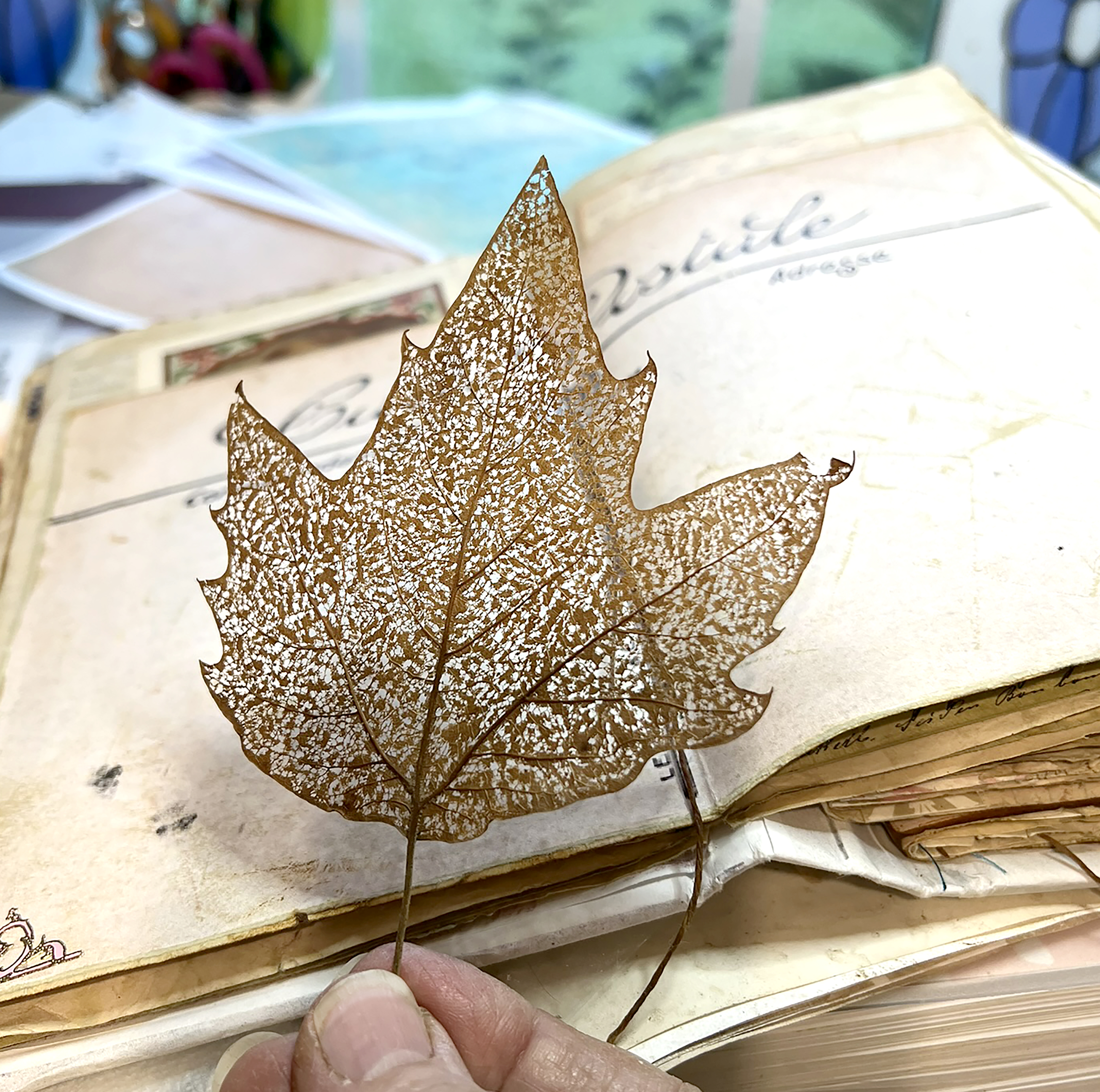
This is a skeleton leaf added to a junk journal page:
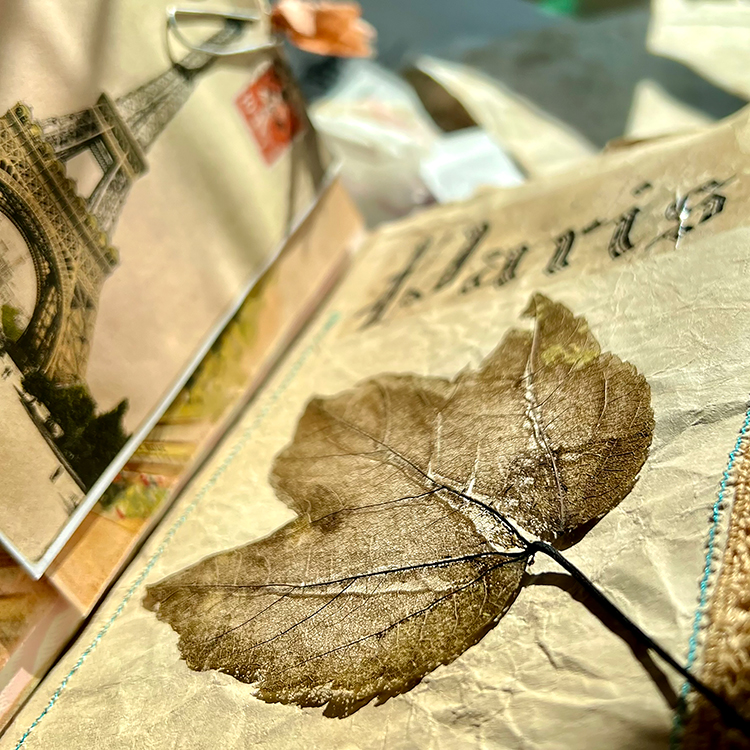
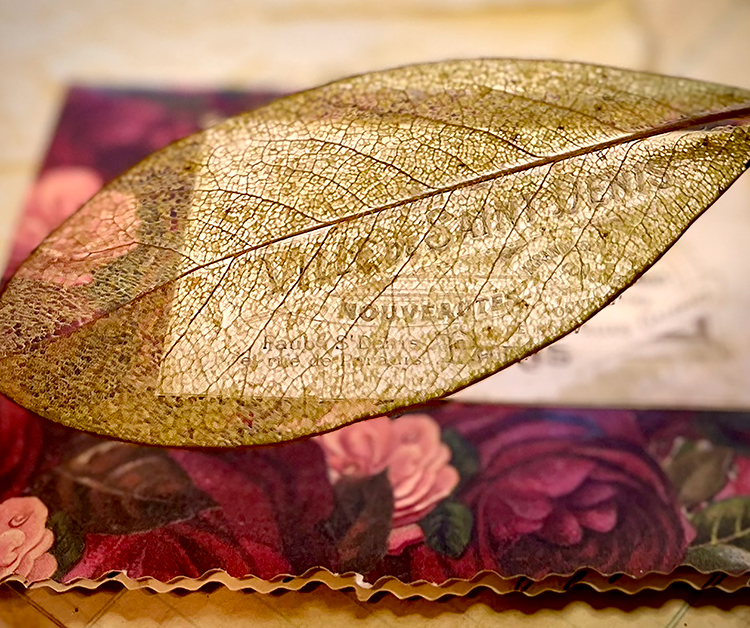
Magnolia leaf:
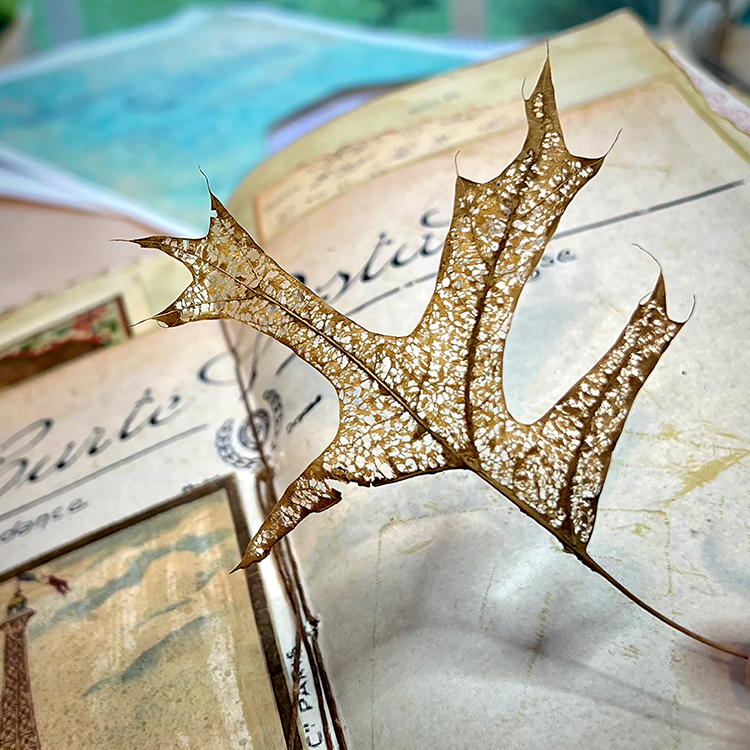
Oak Leaf
Optional Step 4 – Bleaching the Skeleton Leaves
Now that we have learned how to make a skeleton leaf, you can take it another direction. You can bleach it. Add a mix of 1 part household bleach to 4 parts of water in a shallow dish. I used tablespoons. Let the leaf sit in this solution for 2-6 hours. It will depend upon the leaf as to how quickly it will bleach. TIP: Some leaves will disintegrate in bleach water. Rinse it well and follow the steps above for making the leaf flat.
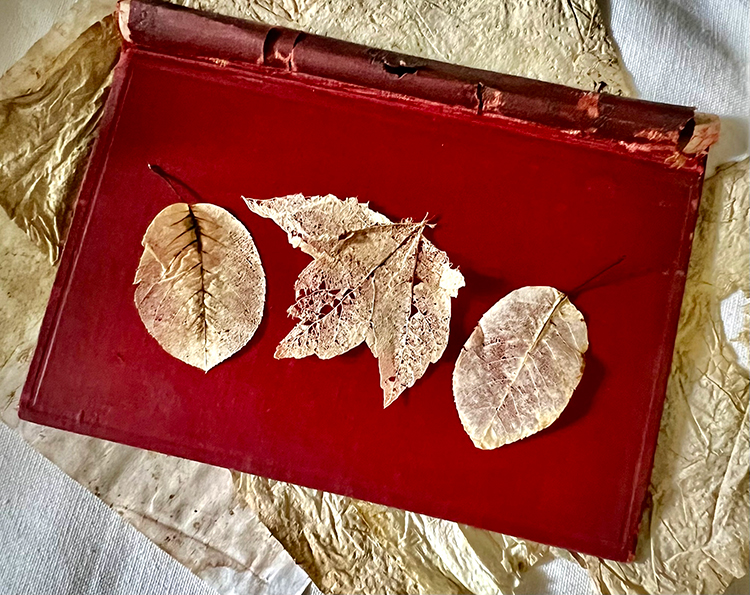
Below are two bleached leaves on a junk journal page.
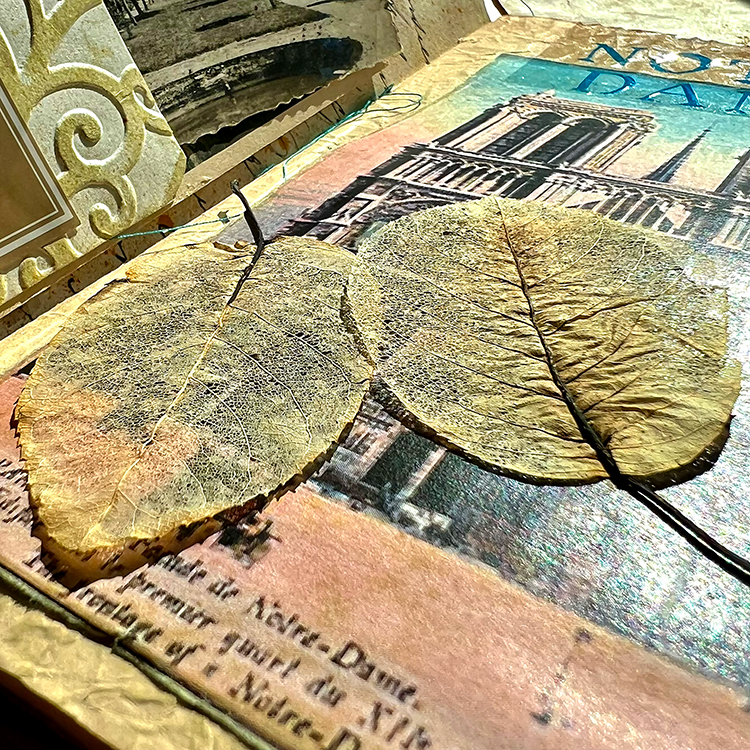
Below is my fave leaf of the process. It is wonky and torn in places, but it has so much character.
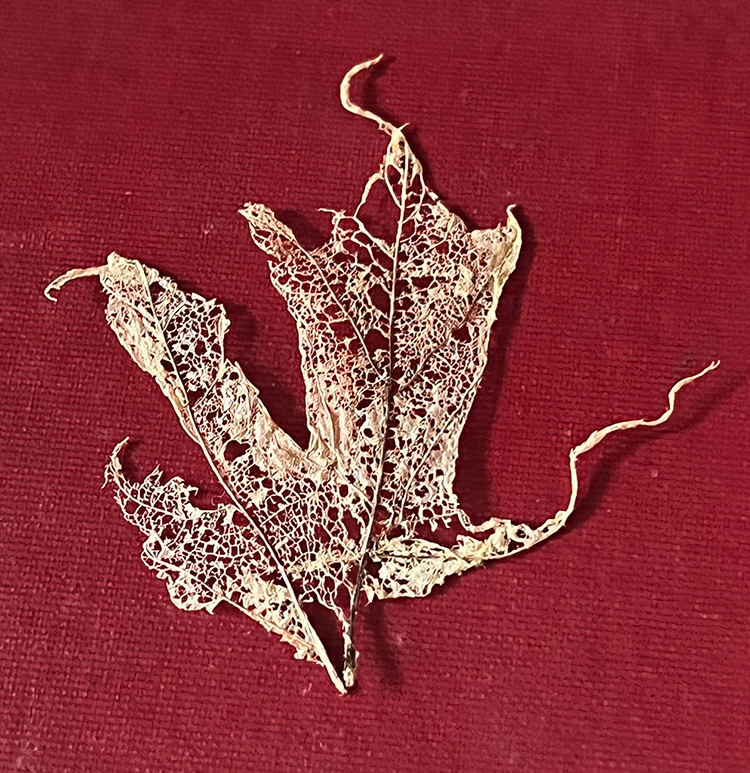
Optional Step 4 – Dying the Skeleton Leaves
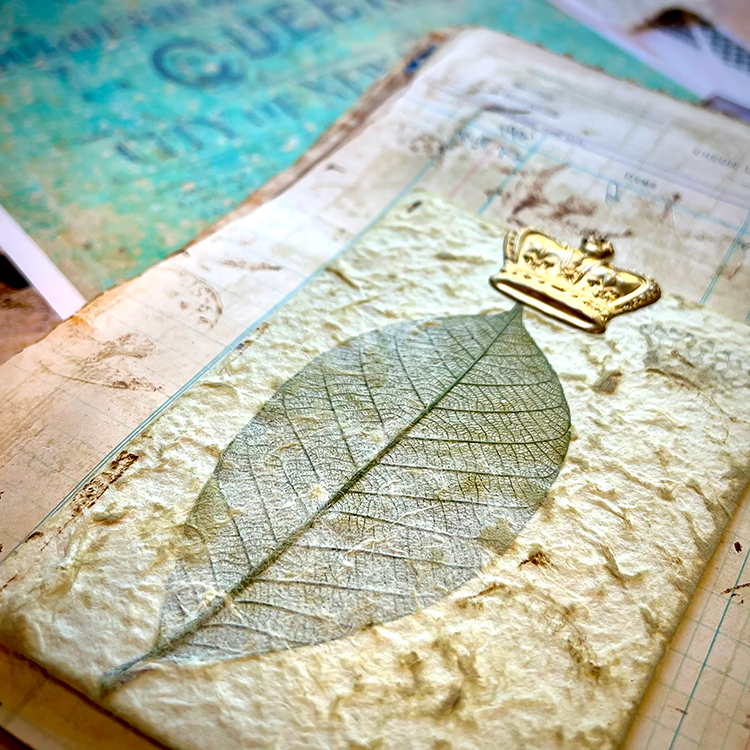
I prefer the look of natural leaves. If you would like to add a little color to them, it is easy. This works with bleached leaves and I had the most success with magnolia leaves. Once the leaf is bleached, rinsed, dried, and pressed flat you can paint it with watercolor paint or ink. I brushed a watercolor mix on the leaf seen below . I think it works beautifully on a piece of handmade paper.
Below is a close up view of the results of a dyed leaf.
Thank you for visiting The Graphics Fairy today! I hope you enjoyed playing with me in my Graphics Fairy sandbox! This mixed media project – How to Make Skeleton Leaves – is just so much fun to do. I hope you will try this and be amazed! You might also like How to make Ink from Acorns.

When I am not working on techniques to share, I also create Photoshop Elements tutorials and craft project videos over on The Graphics Fairy Premium Membership site. You can find even more of my art, DIYs, books, and whimsical shenanigans on The Bookery


Thea Garner says
Loved tĥe skeleton ĺeaves
Karen says
So glad you loved them!
Stemen Kathy says
Thank you. Very interesting
Karen says
Thanks for checking it out! 🙌 You’re welcome, Kathy
Undine Reich says
Danke für`s Teilen 🤗 Ein Tipp für Aquarianer …. ein Manolienblatt ins Aquarium hängen, und nach 2-3 Tagen haben Schnecken und Garnelen ein wunderschönes Blattskelett “gezaubert”.
LG Undine
Stephanie Adams says
This is such a cool project, thanks for sharing Rebecca! Stef x
Karen says
Thanks so much, Stef! 🙂