Turmeric Sun Printing
Have you ever wondered what Turmeric Sun Printing is and if you could use it in your creative work? You can definitively use this photographic technique to add a warm, rusty organic yumminess to your paper, book, and DIY projects. I am Rebecca here to guide you through the process of a technique that is easy and fun, requiring only a few inexpensive ingredients and the wonder of the sun! Let’s discover the ins and outs of sun printing with a kitchen spice.
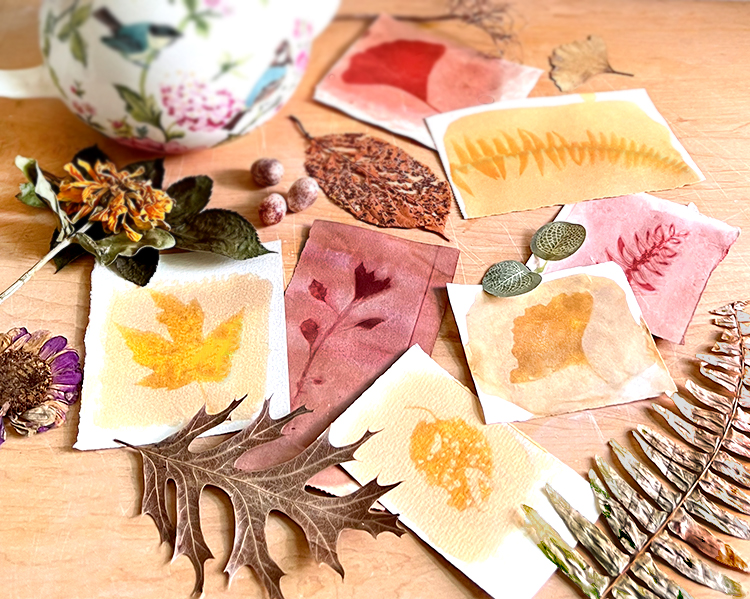
This post may contain affiliate links which won't change your price but will share some commission, you can find our privacy policy here.
What is Turmeric
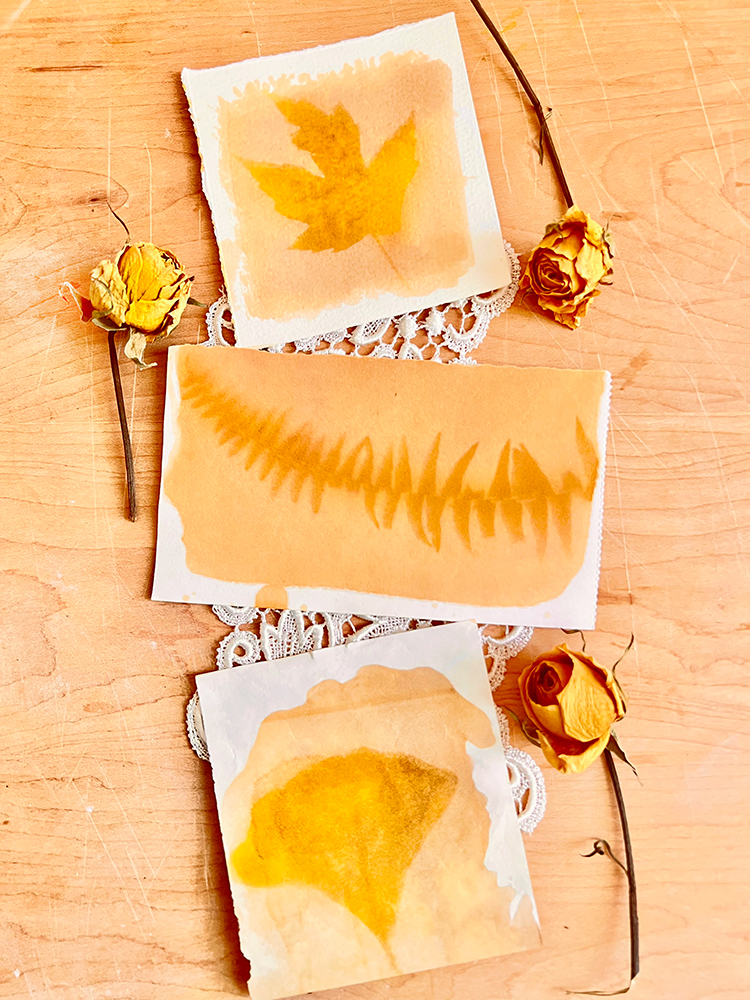
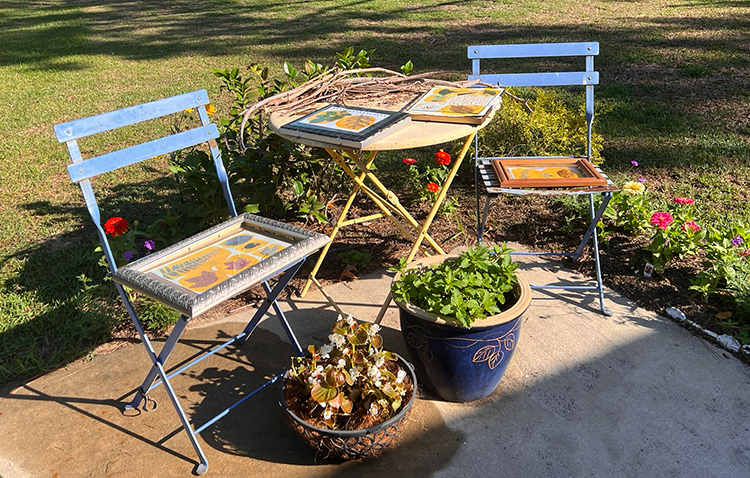
Turmeric is a bright yellow-orange spice used in Asian, Middle Eastern, and Indian cuisine. It is part of the ginger family. If you like curry, you have eaten turmeric. It is also hailed as great for nutrition and has some health benefits. I drink it as a tea to fight inflammation from my cancer treatments. It adds color to foods and will stain or color paper and cloth as well. It will also stain your hands and clothing and any surface it lands on, so make sure you wear protective gloves and clothing and protect your surfaces well. Below you see my sun printing station.
What is Turmeric Sun Printing?
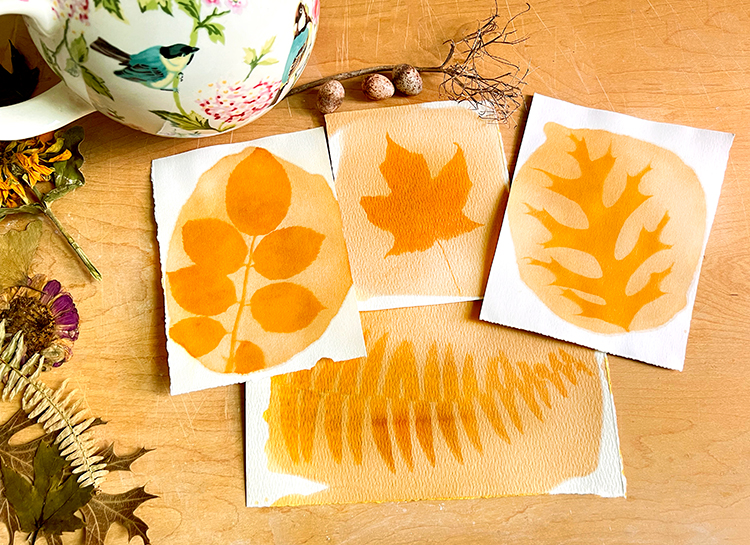
Turmeric Sun Printing, also called Anthotype Printing, is a photo-sensitive process that uses the sun to create images on paper and cloth. Think of it as a photographic printing method with a little chemistry thrown in. I find it similar to working in a darkroom while developing photographs the old-school way. Photographers who still use a darkroom to process their own images will understand this method easily. Below are leaves created with baking soda and turmeric.
The curcumin in the turmeric absorbs energy from sunlight. It starts to break down or activate quickly when exposed to sunlight and begins to lighten. If you mask areas from the sunlight, it will leave the pattern of the mask object on the surface. This is much like the negative in photography. The unmasked areas exposed to the sun will lighten considerably during the process and become the positive areas. Thus you have a print of the mask or a sun print!
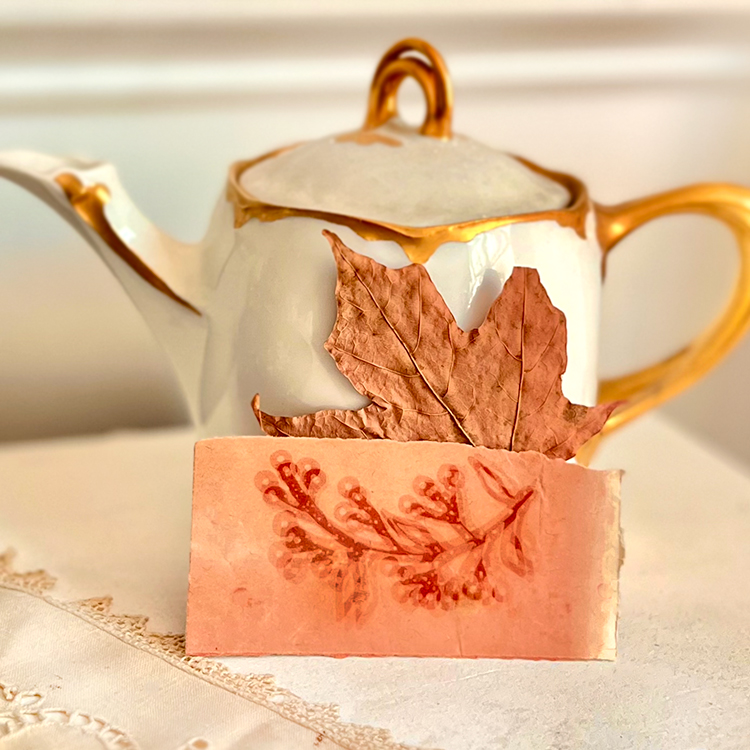
Anthotype Printing means Nature Printing. Light-sensitive plants, fruits, or vegetables are used to create prints. Dried vegetation works well also. Please experiment to find other colors and ways to print (see the last section below to understand how to achieve color and shade variations). The original color remains in the masked or shadowed parts of the image depending on the exposure. So have fun exploring the many possibilities. I will share some printing with other foods in the future.
Printing with Turmeric
This technique is a ton of fun and fairly easy to master. I prefer to create botanical prints because they are absolutely gorgeous, work well with my art, and I can use items straight from my garden and yard.
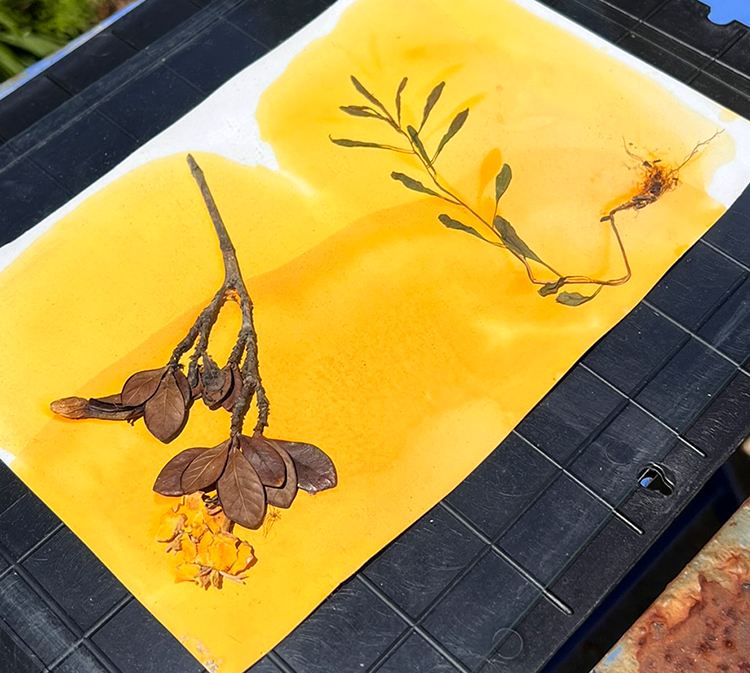
Please experiment with stencils, yarn, rope, kitchen objects, small toys, die cuts, lace, etc. Anything that is opaque should create the same pattern on your surface. The more opaque the object, the darker your print will be. It must be fairly flat, so that the glass can press on it during the developing stage.
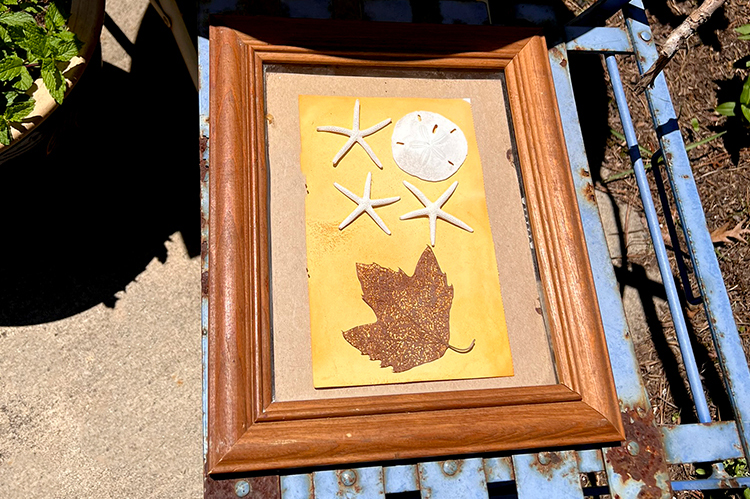
If your mask moves or shifts, the print will be blurry and not as crisp as you see below.
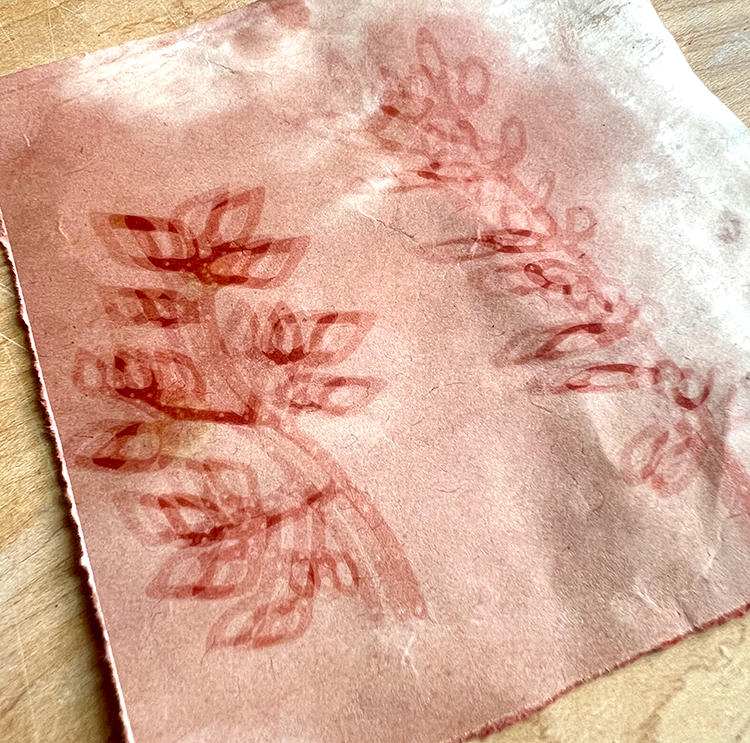
One thing to note is that timing is not exact. Developing your print in the sun has several variables; i.e. the time of day, the cloud cover, the weather, the level of contrast you desire, how much dye you laid down on the surface, etc. The best indicator is the yellow color. The sun print is done is when the dark yellow color of the unmasked areas turns to a light lemon yellow shade.
Print before developing is dark yellow.

Print after developing is light lemon yellow
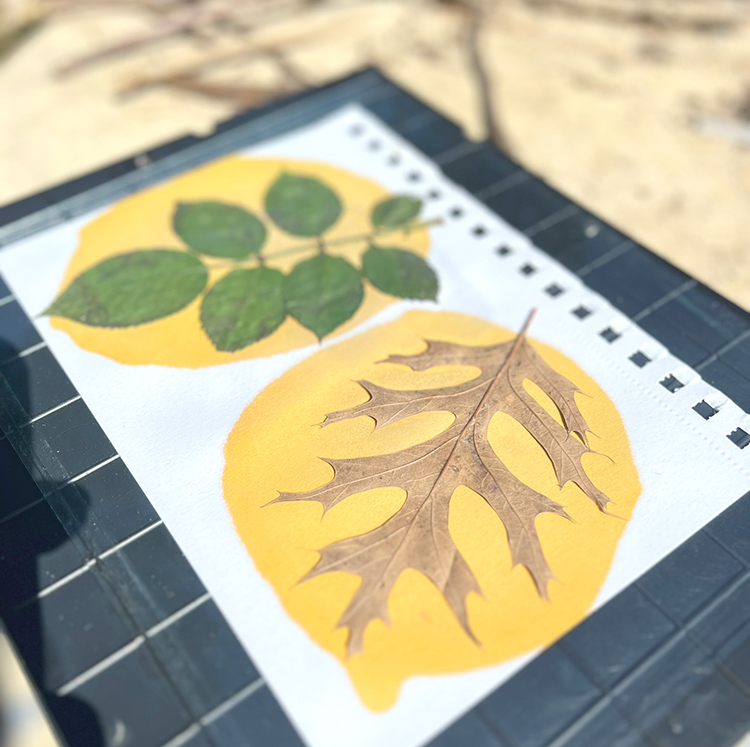
IMPORtANT: The paper remains sensitive to sun rays until it is placed in a Borax or Baking Soda solution to stop the photo-reaction process. If you do not perform this step, the images will continue to develop in ‘any kind of light’ and eventually disappear.
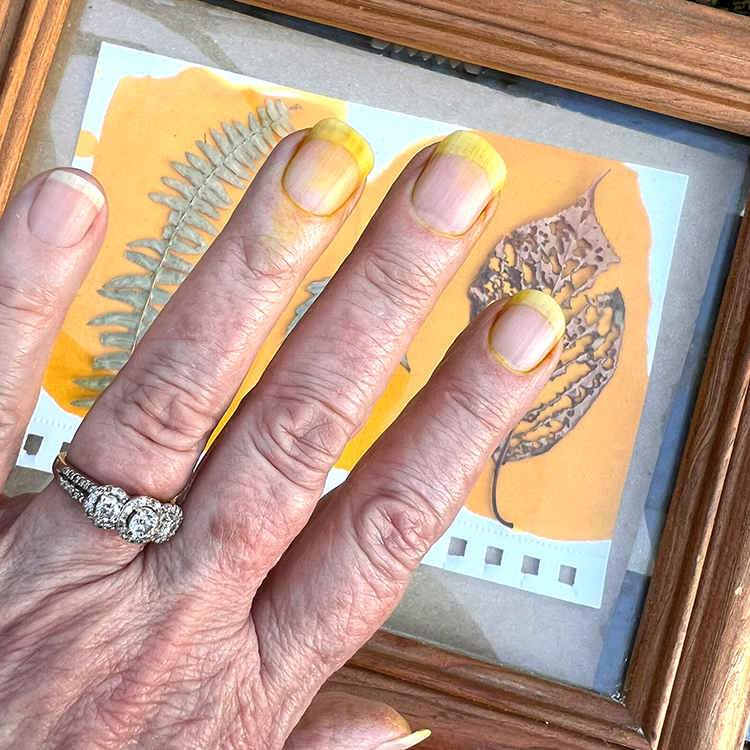
PLEASE NOTE: Turmeric stains everything it touches!!! Always wear gloves, an apron, and an eye splash covering while handling turmeric. Protect your work surface with plastic. I use large trash bags under my work. As you can see, I forgot to wear my gloves and stained my nails. OOPS!
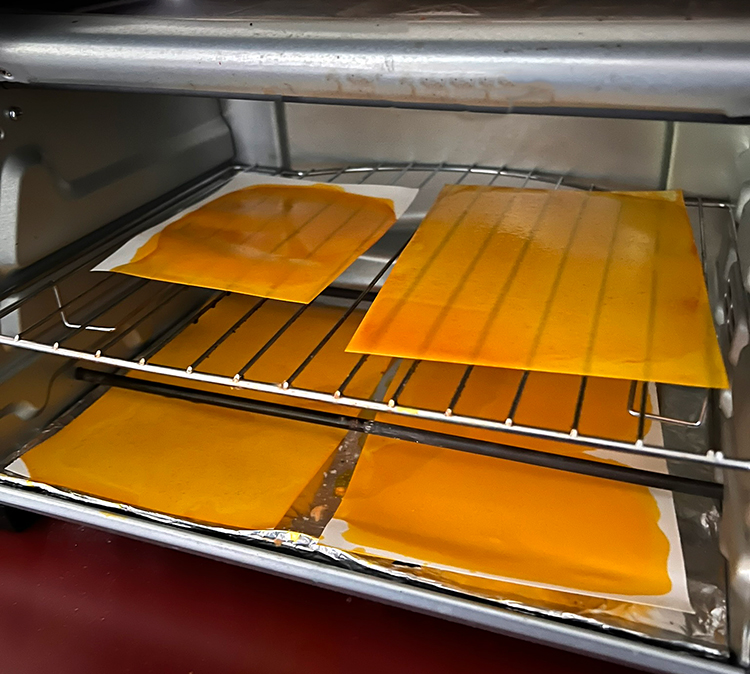
WORK AREA TIPS: Most of the prep steps need to be done in a fairly dark area. Any light source will activate the turmeric immediately. I do this process in a windowless bathroom, and leave the door ajar to see what I am doing. After I paint the solution onto the paper or cloth, I let it dry in my large toaster oven, usually overnight. I cover the window of the oven with a towel. OOPS: As you can see below, the line of the toaster rack played a part in the paper drying and became visible in the art print. Everything matters.
Paper and Cloth for Sun Printing
I tested several different papers for my prints. The paper used needs to stay together when wet, because it will be thoroughly saturated. I tried 20 lb. copy paper, cardstock, mixed media paper, watercolor paper, photo paper, and good sketchpad paper. I did not like the copy paper because it was very difficult to manage when soaking wet. And it rips easily. The other papers worked beautifully and withstood the water bath. Sturdy book pages are fine as well. Let me know if you try anything else and love it. Below is my test print on mixed media paper.
TIP: The quality of the print may depend on the PH of the water and the PH of the paper used. If your prints fade, it is most probably due to the type of paper used. Acid free paper is best.
Cloth made from natural fibers like cotton or linen work well. I had mixed results with fabric and will continue experimenting. After two hours in the mid-day southern USA sun, the turmeric solution had almost vanished on the cotton cloth. It also left some dark streaks that I believe happened because the liquid pooled somehow, but I do like it!
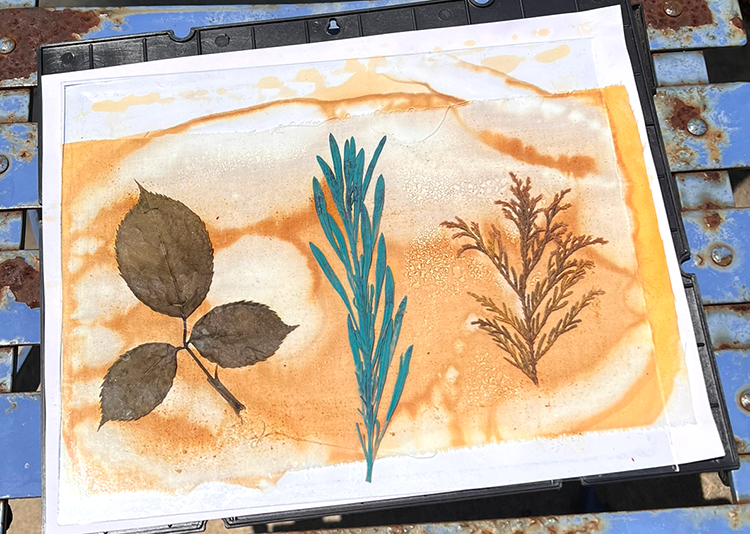
This is the final look of the cotton fabric.
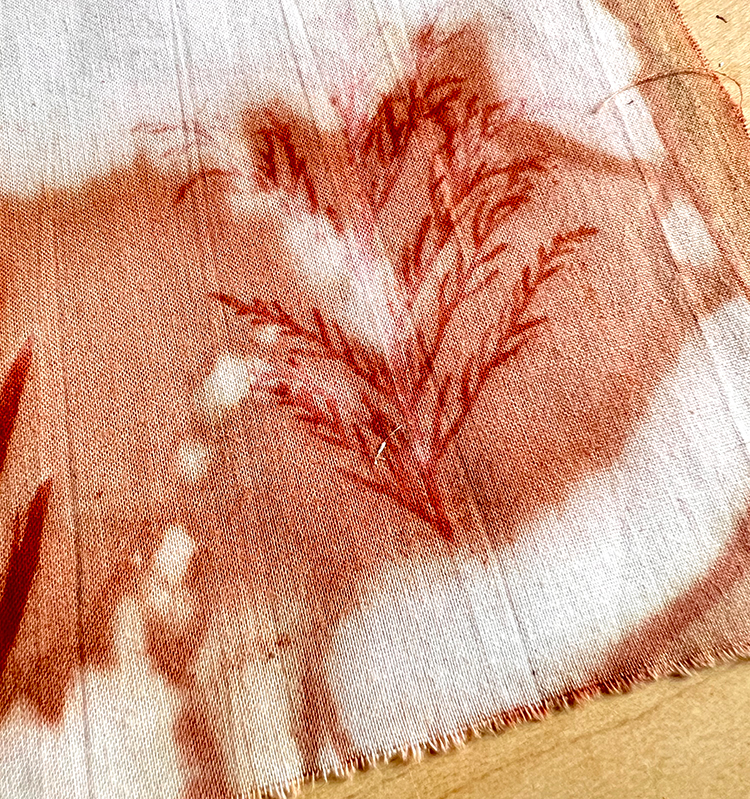
The linen fabric became mottled after two hours, and I’m pleased with the look. So I still have some work to do before mastering fabric sun prints. Perhaps I did not apply the dye evenly or it possibly didn’t dry well before I began developing. Perhaps the fabric should be stretched to keep it flat during the process. I would love to hear how your experiments go!
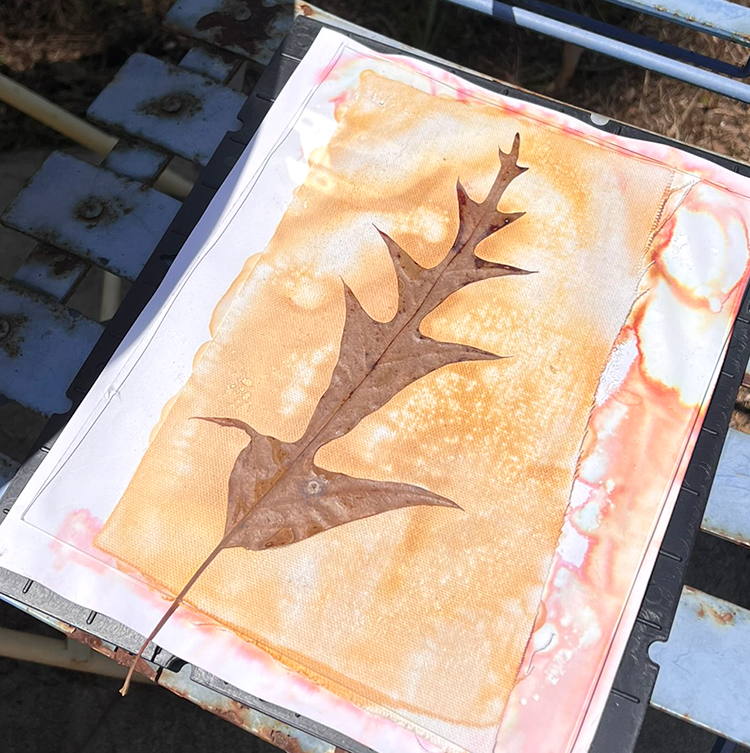
I loved the final look of my woven fabric.
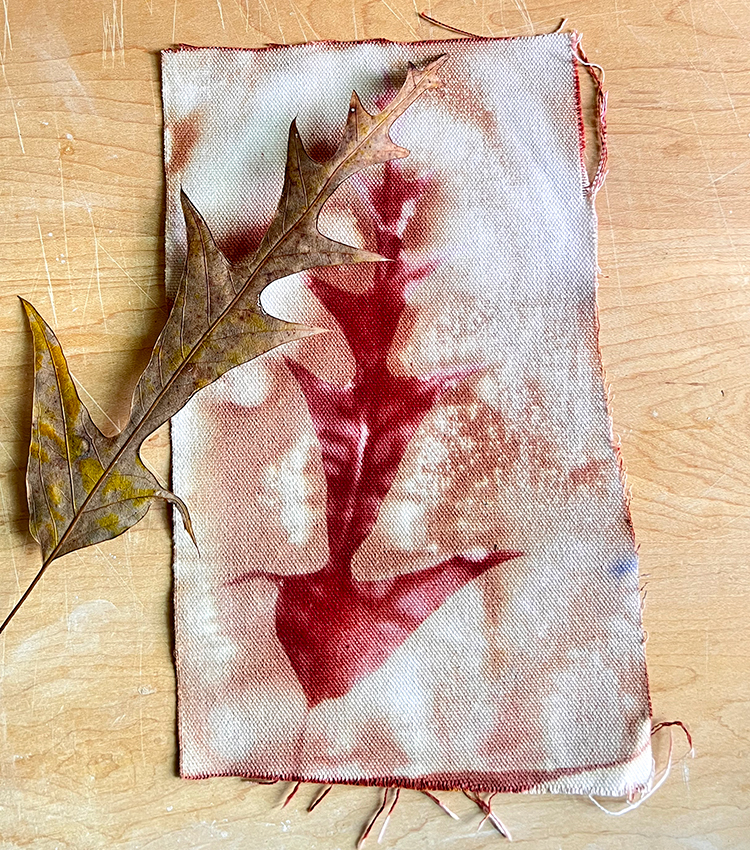
Turmeric Sun Printing Technique
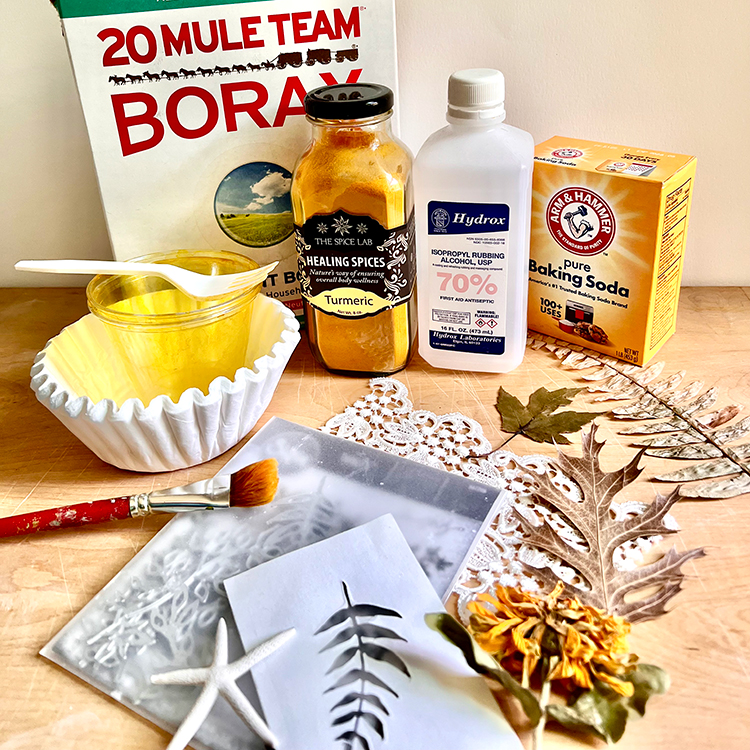
Materials
- 1 teaspoon Turmeric Powder – can use more or less
- 3 teaspoons Isopropyl (rubbing) alcohol (I used 91% and 70%) You can also use vodka!
- 2 cups warm water
- 2 teaspoons of borax (found in laundry section of grocery stores) or Baking Soda
- Paper and cloth – I used white, make sure the cloth has been washed
- Object to print (negative) – flower, leaf, flat flower stems, or any flat object
- Glass photo frame clean (holds your object as it develops) Plexiglas or acetate sheet works
- Cardboard same size as glass or larger
- Painter’s tape or bulldog clips
- Two plastic containers – I used small plastic cups
- Plastic Fork
- Tray to mix Borax or Soda solution (I use a cookie sheet with sides)
- Cheap or Old Flat Brush or sponge brush (turmeric will stain bristles)
- Coffee filter or cheesecloth
- Paper towels
- Protective Clothing, gloves, eye splash covering, work surface covering
Step-by-Step Directions
For best results, do this process on a sunny day. It will work on a cloudy day, but will take much longer. It will also work with a black light or a UV light.
- Cover your work surface with plastic. Wear gloves, eye splash protection, and an apron. This stuff stains and is not easy to remove. If you stain your fingernails, use lemon juice.
- Lay your film paper or cloth out flat on the plastic.
- Make the Dye – Place Turmeric in plastic cup. Add Isopropyl Alcohol and mix well with a fork. You can adjust the amounts here to alter the shade of the print.
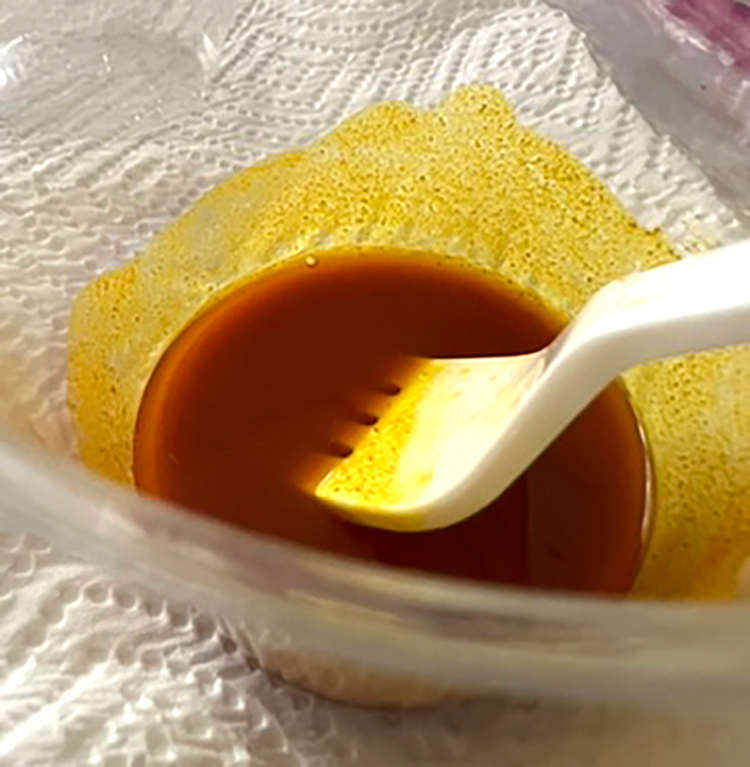
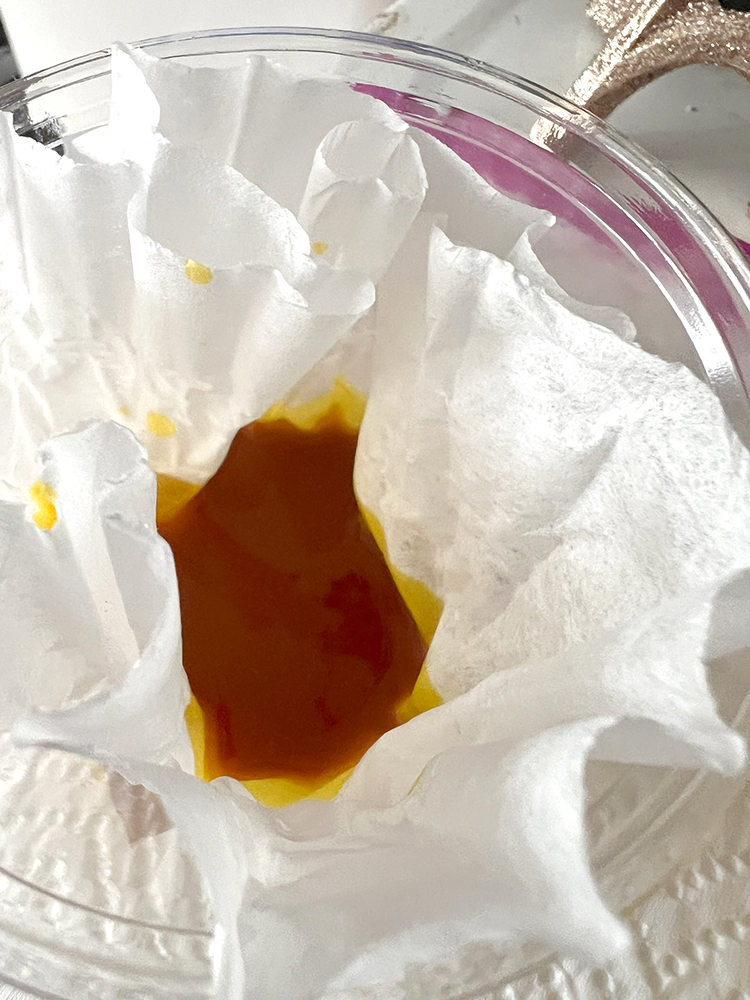
- Strain the Dye – Place coffee filter or cheesecloth in second cup. Pour the Turmeric mixture into the filter to strain out the powder. Allow to drip. You can press on it or wring it to get every drop. The liquid is the dye. Discard the filter.
- Prepare the Film – In a darkened or low light room, paint the mixture on to the paper or cloth. Cover it as evenly as possible. This is the film for the printing. You can adjust the amount of coats you apply to alter the shade of the print. I was putting on three coats initially, but discovered that I like one coat better. This is paper below.
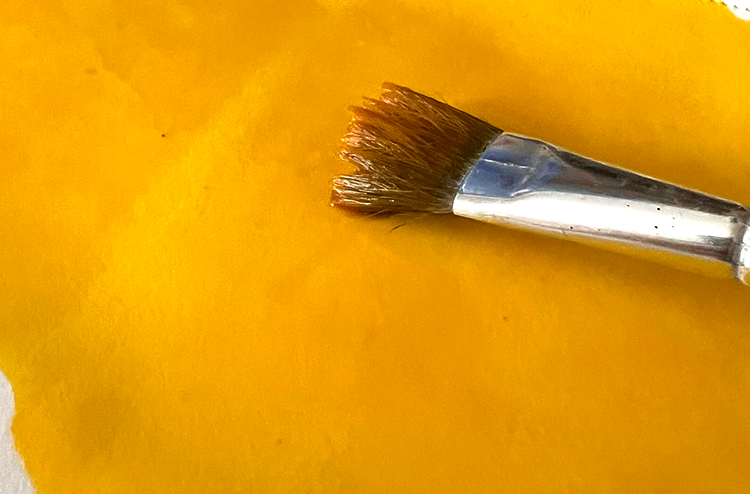 This is on fabric.
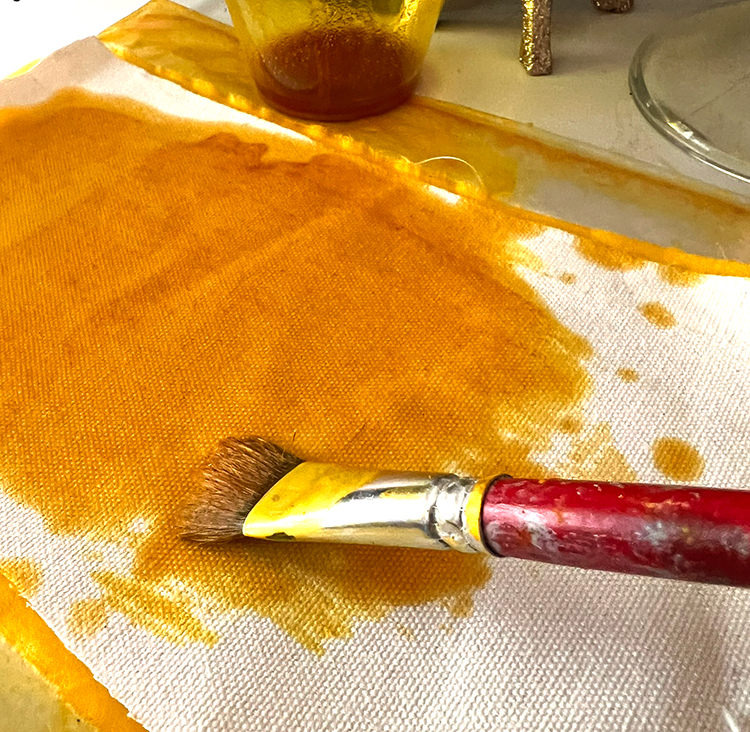
- Dry the Film – Allow to dry completely (15-30 minutes) in a dark place. I use my toaster oven (not turned on of course), but you could place it in a cabinet or room without a window. I allow mine to dry overnight. I prepare the paper at night and begin the process when the sun is brightly shining the next morning. Do what works for you. Just make sure the film is dry before you lay the object down.
- Design – While the paper is drying, lay out your design. You want to be ready to roll once the flowers or flat objects are in place. This is the negative.
- Create the Design – Place cardboard flat on the work surface. Lay the film or treated paper or cloth on the cardboard. Place the flowers, leaves, objects on the treated paper or cloth. Cover with the glass immediately. TIP: Be careful not to cut yourself. Don’t push down on the glass too hard. Clamp to tape edges of the glass to the backing board or use the frame to hold everything in place. If the frame is too tall and the sun is not directly overhead, it may print onto your surface. This is your sun printing ‘sandwich’.
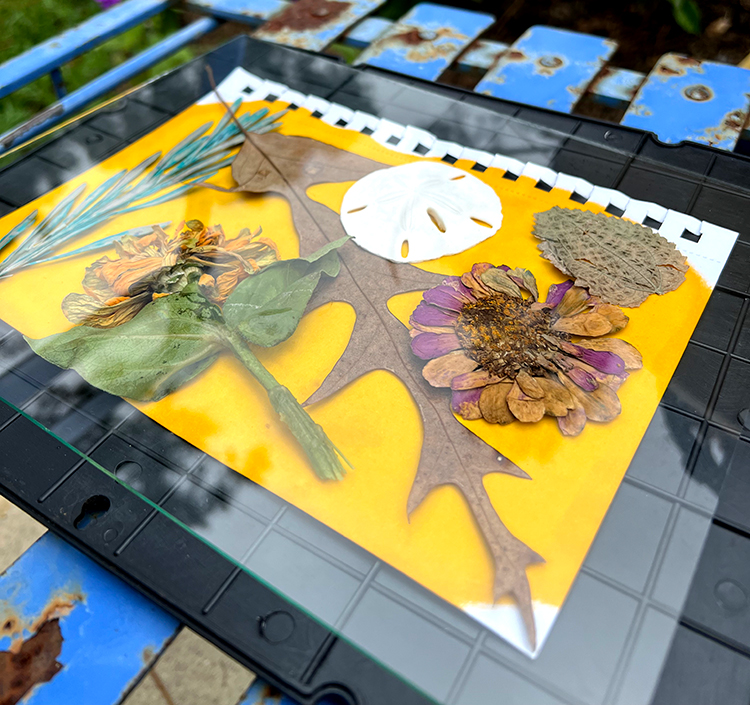
- Developing – Place the sun printing sandwich in the direct sun for 3-5 hours. It is best to use mid-day sun. If you have morning or evening sun which is moving down the horizon, your might get some blurry lines. Check occasionally to make sure the wind hasn’t moved it. TIP: Once it is placed, do not move it!! If it moves, the image will be fuzzy.
- Mix Halting Solution – About 10 minutes before the sun printing is complete, prepare the Borax or Baking Soda and warm water solution in a container larger than your prints. Mix until the powder is dissolved.
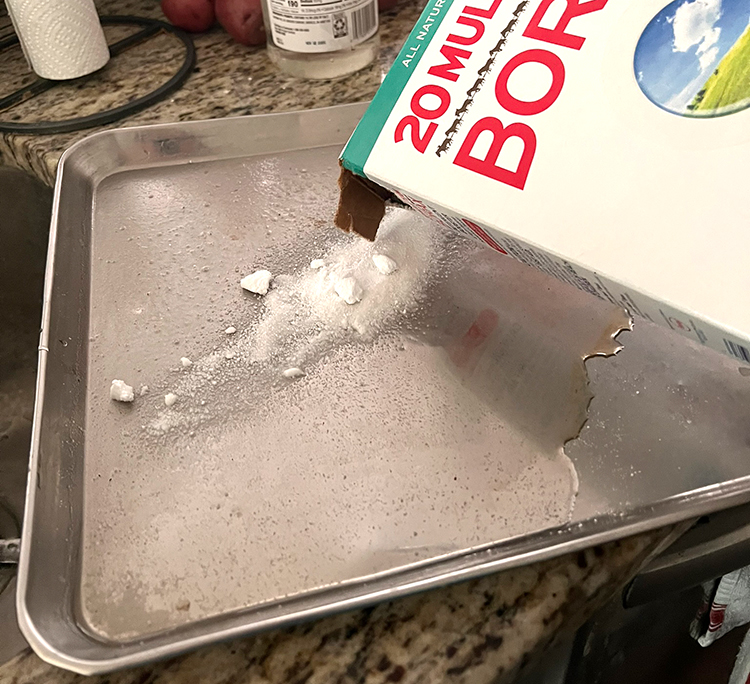
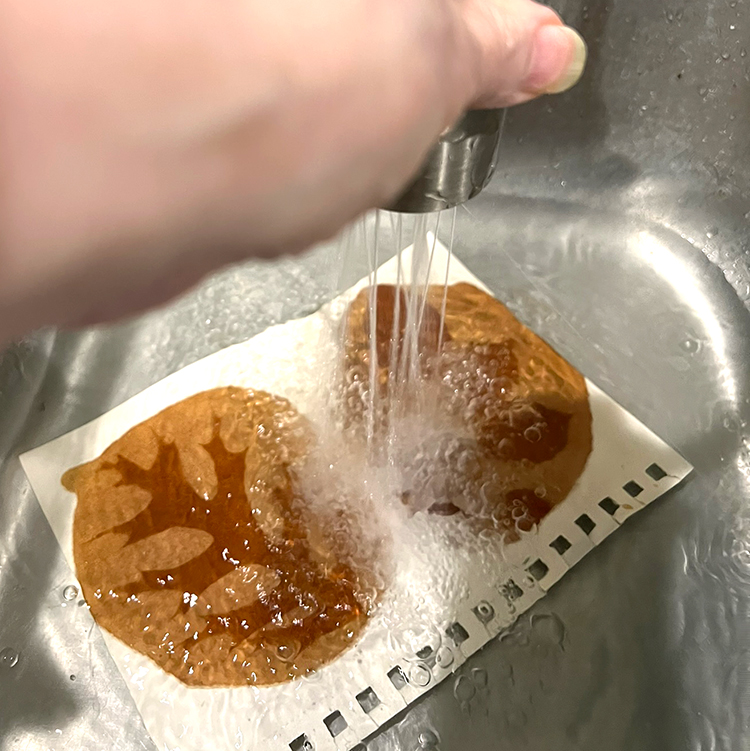
- Halt the Process – Bring the sandwich out of the sun. Remove the glass, masks, and cardboard. Place the paper or cloth in the Borax or Soda solution. Jiggle it around and turn it over a few times. Let it remain for several minutes. The longer it remains in the halting solution, the darker the print will be.
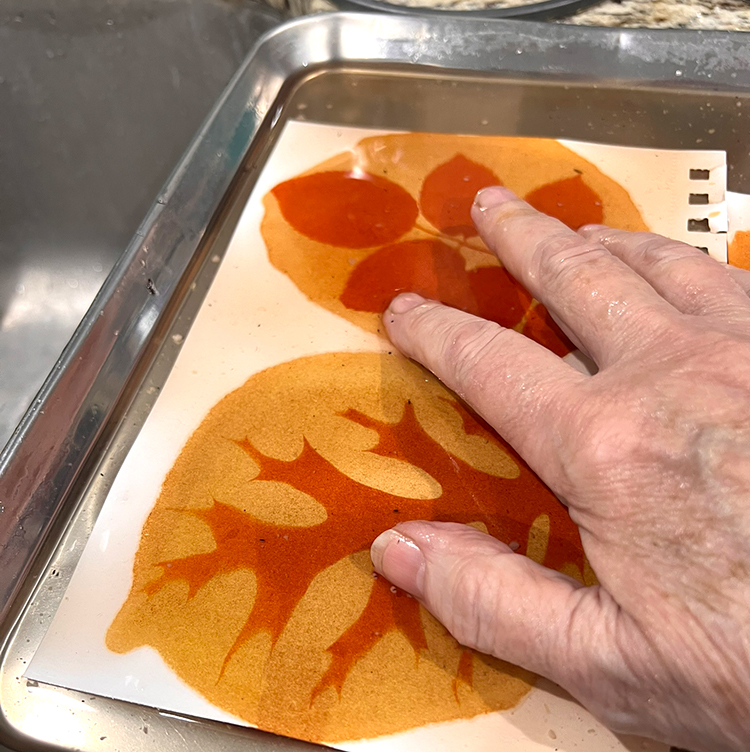
- When it has reached the shade you want, remove from solution and rinse with water. Lay flat or hang to dry.
Why So Many Shades?
In my experimentation, I found that there are many variables which darken or lighten and alter the colors of the turmeric on the paper or cloth. It was fun to note that I was attempting to save the coffee filters for later use (fodder). After it dried, I trashed the powder and rinsed the filter. It was a beautiful shade of yellow. One of my hands still had remnants of the borax solution on it. When I touched the rinsed filter, my fingers changed the yellow color into a deep maroon tone in places where I touched. This taught me another ‘chemistry’ reason for using the borax or baking soda. It alters the colors of the dye (turmeric) as well as halting the developing process. Hmmmmm… so very many possibilities herein.
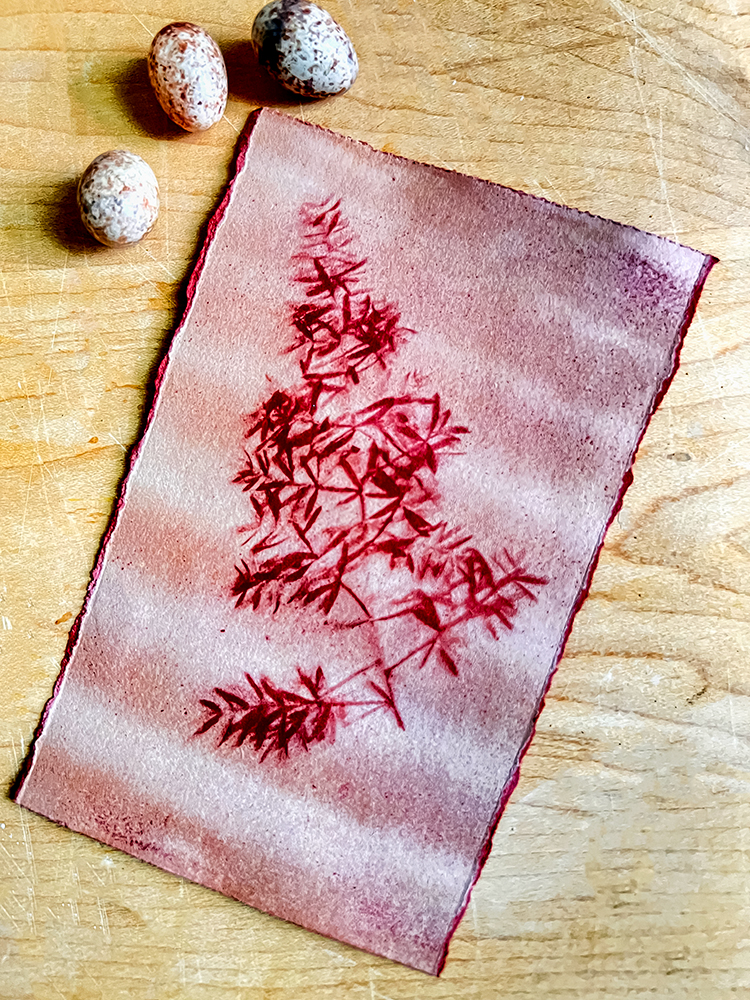
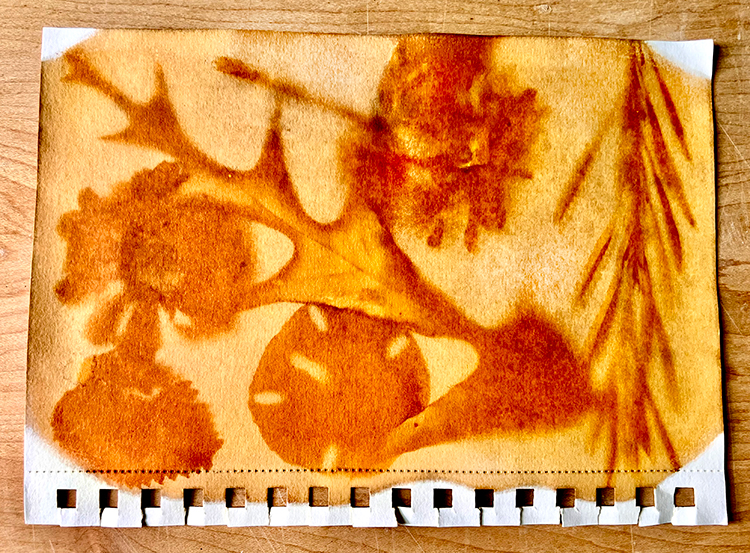
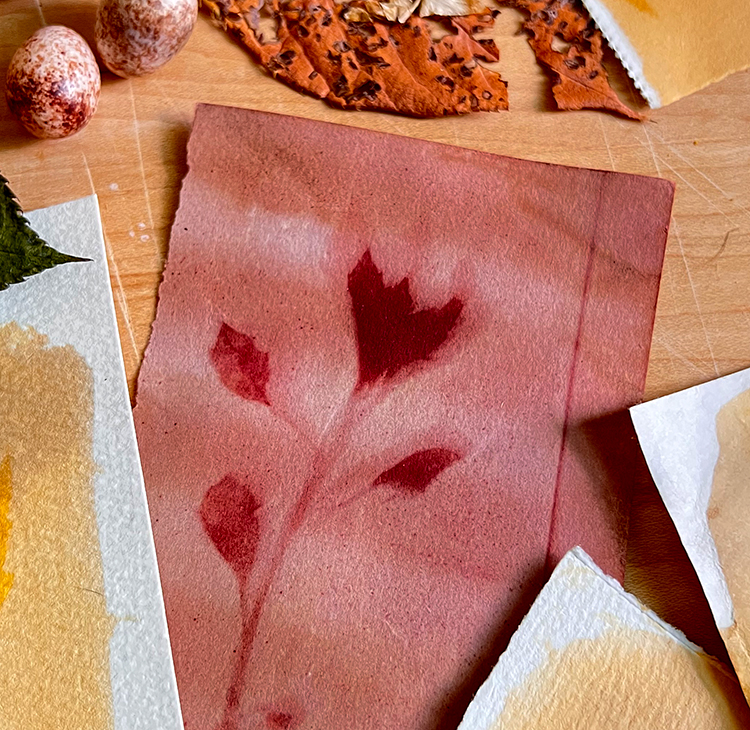
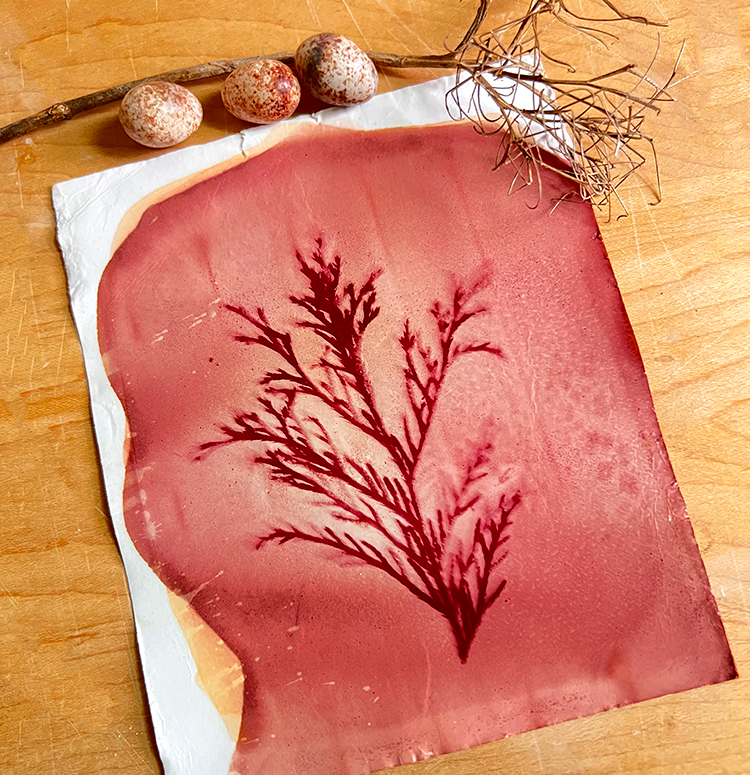
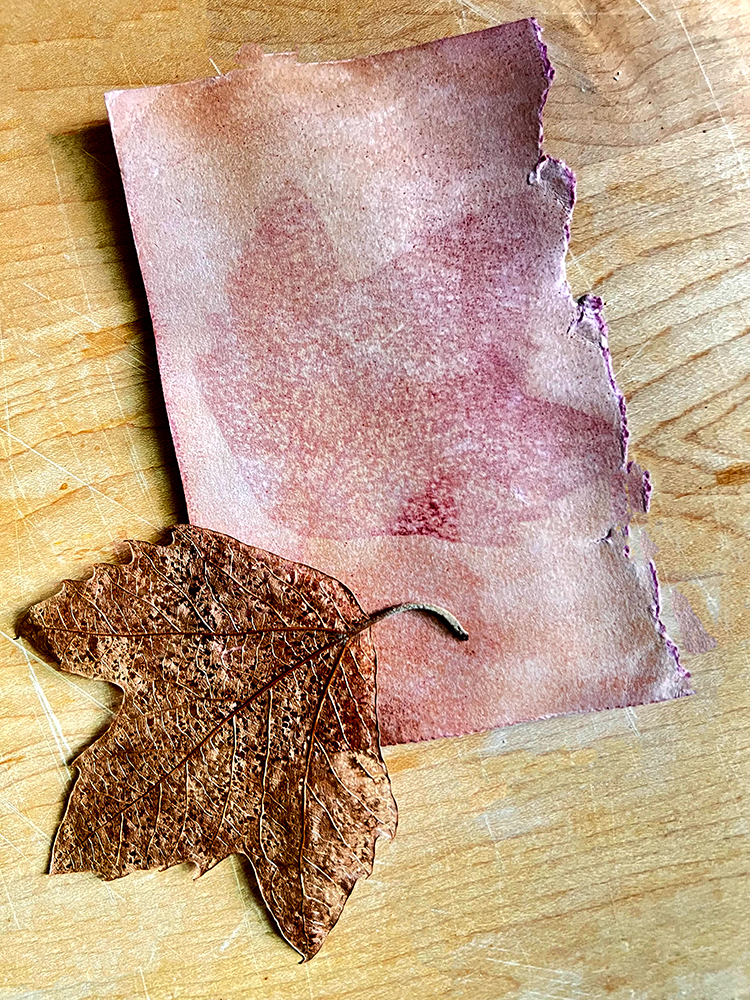
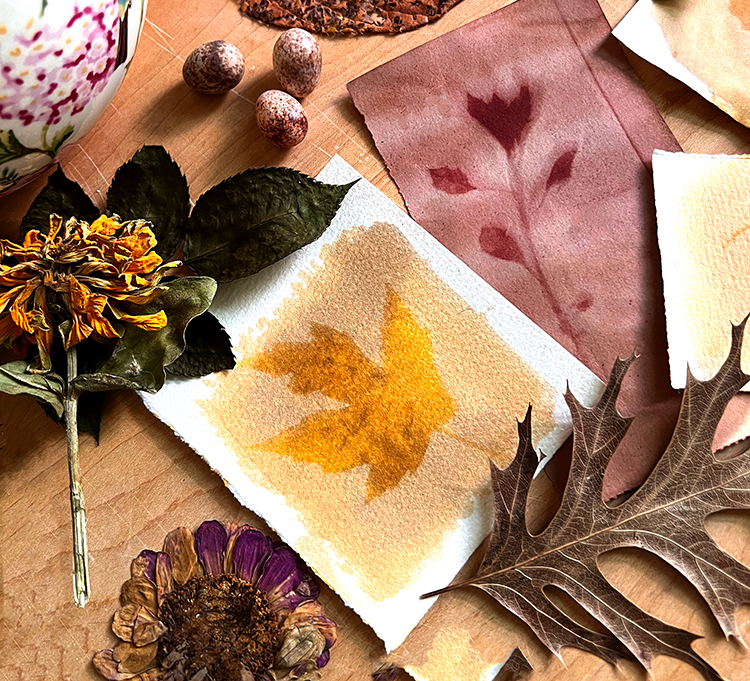
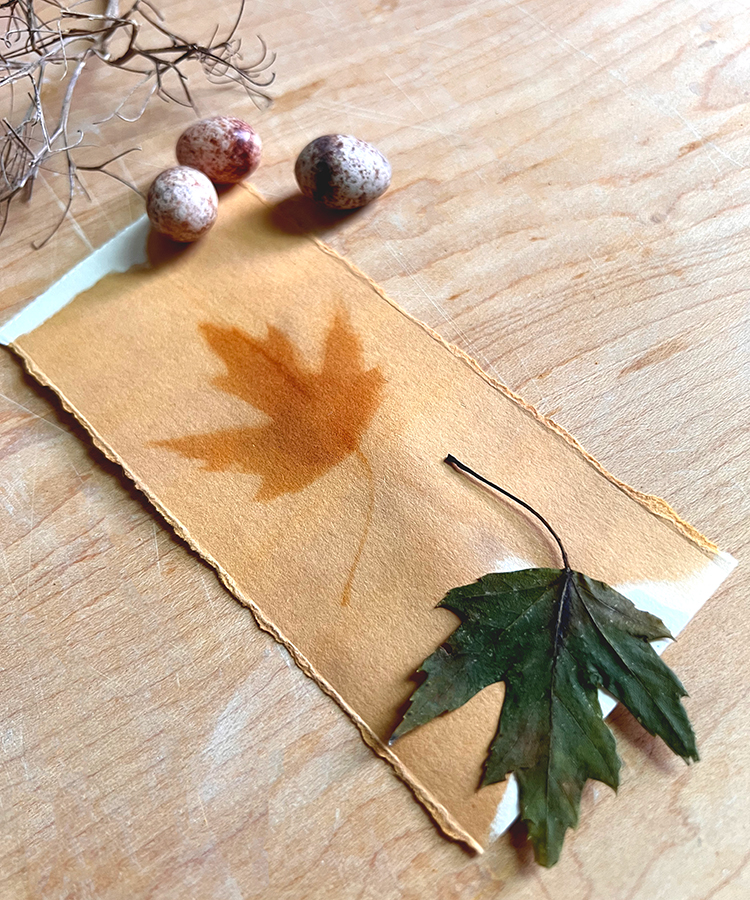
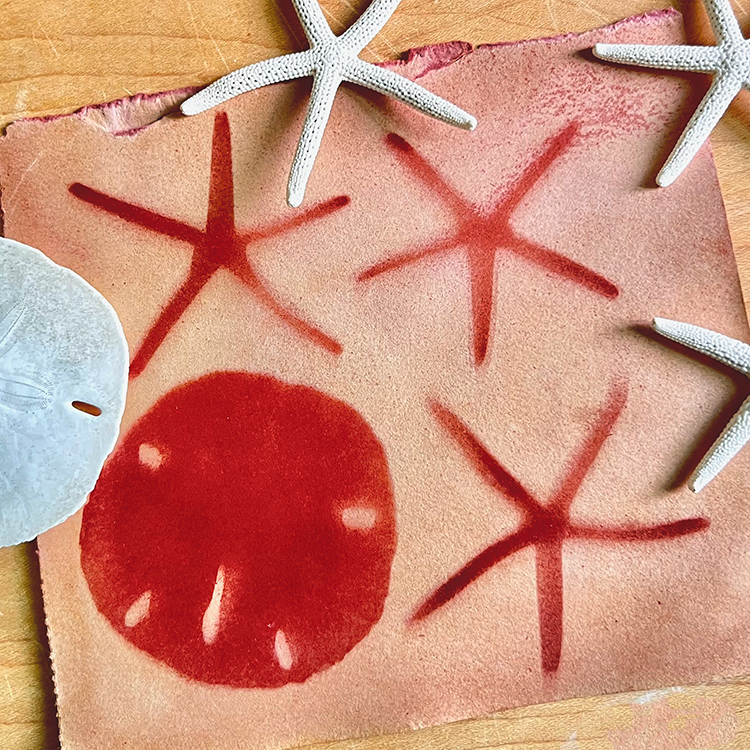
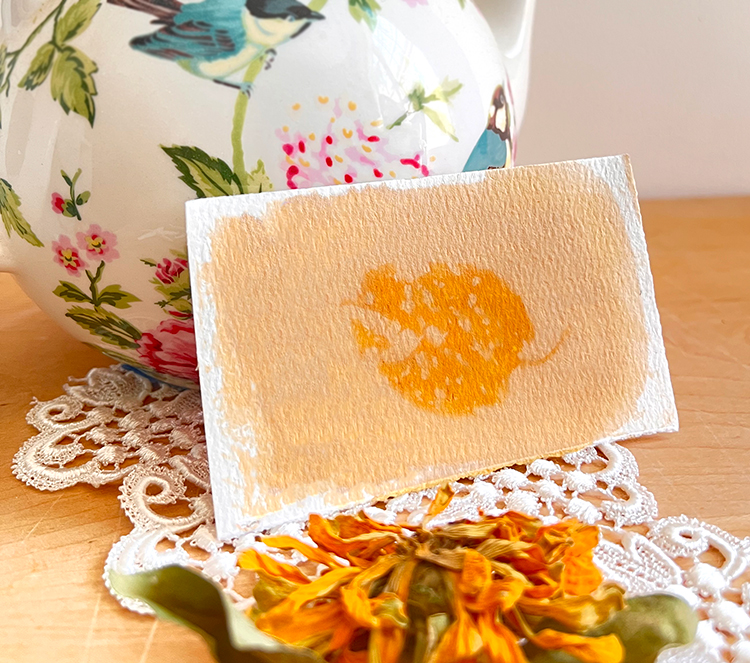
As you will see below, the halting solution and the amount of turmeric dye used alter the image significantly. The Borax halting solution turned my prints a lovely maroon color. The baking soda turned my turmeric prints golden brown. I will share a few images and why they are different below:
- Light Borax (1 teaspoon in 2 cups water) and Heavy Turmeric dye (3 coats) on mixed media paper
- Heavy Borax (3 teaspoons in 2 cups water) and Heavy Turmeric dye (3 coats) on photo paper
- Light Borax (1 teaspoon in 2 cups water) and Light Turmeric dye (1 coat) on mixed media paper with a skeleton leaf
- Heavy Baking Soda (2 teaspoons in 2 cups water) and Light Turmeric Dye (1 coat) on watercolor paper
- Light Baking Soda (1 teaspoon in 2 cups water) and Light Turmeric dye (1 coat) on watercolor paper
Before Halting:
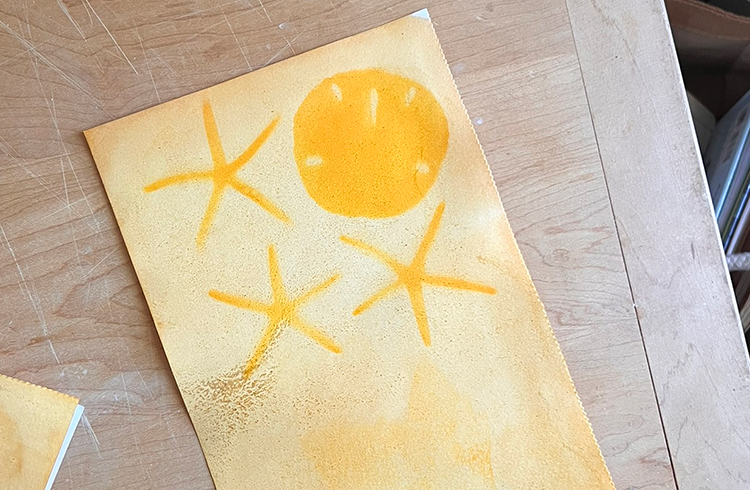
After Halting with borax:
I hope you enjoyed this Turmeric Sun Printing tutorial and process as much as I did. I can’t wait to hear your thoughts and discoveries on your creations! When I am not creating for TGF, I also create Photoshop Elements tutorials and craft project videos over on The Graphics Fairy Premium Membership site. You can find even more of my books, art, and whimsical shenanigans on my website – The Bookery.
May joy be with you all,
Rebecca


Undine Reich says
Hallo Rebecca,
vielen Dank für die schöne Idee und alles Gute für die weitere Genesung.
VG Undine
Linda Kay says
I have been curious about this type of sun printing for a while, and I want to try it. Thank you for all of the information and different types of mixtures to use to finish the process. I especially like the fabric trials as it is something I want to use in my mixed media artwork. I am wondering if it would work with other ground spices like cinnamon or cloves, which have a strong color and staining properties.
Rebecca E. Parsons says
Linda: I do not believe it will work with other spices because the cumin in the turmeric is the photo sensitive part. It is a chemical reaction. But please try them and let us know. Rebecca