
How to Make Gesso!
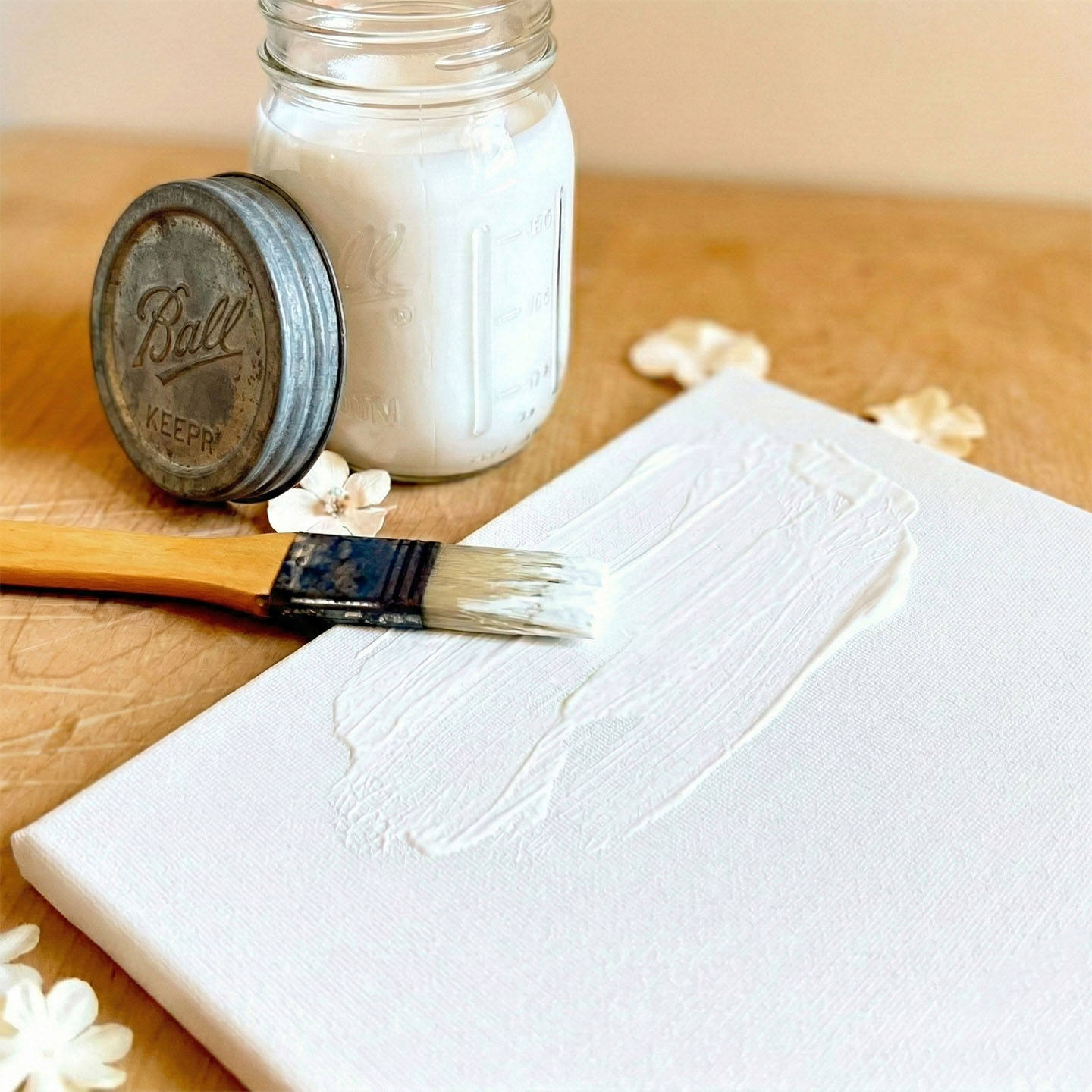
Hello Graphics Fairy artists and creators. Today we will be learning how to make gesso – a versatile and oh so useful art supply for ‘priming’ a surface to accept paint. I will share a few of my favorite recipes for creating this medium. We will also see that using different ingredients will make a big difference to the outcome. Gesso is a favorite way to take your paper, book, mixed media, junk journals, and collage art to the next level. It is not just for preparing panels, canvas, or other surfaces for painting or gilding any more.
This post may contain affiliate links which won't change your price but will share some commission, you can find our privacy policy here.
We will be using a more modern approach with less traditional and archival methods to create handmade gesso using simple and easily available ingredients. These are fun recipes and are not meant to be archival. So, enjoy the process. I will show you the ways and give you the pros and cons along with plenty of tips and tricks I have learned from making my own DIY Gesso.
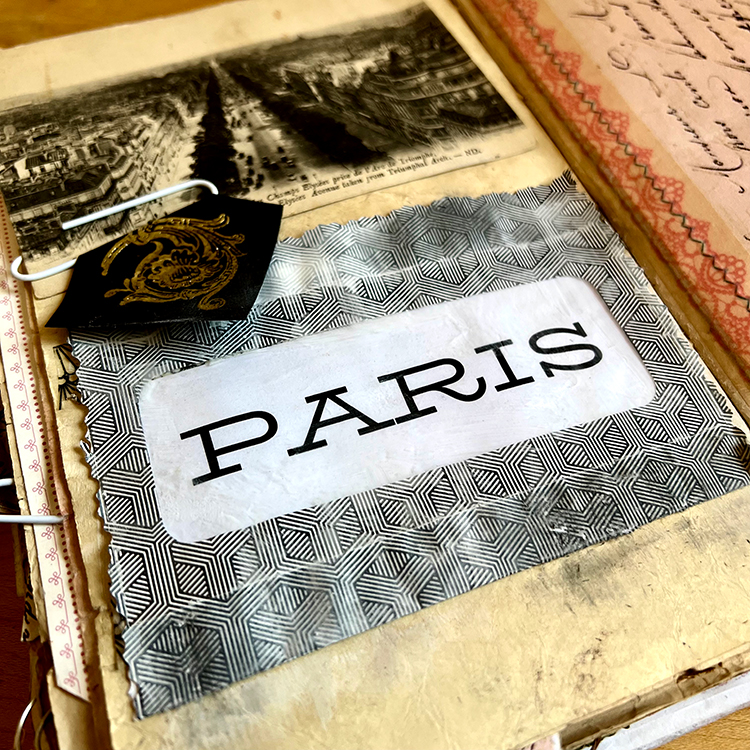
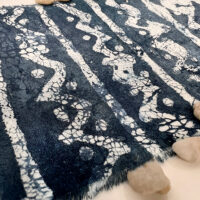
Below is some Baby Powder Gesso used to give the PARIS pocket some flair and nuance.
Please check out my deep dive into Gesso called What is Gesso – a Comprehensive Guide! It walks you through everything you need to know about gesso.
Homemade Gesso versus Store Bought Gesso
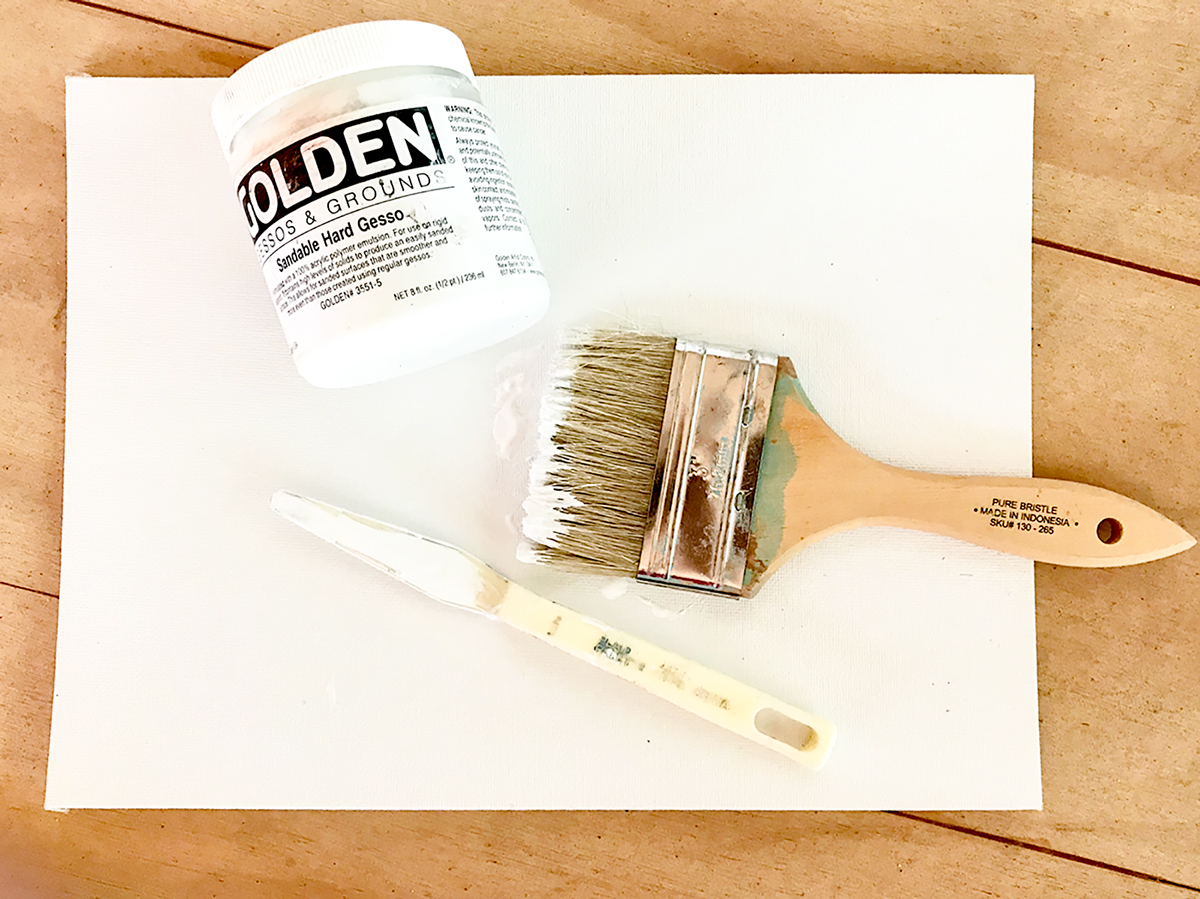
The most commonly used way to prepare a surface that will accept paint is using Gesso. Although the store bought products work beautifully when applied to many different surfaces, we can easily make something in our studios that does exactly the same thing. This opens a world of possibilities for you.
Additionally, the manufactured product can be fairly expensive and, if you are like me, you already have a bunch of the ingredients for making gesso in your home! The main ingredient difference in manufactured gesso and homemade gesso is Calcium Carbonate. It is used because it remains stable for a long, long time. NOTE: For an heirloom piece or a fine artwork, I would recommend using a high quality, manufactured gesso.
Gesso has a creamy consistency with a little grit to it. The grit or filler is what allows the paint or glues to grab on to the surface below. So we must add some grit to our mixtures. Some sources of grit are: Baby Powder, Corn Starch, Chalk, Whiting, and Plaster of Paris, and many more. Here are three filler/grits I used to make our tutorial recipes.
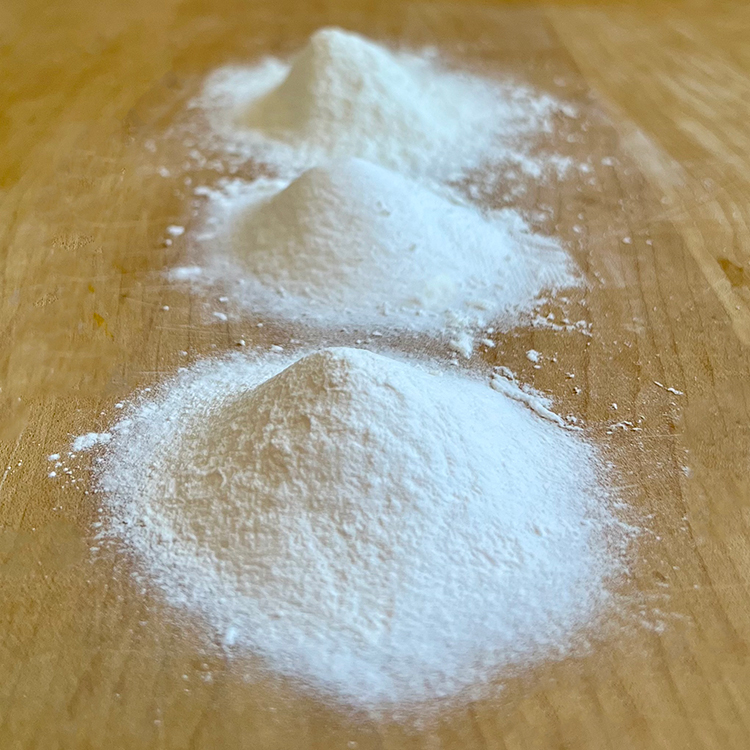
How to Make Gesso!
I first learned to make gesso 25+ years ago when I was learning gold leafing and water gilding. I learned the centuries old formula for gesso by building a mountain of Whiting (calcium carbonate), adding rabbit skin glue and water. It took hours and you needed to carefully work it until the mixture began to “fall down along the sides of the mountain.” That is how you knew it was correctly done. I will not be sharing this method today mainly because I prefer not using rabbit skin glue and it take several days to make.
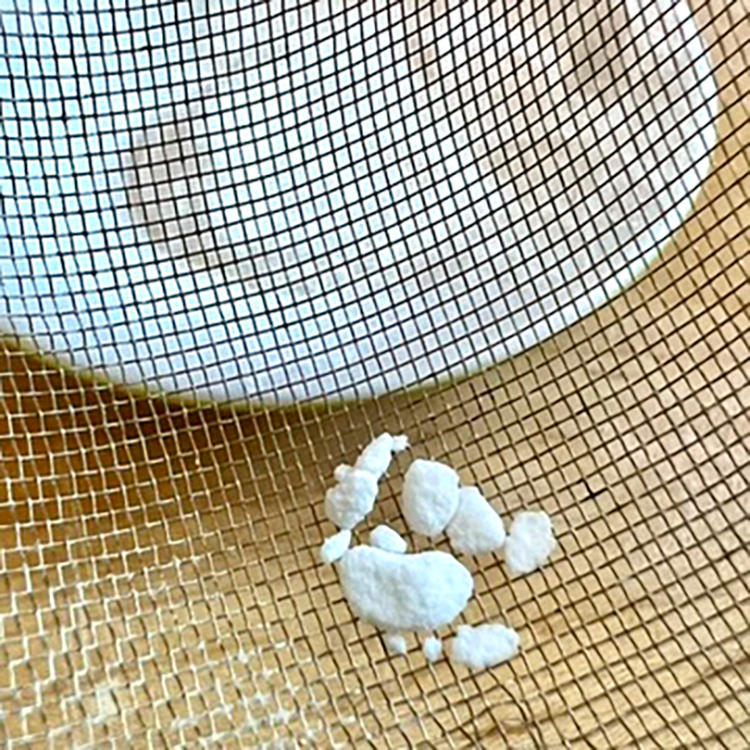
One of the problems with making your own gesso are the lumps that form in the mixture. UGH! I usually sift the Grit/Filler ingredient before adding it to the wet mixture. This helps. You can also use a blender, but make sure it is a studio only blender. Do not use it for food prep after making art supplies!! See the lumps in the filler below.
DISCLAIMER: If you are creating a major or important work of art or an heirloom treasure, I recommend using a good, artist grade manufactured gesso. Just like using archival paper materials, your artwork will last longer. If you are painting with oils, it is recommended by most artists that you use traditional gesso for priming your canvas, panels, or other surfaces. Oil paints have different requirements to work properly. A mismatch in the flexibility of the media can cause problems over time. For egg tempera art, it is recommended to use an artist grade gesso. Please experiment and make your own judgements for your personal artwork.
Supplies for Making Homemade Gesso
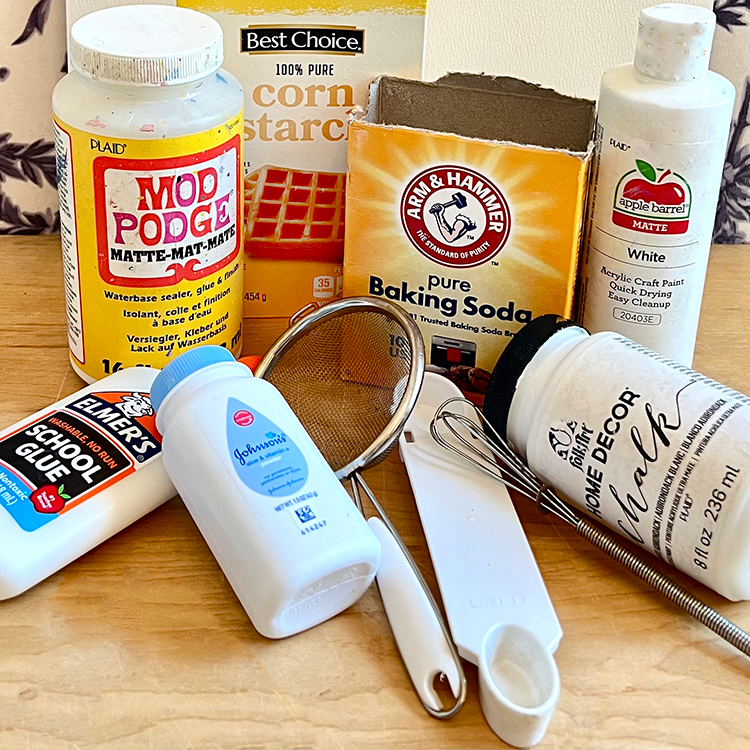
- Distilled water
- Filler/Grit Material/Inert White Substance: Whiting or Ground Chalk (Calcium carbonate), Marble Dust, Corn Starch, Unscented Baby Powder, Gypsum, Plaster of Paris. My preference is marble dust or chalk.
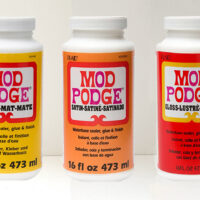
- Binder: PVA Glue, School Glue, Mod Podge, Acrylic Resin
(use an archival book-binder’s PVA glue if you worry about pH) - Paint: Titanium white acrylic, Flat or Matte Latex, Matte White Craft Paint. NOTE: I prefer Titanium White Powdered Pigment for my DIY gesso. It increases the opacity, but it is not requisite.
- Dust Mask
- Sifter – I use a small mesh strainer
- Palette Knife or Spoon or Whisk to stir
- Container that can be tightly sealed
- Measuring spoons or cups (never use for food again)
- Optional: Kitchen Scale
Proportions
How Much of What?
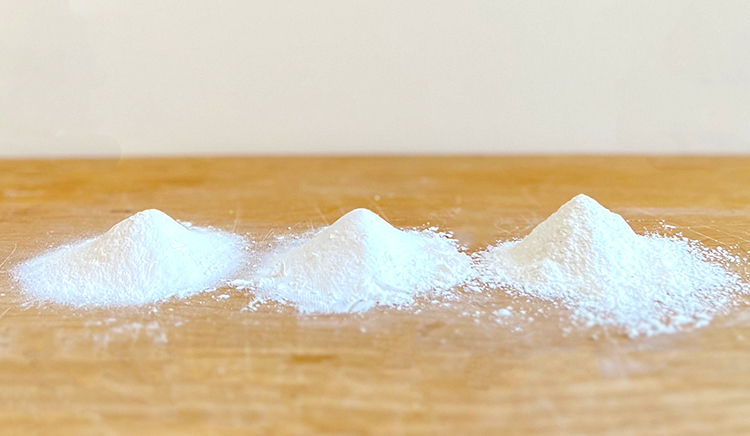
Making your own DIY Gesso is a matter of personal preference for each artist. You will find what works for your style of creating and settle on the feel and amounts of ingredients used. I will give you amounts of the ingredients for each of my recipes. Consider these a starting point, just like cooking. You might want to add more of the grit ingredient for some of your mixtures. Some of you might want a smoother consistency. Others might want a more opaque mixture while others may want it transparent or even clear. So play around with the ingredients until you arrive at a gesso that suits your art.
Below are my test results for the three gesso mixtures created for this tutorial. I brushed on two layers of gesso for each of the methods. I worked on a Graphics Fairy floral image printed with a laser printer as a background. I was looking for the amount of transparency, how easily it wet on, if the gesso sticks without cracking or flaking, and if it left any texture. PLEASE test your mixtures on scrap surfaces or papers before you apply them to an art surface. All mixtures and the ingredients used will react differently on different surfaces. Know before you go!!!!
1- Corn Starch Gesso – is sticky going on the surface, dries fairly opaque, and is smooth to the touch.
2- Baking Soda Gesso – goes on easily, is translucent, and leaves brush marks which I love. Very gritty.
3- Baby Powder Gesso – flows on easily, is fairly opaque, and is very smooth but shows some brush marks.

I personally have several different ways to use my homemade gesso. I prefer a smoother one for my books and mixed media projects. A gesso with lots of tooth or grit is my preferred one for painting on canvas and to have some texture on my mixed media work. A medium thick gritty gesso works best with my collage work. See the Baking Soda Gesso on a French Label below. Love the brush marks!

And I sometimes prefer a clear gesso. So I have a way of mixing mine by feel that works for me. I just add a touch of this and a bit of that and a dollop of something else. Then I rub it between my fingers and adjust accordingly. Let’s look at these ingredient options and some of the most common issues involved in properly creating your own unique and special gesso just for you! Adding a combination of ingredients to produce your own ‘medium,’ even if it isn’t technically a medium is fun. Just be careful what you use when you want your work to last!
Gesso Recipes
Play around with the quantities of each ingredient until you get the opacity and consistency required for your project. While many different versions of this recipe exist, my starting ratios (traditional proportions ) are:
- 2 parts Binder – PVA glue
- 4-6 parts Distilled Water (the thicker the glue, the more water you’ll need)
- 8 parts Filler – Calcium Carbonate or other grit product
- 2 parts Paint
We will discuss several options for actually creating your own Gesso. I have used ingredients that you probably already have on hand in your studio or your kitchen. These are:
- Corn Starch and Acrylic Paint Gesso

This is a quick gesso when I am in a hurry. Use matte acrylic craft paint in white and PVA glue. The corn starch makes a very smooth, thick gesso. It dries quickly and is translucent. For a more opaque gesso, use a titanium white acrylic paint. It can get very thick and hard to mix if proportions are wrong. Just add more water if necessary. - Baking Soda and Chalk Paint Gesso

This was a pure experiment. I really like the results and the ‘gritty’ gesso this method produces. I used Folk Art Chalk Paint in white as it is readily available in craft stores. Other big brand name chalk paints should work as well. - Baby Powder, Latex House Paint, Mod Podge Gesso

For this gesso, use FLAT latex house paint and Matte Mod Podge. I like my gesso to dry matte without any shine. Use Unscented Corn Starch based baby powder. Scented baby powders can cause the gesso to be unstable and crack easily or peel off. This mixture sometimes has a gray appearance when wet but dries whitish.
Other Gesso Combinations
- Calcium Carbonate Gesso
This mixture produces a gritty gesso that I prefer. Use PVA glue and Titanium White acrylic paint. I love to use powdered pigments when I have them in this mixture. I would call this my top-of-the-line gesso. - Heavy (Thick) Gesso: You can also make heavy (thick) gesso, which works as a texturing medium and a primer, by doubling the filler/grit portions.
Step by Step Tutorial – Mixing the Gesso
The method for mixing the ingredients are the same for each type of gesso we make. You can add more of the filler or grit for a more paste-like gesso. More water can be added for a thinner gesso. You will land on a mixture that suits your style of creativity. Just make sure you write down the proportions of your personalized gesso mixture. I prefer a smooth gesso with the consistency of pancake batter. I can always make it looser if I need to.
- Use a dust mask. This is necessary as the fillers cause a cloud of dust that is not good to inhale. Even small amounts can irritate your nose, throat, and lungs.
- Pour the PVA glue into a mixing container.
- Add the Distilled Water. We use distilled water to lessen the chance of the mixture mildewing in storage. HINT: I use the same measuring cup or spoon to measure the glue and water. Adding the water after the glue helps to get out all of the glue left in the measuring device. No waste. Mix well. HINT: I like to use a small whisk for mixing.
- Sift the filler through the strainer. I do this to remove any big lumps and make it as fine as possible.

- Add the filler a little bit at a time and mix well after each addition. This allows you to adjust the consistency as necessary and keeps the mixture smooth.

- Add the paint and stir until it is fully incorporated into the mixture.

- Adjust with a few drops of water to loosen the mixture or a few pinches of filler to make it tighter. Below is the consistency of homemade gesso that I prefer – like thick pancake batter.

- Store in an airtight container for a week. It is so easy to make DIY Gesso that I only make as much as I need for the project I am working on. Store bought gesso has preservatives added to make it last longer.

Application of Homemade Gesso
Your gesso can be applied in several ways, such as with a brush, roller, or scraper. If preparing canvas, you want it smooth as possible. You will need to sand it. SAFETY NOTE: Always wear a respirator when sanding. The dust is an irritant to lungs, and some forms of chalk contain silica, which is harmful if inhaled.
For mixed media and collage, many artists use gesso to cover or obscure some portions of their artwork. Others use gesso for transfers and resist techniques. I personally love to scrape gesso over one of my art so I can write or draw on top as shown below.
I hope you enjoyed learning How to Make Gesso. When I am not creating for TGF, I also create Photoshop Elements tutorials and craft project videos over on The Graphics Fairy Premium Membership site. You can find even more of my books, art, and whimsical shenanigans on my website – The Bookery.
May joy be with you all,
Rebecca



Cheryl says
Thank you
Karen says
You’re welcome! 🙂
Rebecca E. Parsons says
Enjoy Cheryl
Tammy says
I didnt see anywhere how much of each item to use to make the Gesso. Could you please let.me know.
Rebecca E. Parsons says
Tammy, You can find the ingredient recipes under the heading: Gesso Recipes. Enjoy.