
How to Print on Napkins
Hello Graphics Fairy friends! I’m Diana from Dreams Factory and I’m happy to be here again to share another creative project with you. Today I’m going to show you how to print your own vintage designs directly onto simple white paper napkins using a regular home printer. There are a few things to keep in mind while trying this technique, but once you get familiar with the process, you will be able to turn your favorite vintage printables into custom decoupage napkins in no time! Have fun learning how to print on napkins!

This post may contain affiliate links which won't change your price but will share some commission, you can find our privacy policy here.
Napkin decoupage has been a long favorite technique for achieving that soft, almost painted-on look. While there are countless decorative napkins available to purchase and use in your projects, searching for THE perfect one for a specific project can sometimes feel limiting — and to be honest, even a little tiring. So instead of just searching, I want to empower you and show you how easy it is to create your own.
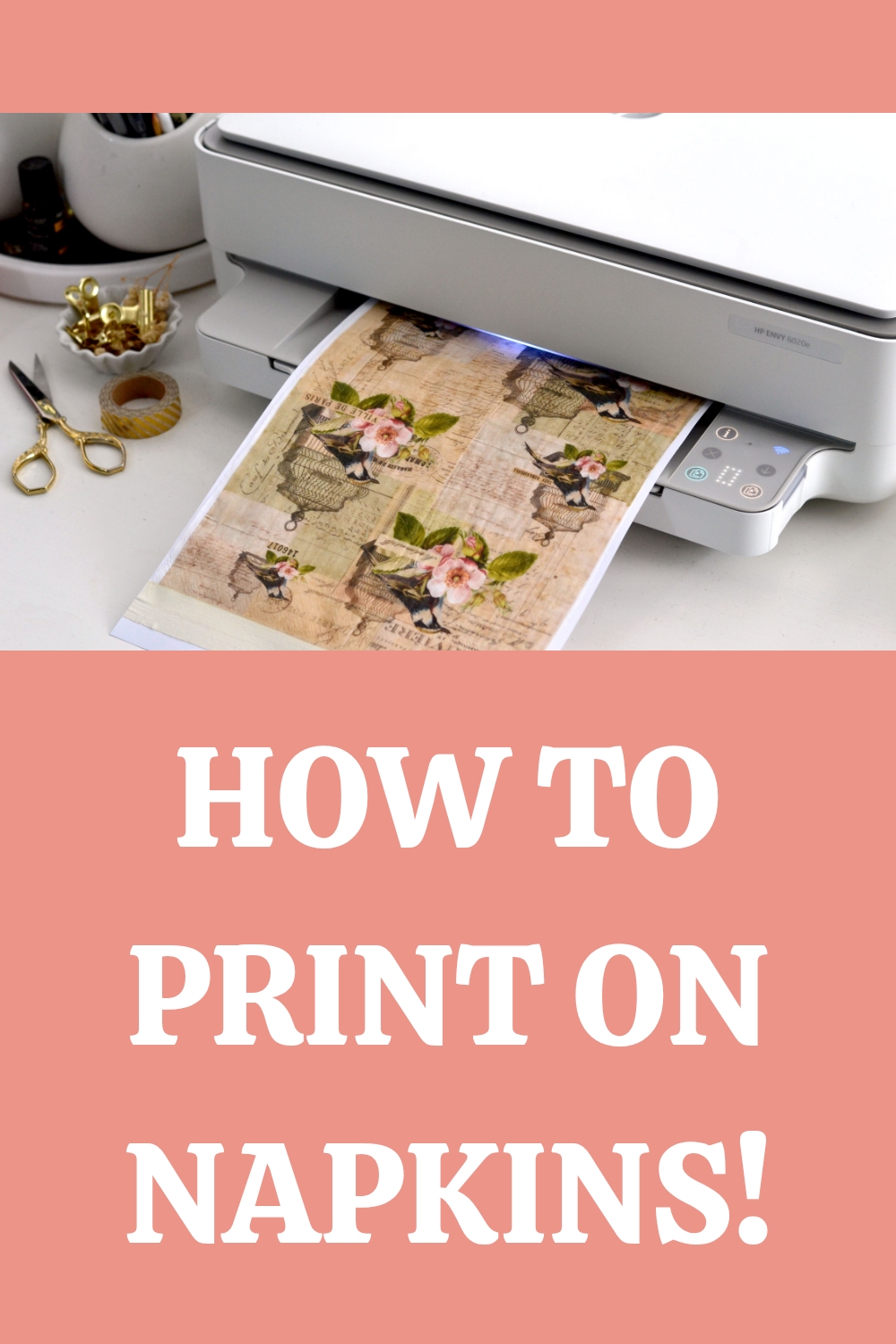
Printing your own designs opens new doors for experimenting and truly endless possibilities. This will allow you to get creative on your terms and approach everything in a way that feels personal, distinctive and truly unique.

I created three absolutely gorgeous printables specifically for this project using vintage backgrounds, French ephemera, beautiful flowers and some adorable birds. I know having to pick just one would be quite difficult, so I would suggest, instead of choosing just one as your favorite, to print and use them all!
You will notice that all three printables have a little bit of extra white space at the top. I intentionally left that extra space there, as you will need it to create a special assembly which will help you feed the napkin safely through your printer.
Printables:
—-> Click HERE to Download the Full Size Printable PDF <—-

—-> Click HERE to Download the Full Size Printable PDF <—-

—-> Click HERE to Download the Full Size Printable PDF <—-
How to Print on Napkins Supply List:
- white cardstock paper
- white napkins
- home printer – laserjet or inkjet
- regular scissors
- masking tape

For this technique, you will need to use a single layer of a white paper napkin! It’s really important to use only one layer! Keep this in mind so everything goes as smoothly as possible.
Most paper napkins come in multiple layers, so you’ll have to gently separate the layers first. If possible, I would suggest using 3-ply white luncheon napkins, without any printed designs, as you will be able to use them all and create three custom-made printables. I recommend starting with good-quality luncheon napkins, which typically come in packages of around 16–20 (depending on the brand). They are slightly sturdier, but also delicate enough to blend beautifully once applied. I would avoid the larger economy packs of 50–100 napkins, as they tend to be thinner and lower in quality.

If you already purchased printed napkins, you can separate them and only use the white layers. Raid your home for old napkins that are just lying around in your drawers and put them to good use – in this scenario, you will be able to create two custom-made printables!

STEP BY STEP TUTORIAL:
HOW TO CREATE THE PAPER ASSEMBLY
Place a paper napkin on your working surface.

Unfold it and proceed to separate the layers. Remember that we only need 1 layer for printing each of our beautiful designs!

Now, place a sheet of cardstock paper on your table. Carefully smooth the single napkin layer over, aligning it as evenly as possible. Leave some extra space at the top.

I usually like to fold one side of the napkin under the cardstock paper (on the left side here) so I can hold it in my hands without it moving too much. Then I use the edge of the cardstock on the opposite side (on the right here) as a guideline to cut the napkin placed on top.

Next, I slightly reposition the napkin to use the other side of the cardstock paper as a guideline when cutting, while also leaving a tiny bit of space on both sides. Follow the same steps to cut the bottom of the napkin, making sure you also leave a tiny bit of space there.
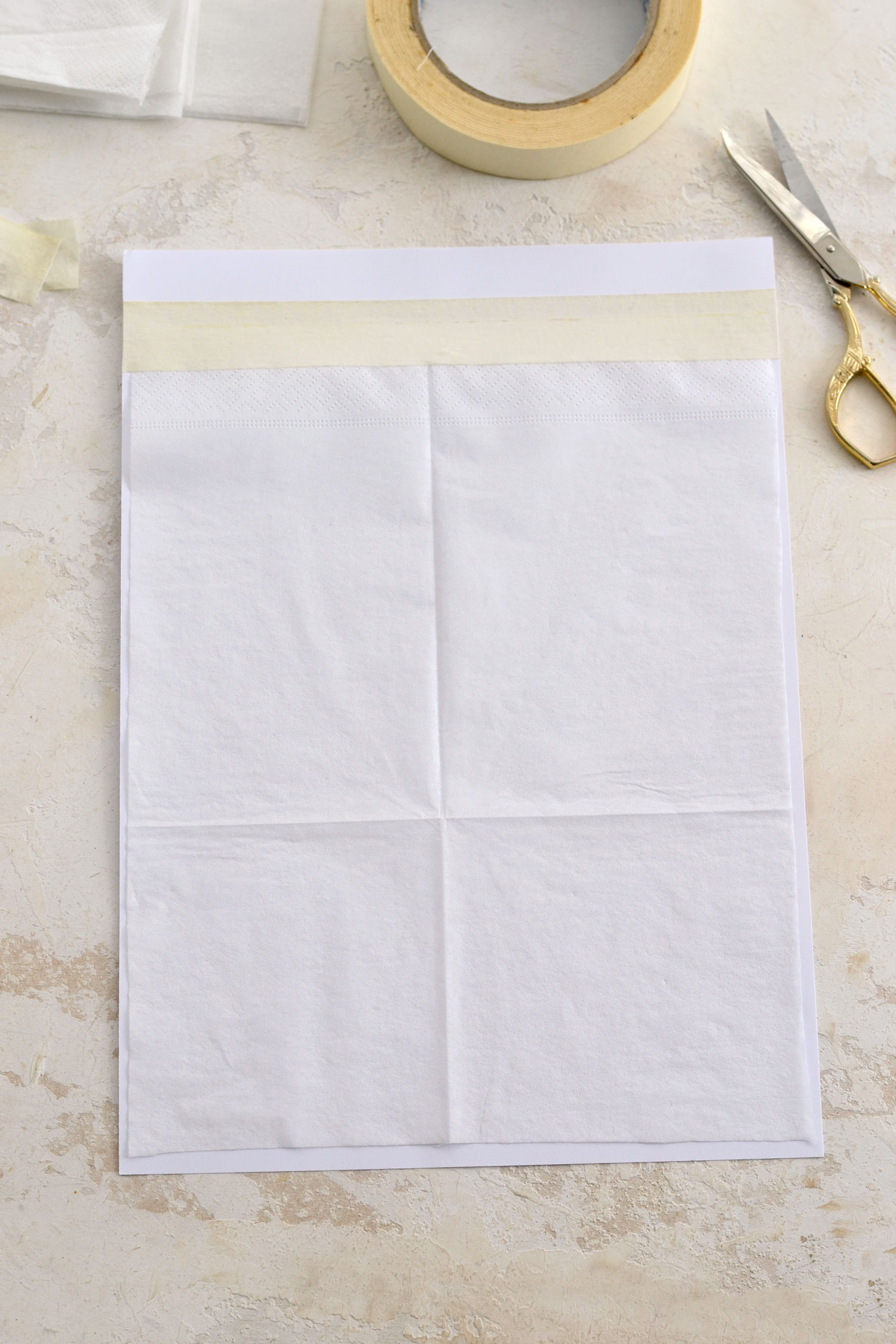
Take a closer look at the image below. This is how your final napkin should look, with no parts hanging outside the cardstock paper! We have that larger extra space on top and only a tiny bit on the sides and bottom.
P.S. If you want, you can try ironing your napkin at this stage to remove some of the wrinkles. I tried it a while ago, but since I didn’t see too much of a difference, I’ve decided not to use it today. If your napkin is really wrinkled, you can start with a lower setting on your iron and gradually work your way up until you are able to remove the wrinkles and flatten your napkin. Make sure you don’t use any steam and always control the temperature, we don’t need any unwanted incidents!

Center the napkin on your cardstock and place the assembly on your table. Remember to leave that extra space at the top and check that all the napkin’s edges are constrained inside the cadstock.
Tear or cut a piece of masking tape that is longer than the width of your paper assembly and carefully add it on top. The top section of your tape should be placed directly on the cardstock and the lower section on the napkin, as you can see in the image below. Be careful while adding the tape, but also be determined. I usually like to press the tape so I can temporarily adhere the longer ends directly on my table, just to make sure everything stays in place.

Press the masking tape’s surface with your fingers so it adheres completely to your paper assembly. The top section that is glued to the cardstock is really important, as we don’t want it to peel right off while feeding it through our printer.
When everything looks good, you can carefully unpeel the two ends from your table and use your scissors to cut them (again, use the edges of the cardstock as a guideline when cutting).
Your first napkin paper assembly is now ready to be printed! If you have time, you can work in batches and have some of these ready for future printing.
INKJET OR LASERJET PRINTERS?
Before we jump right into the actual printing process, I want to take a moment to talk about inkjet and laserjet printers and the differences between them, specifically for this project. I’ve tried them both throughout the years, so I can give you a few insights on how they behave.
Inkjet Printers
Inkjet printers are often the preferred choice for printing on napkins, since most people have this type of printer at home. Because inkjet ink is water-based, it absorbs gently into the fibers of the napkin, creating a soft, slightly muted finish that works beautifully for vintage designs. The colors appear natural and quite vivid.
But there are a few things you need to keep in mind so you can avoid bleeding or smearing:
- After printing, make sure you allow the ink to dry thoroughly before using the napkins. Leave them to dry for a few hours, even overnight, just to be on the safe side.
- Avoid using glues that are too wet, as the ink can reactivate slightly with moisture. Choose thicker glues or mediums instead and avoid oversaturating the surface with glue. Apply a thin, uniform layer on the object you are decorating, then add the napkin, carefully press it with your fingers and finally, add another layer of glue on top. Use a light touch when applying it and make sure you don’t insist too much on one area, as the napkin can easily tear.
- If you prefer to skip the glue altogether, you can check my cling wrap transfer and keep everything glue-free.
Laserjet Printers
Laserjet printers use heat to fuse toner onto the surface. Because toner sits on top of the fibers rather than soaking in, the printed image can appear slightly crisper and more defined. If you have a laserjet printer, it will be the safest choice for this project because there will be no bleeding or smearing.
Here is what you need to consider if using a laserjet printer:
- Make sure you don’t use regular tape as the heat inside might melt it and create a real mess – we don’t want that. Masking tape is the safest choice here and the napkin must be secured very well to prevent shifting. The heat inside may cause slight wrinkling of the napkin, too and even some misprints here and there. Some printers run hotter than others, so testing is recommended.
- On the positive side, laser toner does not reactivate with moisture, making it the perfect choice during the decoupage process.
Whichever printer you use, I recommend printing a sample sheet before trying your final design. A small test ensures smooth feeding and … peace of mind. One last thing that I would like to mention here is that I’ve never had any unwanted major incidents while using this technique. There are small misprints here and there, but that’s normal for homemade prints. So I would say that if used properly, it’s foolproof and creates (almost) perfectly printed designs every single time.
HOW TO PRINT ON NAPKINS
Load the paper assembly into your printer. Select the cardstock paper setting, depending on your printer and make sure you turn off draft or high-speed modes if they are already selected/available on your printer.
Selecting Shrink to fit will ensure the printable works for both US and international users.
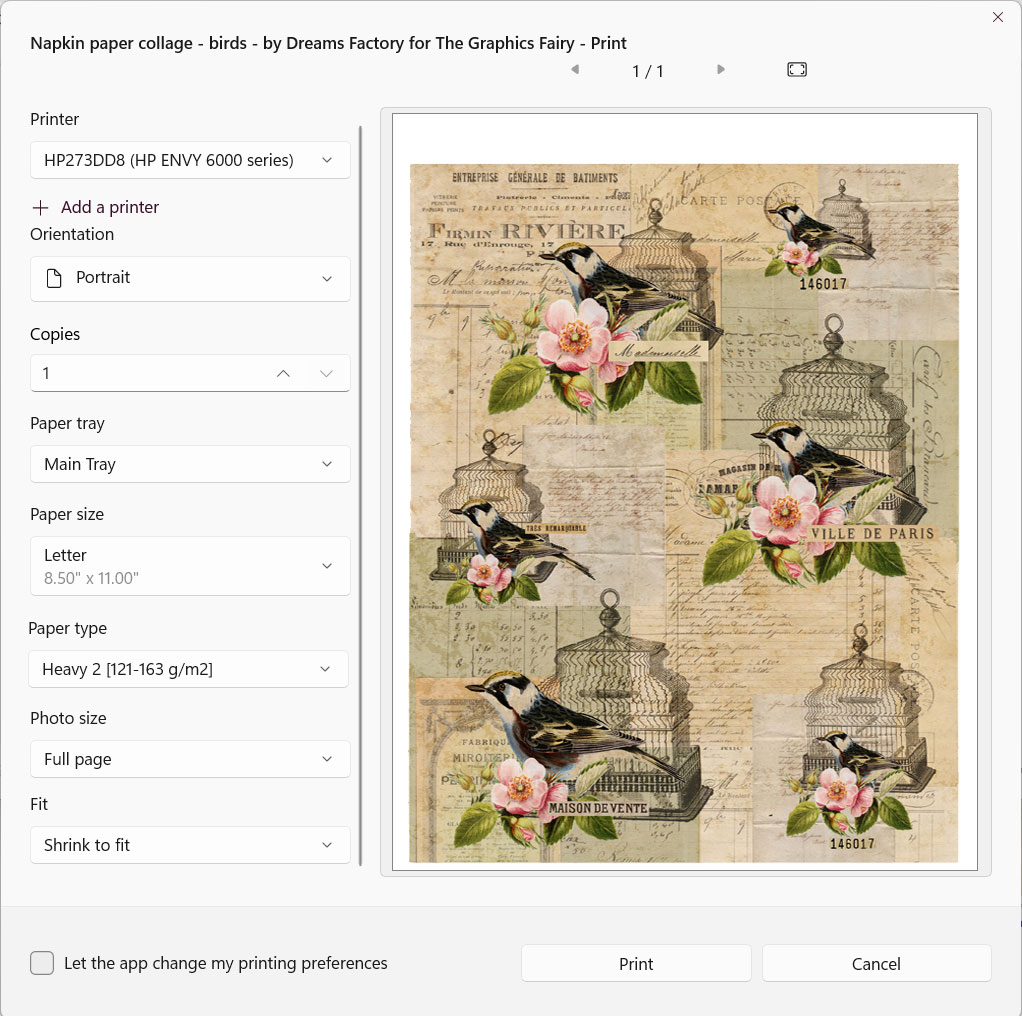
Print one sheet at a time and stay nearby while it feeds through. Your paper assembly should go smoothly through the printer!

Carefully lift the paper assembly and admire your first custom-made napkin! Once printed, allow it to dry completely before using.
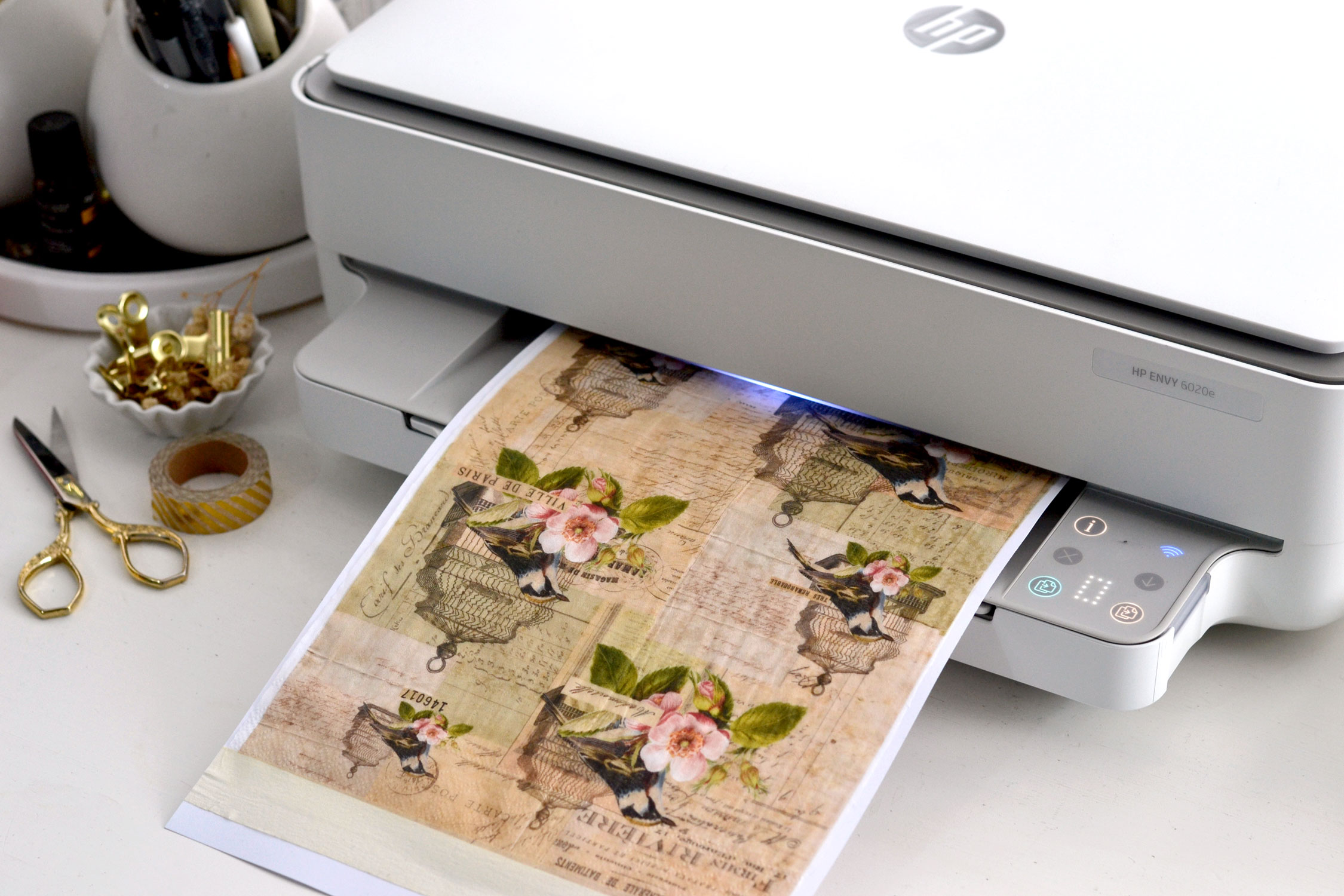
I feel that once you try printing on napkins, you’ll never look at plain white napkins the same way again! Take a second to soak this moment in! New doors have just opened widely and they reveal so many great creative opportunities!

Move on to printing the other printables, too.

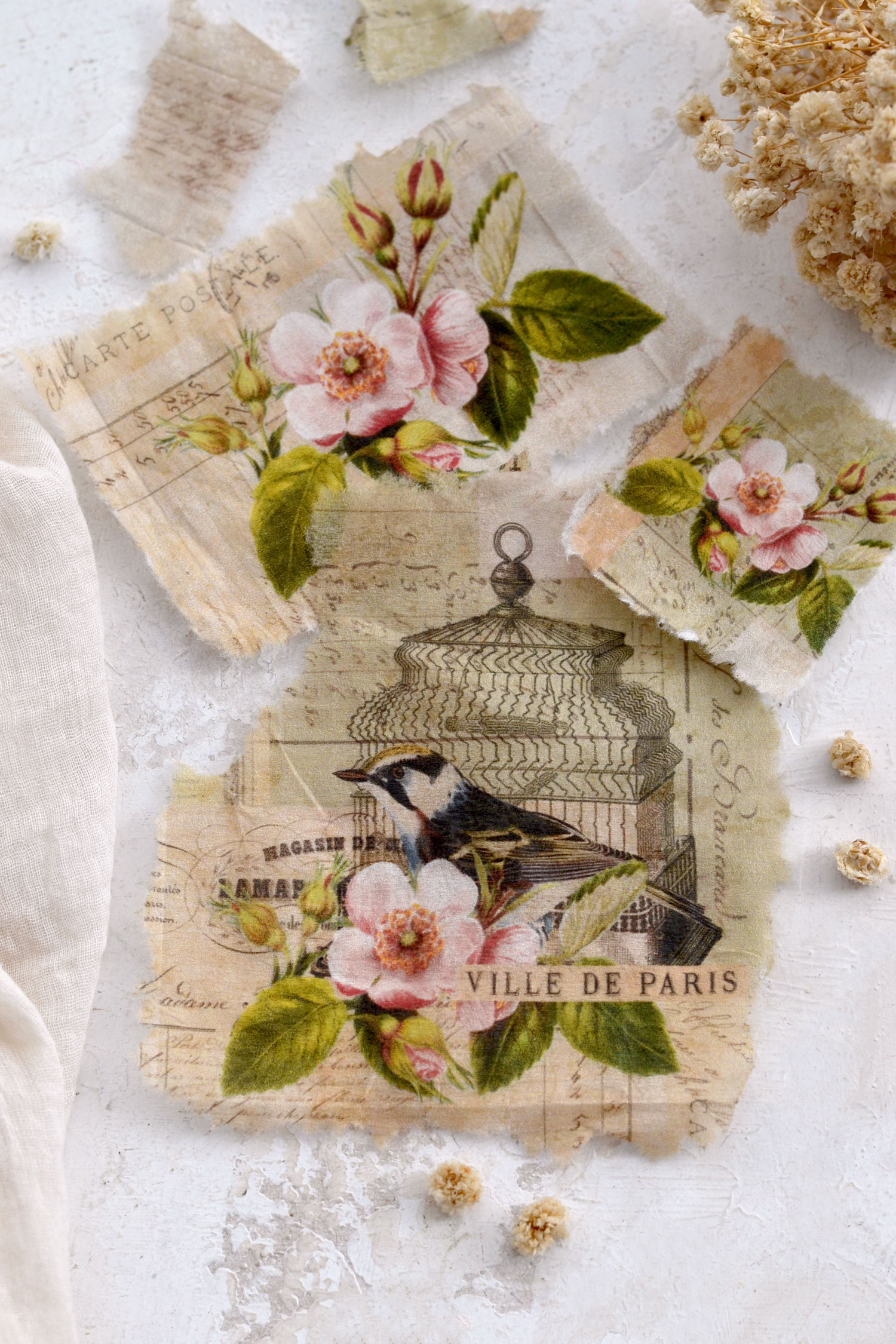
You can choose to keep the printed napkins as they are until ready to be used, or you can carefully remove the tape and gently separate them from the backing sheet. Can you believe how amazing they all look? Their delicacy and sheerness are definitely their greatest qualities!

This method allows you to transform your printables — whether it’s a botanical, a French ephemera collage, or a delicate floral — into a lightweight, sheer surface that blends nicely into wood, paper, or even canvas. You’ll notice that the colors appear slightly softer than on regular paper — and even more beautiful once applied to a surface.

Once printed, the napkin designs can be cut or torn into smaller sections and layered onto different projects. For decoupage, I prefer tearing the napkin rather than cutting it. Soft, feathered edges perfectly blend into the background and enhance the aged, timeworn appearance. Work slowly and support the napkin with your fingers as you tear to prevent accidental ripping. Make sure you keep all the scrap pieces, they are small little gems that can be used to enhance your collages.

The sheerness of the napkin allows the background to show through, creating that soft, beautiful finish that makes vintage-style projects feel so authentic. Here I used a small piece to create a lovely coaster, just to give you an idea of how beautiful this printed napkin design can look!

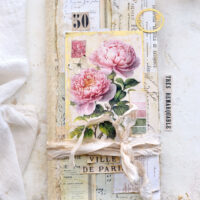
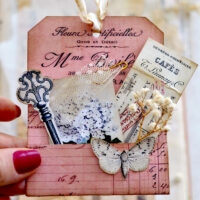
Your printed napkins can be used to create wooden signs, handmade gift tags, journal covers or mixed media pages, decorative boxes or trays, even some super chic background layers for art journaling. Of course, you can get as creative as you want with these and use them to your heart’s content! Here, I used a glue stick and partially glued only the top of the napkin to a coffee-dyed tag so I can better preserve some of its lovely sheerness.

Yes, one of the reasons this technique works so beautifully for vintage-style designs is the subtle sheerness of the napkins. Once applied with decoupage medium, the fibers almost disappear, allowing the background to show through and creating that soft, timeworn effect we love in antique pieces. So now, instead of searching for the perfect decorative napkin, you can start printing your own using a regular home printer.
There are so many great options here on The Graphics Fairy, but also make sure you check the thousands of printable designs on the Premium Membership site, which will allow you to get endlessly creative while printing your own designs.
I hope this technique inspires you to look at your favorite vintage printables in a new way. Please don’t be intimidated by how long this blog post is, I just wanted to make sure I cover as much as I can when it comes to this amazing printing technique. There’s something truly special about seeing a design you love transform into a delicate, almost painted surface that not only looks amazing but also feels great to the touch. Print as many of these beautiful printables as you want and keep them close by until you are ready to use them on a handmade piece you’ll treasure for years.
You might also like How to Print on Tissue Paper HERE and How to Print on Rice Paper HERE.
Happy crafting,
Diana | Dreams Factory


Dpopcorn says
I have always loved your web site but you really went beyond my expectations with the napkin print idea. LOVC IT! Thank you soooooooo much.
Karen says
You’re welcome, glad you liked it! 🙂
Betsy says
Thanks! Can’t wait to try this new, to me, technique!
Karen says
Happy crafting!